Raw Diamonds Gain Appeal as Buyers Seek Authenticity and Story
The name carries the first inheritance: raw diamonds are winning buyers who want visible origin, imperfect texture, and a story polished stones can’t tell.
Why rough diamonds feel newly desirable
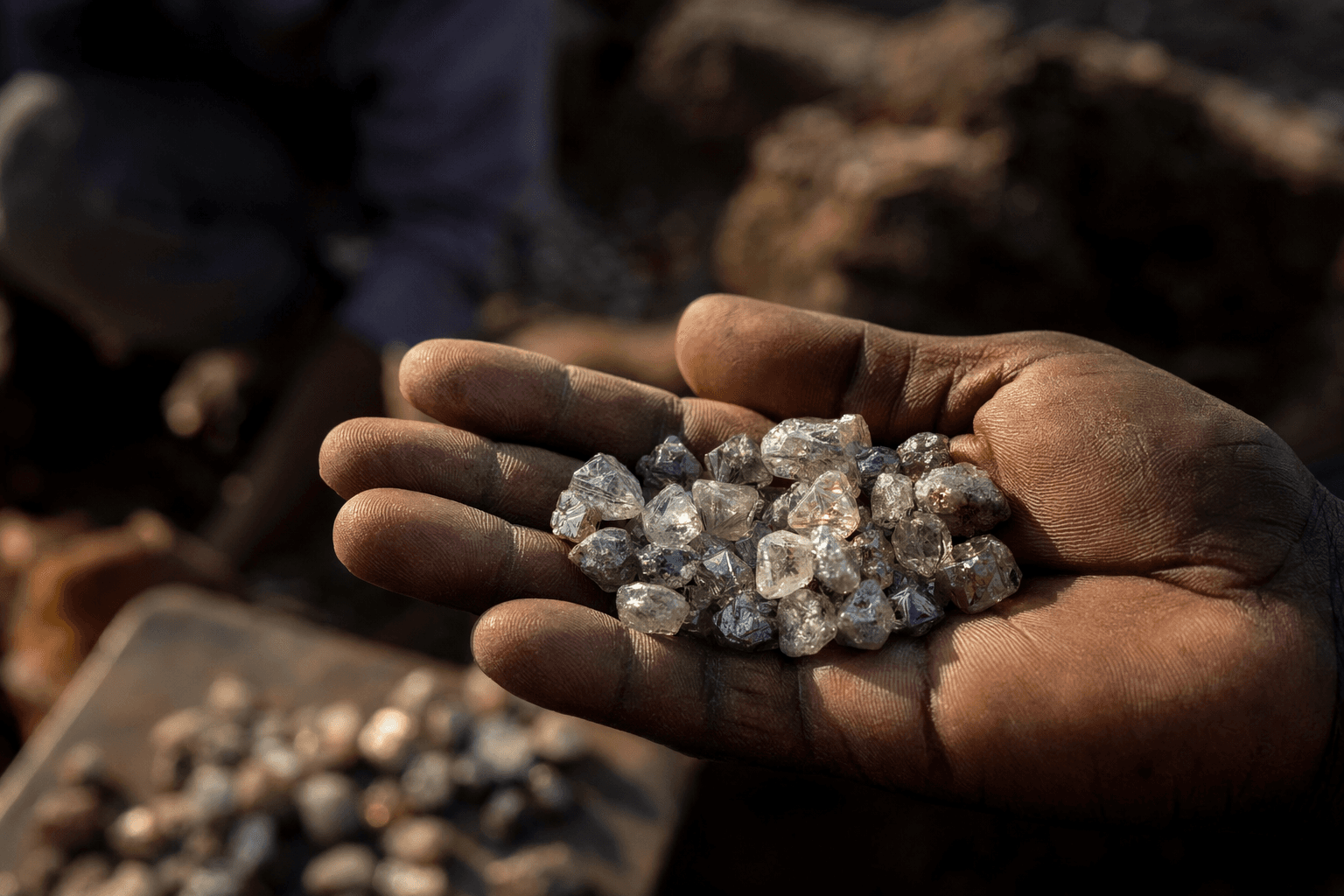
The appeal of a raw diamond begins before the setting, before the carat weight, before the price tag. Its surface keeps the record of pressure, time, and origin visible, and that visibility is exactly what is drawing buyers away from the sameness of polished stones and the convenience of lab-grown ones. Pamela Danziger has called this a countertrend, and it makes sense: when synthetic stones can look endlessly similar, the rough stone offers evidence of its own making.
That difference is emotional as much as aesthetic. Buyers are reading inclusions, irregular shapes, and uneven texture not as defects, but as proof that the stone came from deep within the Earth and arrived unaltered. In a market where value can feel abstract, raw diamonds offer something sturdier: a sense that the piece has not been overworked into anonymity.
The numbers behind the shift
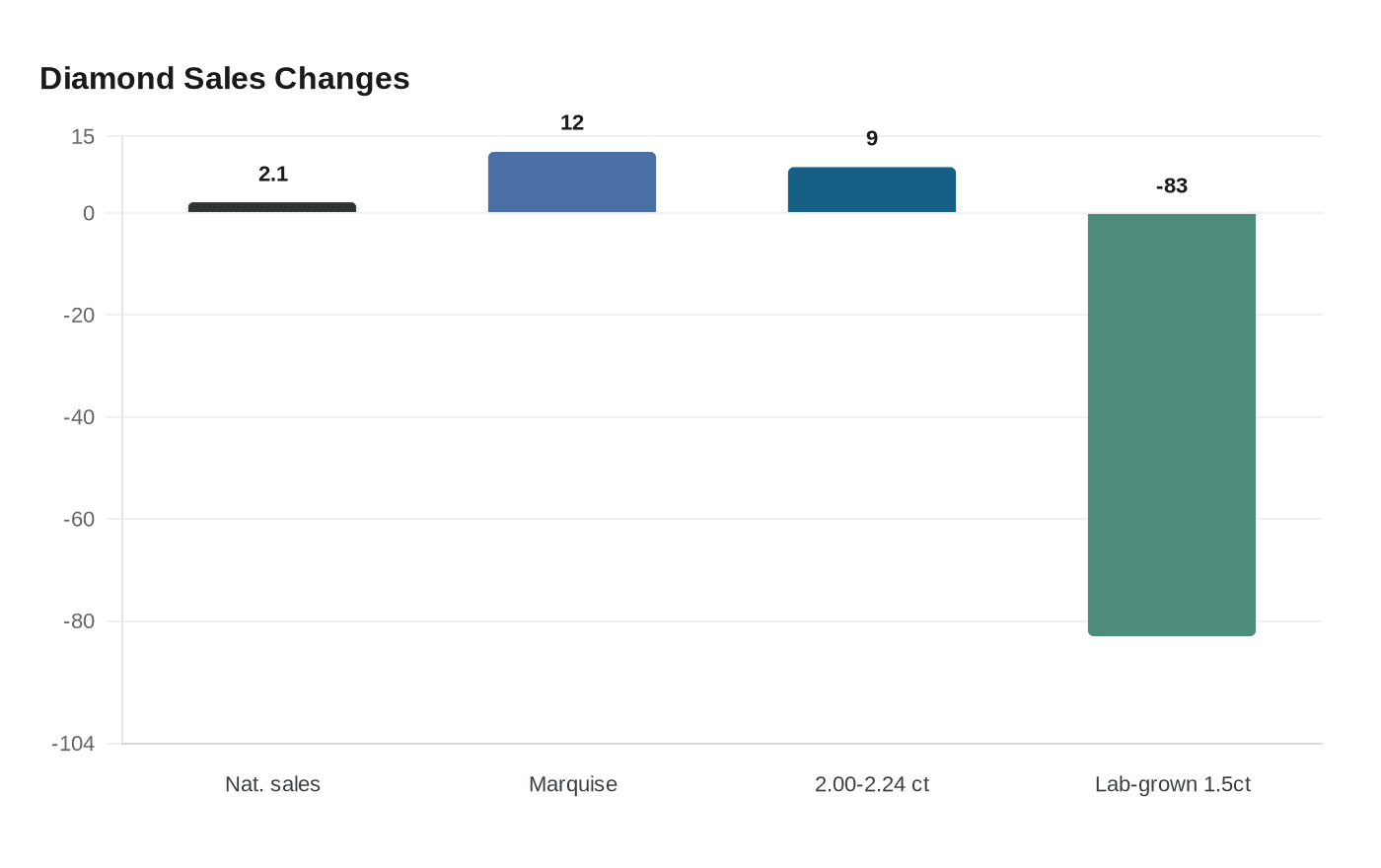
The appetite for natural diamond jewelry has not vanished under pressure from tariffs, inflation, and higher gold prices. In the Natural Diamond Council’s 2025 data set, based on more than four million jewelry transactions from 2,500 U.S. specialty jewelers through Tenoris, U.S. natural diamond jewelry sales rose 2.1%. Holiday jewelry sales at specialty jewelers were up more than 6% to end the year, a sign that the category still moves when shoppers decide a piece is worth keeping, not just wearing.
The same data points to what consumers are choosing. Marquise jewelry grew 12%, and center stones in the 2.00 to 2.24 carat range rose 9%. Those are not timid purchases. They suggest that buyers still respond to stones with presence, shape, and a strong visual identity. The council also says shoppers continued to value authenticity, deep Earth origins, and heirloom quality, which is exactly where raw diamonds have found their opening.
The contrast with lab-grown stones is impossible to ignore. The Natural Diamond Council says the value of a 1.5-carat laboratory-grown diamond fell by 83% from 2015 to the third quarter of 2024. That number has real-world consequences: what once looked like an easy shortcut to size now looks more like a depreciating asset. For a shopper thinking about future heirloom value, that decline changes the conversation fast.
Maya Bjørnsten and the case for personality
Few brands explain the raw-diamond appeal more clearly than Rough Diamonds Jewellery in Copenhagen. The company says it has been making handcrafted Danish jewelry with natural raw diamonds since 2007, and its philosophy is blunt in the best way: it aims to “see personality” rather than imperfections. That is a meaningful distinction. In raw-diamond jewelry, the stone does not need to mimic a showroom classic; it needs to hold its own shape, its own edge, its own sense of character.
Maya Bjørnsten personally handpicks the uncut diamonds, and the brand says it uses only conflict-free and ethically sourced rough diamonds from trusted suppliers around the world. That language matters because rough stones can invite vague storytelling. The strongest pieces do not rely on romance alone. They connect the beauty of the stone to a specific design hand, a named maker, and a sourcing claim that is clear enough to examine.
For shoppers, that means the setting should do more than decorate. It should frame the rough stone so the natural form remains legible. If a piece hides the crystal under too much metal, the story gets muffled. If the mounting leaves the irregular geometry visible, the jewel keeps the tension that makes raw diamonds feel distinct in the first place.
How to read a raw diamond
Rough diamonds ask for a different kind of eye. Instead of searching for symmetry and polish, look for the details that prove individuality: a matte or glassy crystal face, an unexpected angle, a body shape that is slightly off axis, or visible natural texture that has not been sanded away into uniformity. These are the qualities many buyers now read as authenticity, not flaw.
The Gemological Institute of America has reinforced that shift in taste. Rough diamonds were once thought suitable mainly for industrial use, but they are now appearing in luxury jewelry because they are natural and unaltered. In a March 2026 feature, GIA scientists examined 264 rare rough diamonds with forms ranging from raindrop-like crystals to cube-like stones. That range matters because it shows the uncut diamond is not one object with one look. It is a mineral family with a surprisingly wide visual vocabulary.
What to look for before you buy
A raw diamond piece earns its price when the story is specific. The strongest cues are practical, not poetic:
- Clear provenance language, including where the rough stone was sourced and how it was selected.
- Conflict-free and ethically sourced claims that are stated plainly, not buried in soft branding.
- A maker or designer who handles the stone personally, as Maya Bjørnsten does.
- A setting that preserves the stone’s natural shape instead of forcing it into a polished template.
- A design that treats irregularity as an asset, because that is what gives the piece its identity.
The industry is chasing provenance, not just sparkle
This turn toward rough stones is not happening in isolation. De Beers has been working to foreground natural-diamond provenance through new marketing pushes, including its holiday campaign “Forever Present” in November 2024 and the launch of “Desert diamonds” on October 3, 2025, backed by its largest category marketing investment in more than ten years. The message is clear: the market is trying to remind shoppers that a natural diamond carries a different kind of value than a synthetic one.
That effort reflects the pressure Rapaport has described as the trade is reshaped by synthetics and the need to preserve consumer confidence. In that environment, raw diamonds land with unusual force. They offer what many luxury purchases promise but few can prove: visible origin, measurable scarcity, and a surface that still looks like it remembers the Earth.
For buyers who want beauty without sameness, the rough diamond is not a rejection of luxury. It is a more exacting version of it, where the imperfections are not hidden but held up as the reason the jewel matters.
This article was produced by Prism’s automated news system from verified source data, official records, and press releases, then run through automated quality and moderation checks before publishing. The system is built and supervised by the people who set the standards it runs under. Read our full AI policy.
Did this article answer your question?