Smithsonian adds first contemporary artwork to National Gem Collection
Reena Ahluwalia’s Winston Red painting became the first contemporary artwork accessioned into the Smithsonian National Gem Collection, reframing a rare diamond as cultural memory.
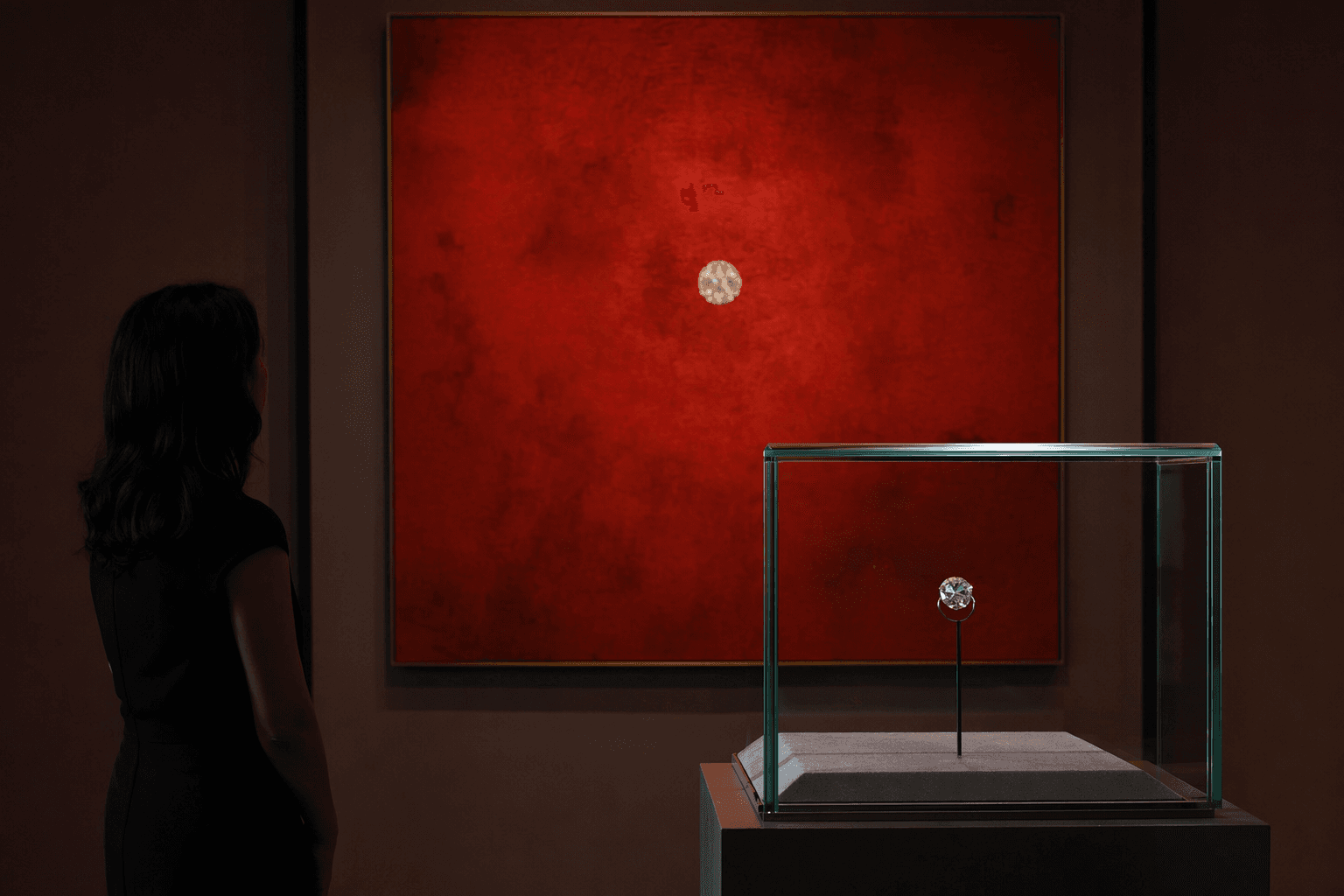
The rarest gems are usually preserved for their chemistry, color and scarcity. Reena Ahluwalia’s “The Legacy of The Winston Red Diamond” pushed that idea further, becoming the first contemporary painting ever accessioned into the Smithsonian National Gem Collection and proving that a gemstone’s meaning can grow through art as much as through geology.
The Smithsonian formally accepted the work on May 6, 2026, in the Janet Annenberg Hooker Hall of Geology, Gems, and Minerals, where Dr. Gabriela Farfan, the Coralyn W. Whitney Curator of Gems and Minerals, received it on behalf of the Smithsonian National Museum of Natural History. The accession is a milestone not because it adds another object to the cases, but because it expands the collection’s vocabulary. A painting now sits inside a gem collection built to document natural marvels, joining mineral specimen and museum scholarship in a way that feels both exacting and unexpectedly intimate.
Ahluwalia based the work on the 2.33-carat Winston Red Diamond, a Fancy red stone that Smithsonian and GIA materials describe as the fifth-largest Fancy red diamond known to exist and the only Fancy red diamond on public exhibit. That alone would make it singular. Fewer than one in 25 million diamonds is Fancy red, and the Winston Red’s crimson color is tied to extreme pressure and temperature deep within the Earth, where rarity is written into the stone’s formation. The diamond, formerly called the “Raj Red,” has an old mine brilliant cut, with even color distribution and clarity issues that only underline how unusual it is.
The diamond entered the Smithsonian on April 1, 2025, when Ronald Winston donated the Winston Red and the larger Winston Fancy Color Diamond Collection. The museum called the gift one of its most significant in the last decade, and the name carries weight for another reason: Ronald Winston is the son of Harry Winston, who donated the Hope Diamond in 1958. That earlier gift helped lay the foundation for the National Gem Collection, and more than 100 million visitors have since seen the Hope Diamond in Washington, D.C. The Winston Red now extends that lineage, linking one family’s stewardship to the museum’s modern sense of permanence.
The new painting matters because it treats the diamond not as inventory, but as inheritance. Ahluwalia translated a stone of extreme rarity into emotional and visual narrative, giving the Winston Red a second life as interpretation. In a museum that exists to display awe-inspiring specimens, preserve natural history and uncover new knowledge, that shift is more than symbolic. It suggests that the future of gem history will belong not only to the stones themselves, but to the artists and curators who understand how to make them endure in the cultural imagination.
This article was produced by Prism’s automated news system from verified source data, official records, and press releases, then run through automated quality and moderation checks before publishing. The system is built and supervised by the people who set the standards it runs under. Read our full AI policy.
Did this article answer your question?