Sotheby’s Geneva sale to feature rare blue diamond, giant sapphire, emerald necklace
A 6.03-carat fancy vivid blue diamond and a 102.40-carat Ceylon sapphire will headline Sotheby’s Geneva sale, where rarity is measured stone by stone.
A 6.03-carat fancy vivid blue diamond will anchor Sotheby’s Geneva High Jewelry sale, a clean read on what the most serious buyers still pay for: color so scarce it barely exists, and a grading sheet that leaves little room for debate. The cushion-shaped stone is internally flawless, type IIb, and comes from South Africa’s Cullinan mine. Sotheby’s has placed it at CHF 7.2 million to CHF 9.6 million, about $9 million to $12 million, as it makes its auction debut.
The timing matters as much as the stone. Sotheby’s will open the sale on May 12, 2026, at 2:00 PM CEST in Geneva, with 124 lots on offer. In a market where collectors increasingly chase provenance as much as carat weight, Sotheby’s is using this blue diamond to show how a single gem can carry the whole argument for rarity. The house cites GIA research showing that only 0.3% of diamonds submitted during the study period were predominantly blue, a statistic that turns the ring from luxury object into near-anomaly.
If the diamond is the headline, the Peacock of Ceylon is the connoisseur’s counterpoint. The 102.40-carat unmounted cushion-shaped sapphire comes with SSEF and Gübelin reports stating Ceylon origin and no indications of heating, the kind of documentation that matters when buyers are paying for natural character, not just spectacle. Sotheby’s says the stone’s blue color reflects well-balanced trace elements typical of the finest sapphires from Ceylon, a reminder that origin is not a side note but part of the value proposition itself.
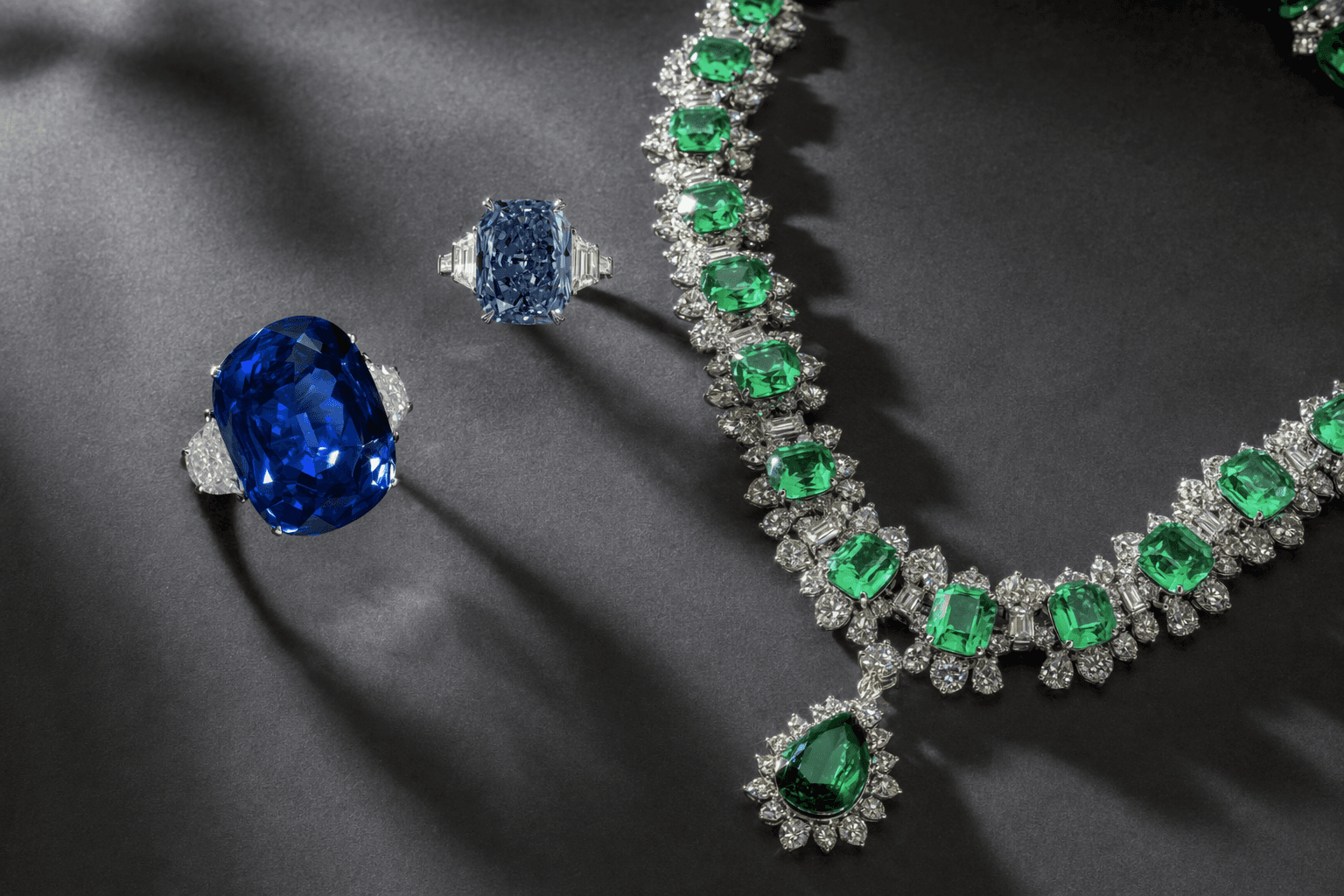
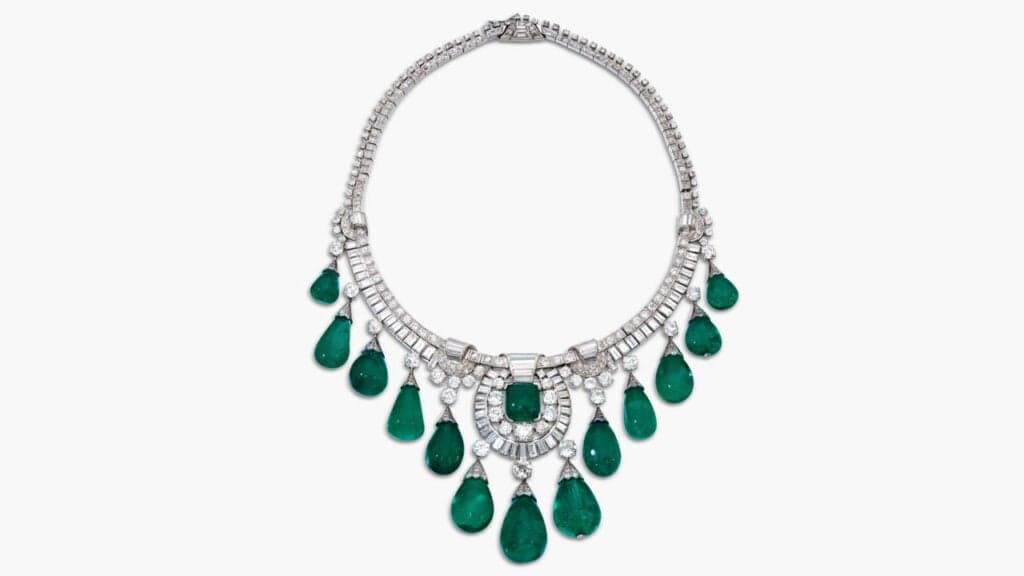
The sale also includes a 1950s emerald-and-diamond necklace set with Colombian-origin emeralds, and that lot brings another familiar pressure point into focus: treatment. Colombian emeralds are prized for their color, but oiling is common, and stones with no oil or only minimal oil draw special attention from gemologists and buyers alike. In practice, that means the market rewards not just beauty, but the paperwork that proves how much intervention a stone has had.
Sotheby’s has said its High Jewelry auctions respond to the changing profiles and behaviors of modern collectors. Geneva’s lineup makes that plain. The house is not simply selling sparkle; it is selling origin, grading, treatment status and the story each gem can credibly carry, which is exactly how heirloom-worthy jewelry keeps setting the tone for the broader fine-jewelry market.
This article was produced by Prism’s automated news system from verified source data, official records, and press releases, then run through automated quality and moderation checks before publishing. The system is built and supervised by the people who set the standards it runs under. Read our full AI policy.
Did this article answer your question?