Tacori rises from Glendale family roots to global jewelry spotlight
Tacori’s appeal rests on more than sparkle: an Armenian family story, California craft, and a hidden Crescent motif turned a bridal signature into heirloom meaning.
From Glendale roots to global recognition
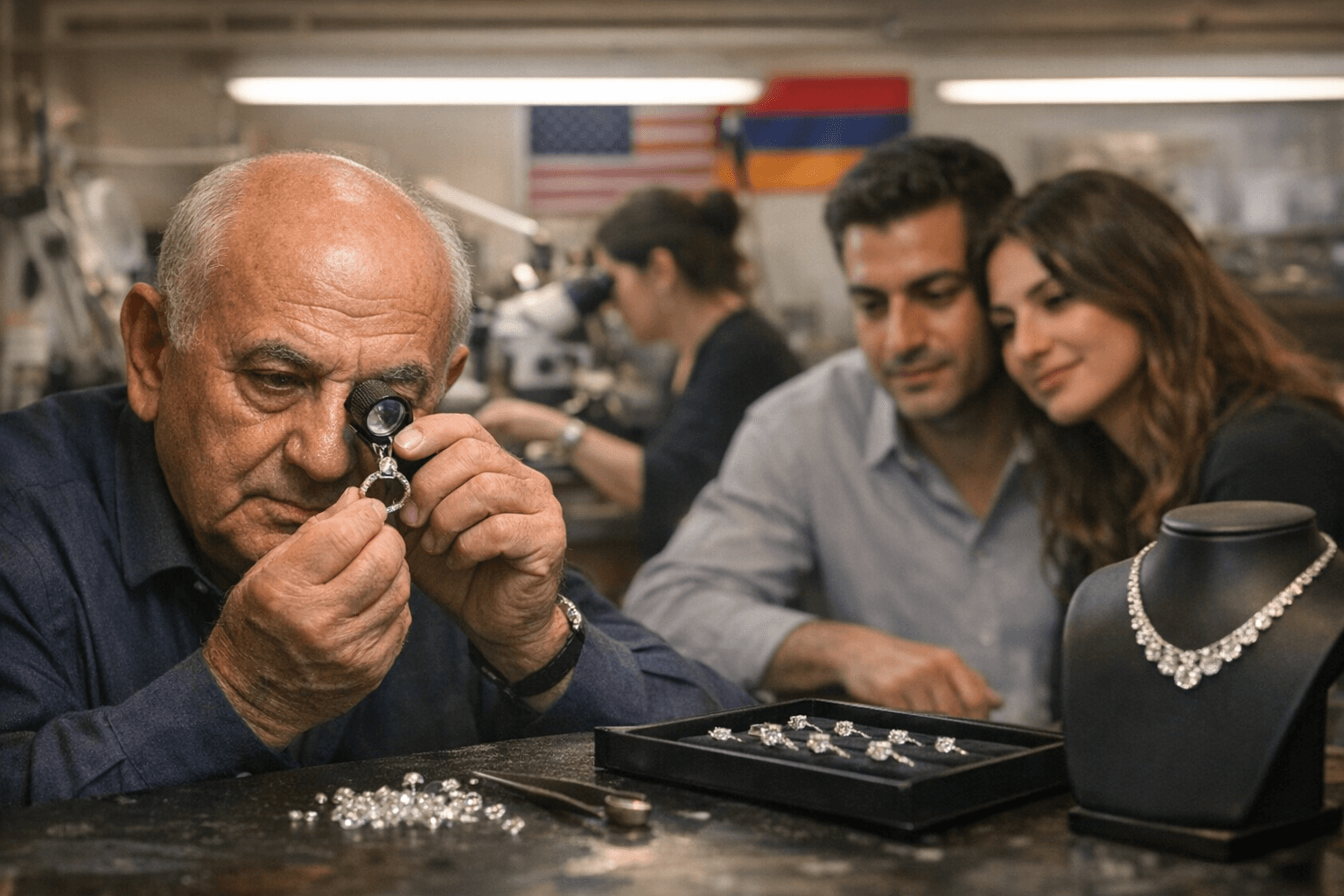
Tacori’s rise begins not in a luxury tower, but in Glendale, where an Armenian immigrant family built a jewelry business that would eventually travel from local counters to red carpets. That arc matters because Tacori’s emotional value is inseparable from its origin story: the company is still framed as family-owned, now led by the founders’ children Paul Tacorian and Nadine Arzerounian, with its identity rooted in Southern California and shaped by generations of continuity.
What separates Tacori from brands that borrow the language of heritage is the specificity of its own. The company has long positioned itself as a California-made label, and says every piece is handcrafted by artisans in California. That matters in bridal jewelry, where buyers are often looking for more than a setting and a center stone. They want a maker they can name, a lineage they can picture, and a design language that feels personal enough to become part of an inheritance.
The Crescent that turned a private symbol into a public signature
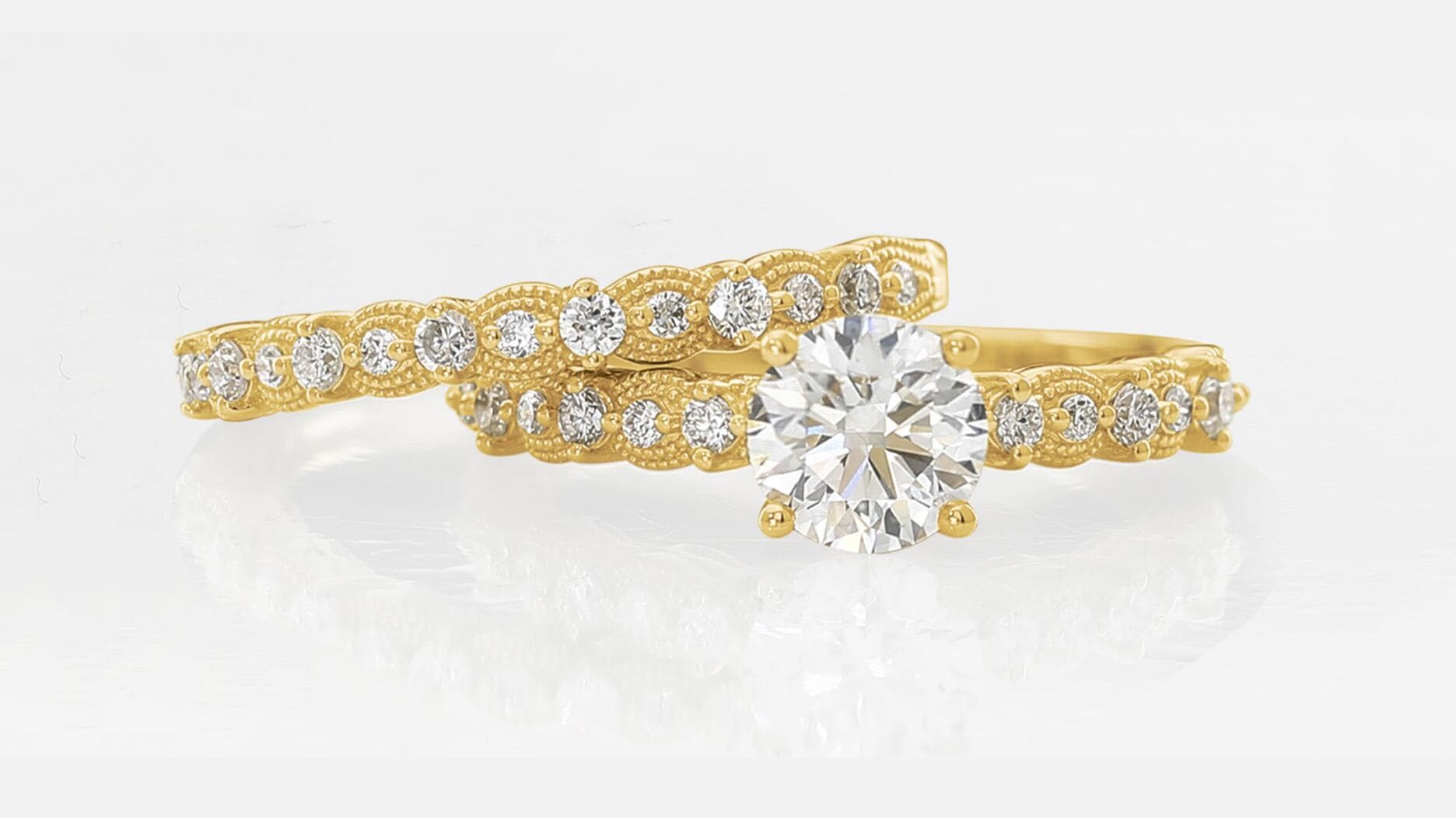
Tacori’s most recognizable idea is the Crescent, a motif the brand says was conceived by Nadine Tacorian for her own union. That detail gives the design unusual emotional force: it was not invented as a marketable logo, but as a hidden symbol of love inside a ring. In a category crowded with solitaires and halo settings, the Crescent became a way to make the underside of a jewel matter as much as the face.
The brand marked 25 years of the Crescent in 2023, and that anniversary underscored how a single idea can become a house code when it is repeated with discipline. JCK described it as a bridal-style icon, and Tacori itself has cast the design as both a signature and a story. For readers drawn to meaningful jewelry, that is the difference between decoration and identity: the motif is not only recognizable, it is narratively anchored to a family milestone.
The Crescent also shows why legacy-rich bridal jewelry resonates so deeply. A piece becomes memorable when it carries a relationship inside its construction. In Tacori’s case, the original hidden symbol of love evolved into a visual shorthand that signals the brand at a glance, but its meaning still comes from the intimacy of its beginning.
Why craftsmanship still carries weight
Tacori’s California production is central to its appeal because craftsmanship is the proof point that supports the story. The brand says its pieces are handcrafted by artisans in California, and that language matters in a market where luxury claims can be vague. Here, the detail is concrete: the work is done by hands in California studios, not outsourced into anonymity, and the brand’s family-led structure reinforces the sense of continuity between design and execution.
That craftsmanship is not limited to bridal rings. Tacori’s custom work shows how the same sensibility scales to red carpet dressing, where jewelry must perform under intense scrutiny. The brand’s press materials point to a custom Deconstructed Dahlia Petal Brooch created for Sev Ohanian at the 98th Academy Awards, crafted in California by master artisans and set with nearly 100 hand-set natural diamonds. The result is not just a glamorous accessory, but a strong piece of evidence for how a heritage brand translates its house language into high-profile, one-off commissions.
For buyers, the brooch is also a useful marker of value. Nearly 100 natural diamonds is not a vague sparkle claim; it signals labor, material density, and a bespoke level of finishing. In a jewelry market full of marketing adjectives, those are the details that tell you where the money went.
Red-carpet credibility without losing the bridal core
Tacori’s visibility extends well beyond engagement rings, and that broader recognition helps explain why the brand feels familiar even to people who may never have tried on a bridal suite. FOX 11 Los Angeles noted that Tacori’s jewelry has appeared on Olivia Rodrigo, Nicole Scherzinger, Stephanie Beatriz and Lisa Ann Walter, a line-up that places the brand in the orbit of contemporary celebrity rather than old-world formality. That range matters because it shows the label can move between bridal, performance, and event dressing without abandoning its signature look.
The broader symbolism is clear: a family business from Glendale has become part of the visual vocabulary of awards season and celebrity styling. When a custom Tacori brooch appears at the Oscars, the brand’s heritage is no longer only a backstory, it is part of the product’s public meaning. The same family name that shaped the company’s beginnings now reads as a credential, one that links domestic craft to international visibility.
This is where Tacori’s story becomes instructive for anyone drawn to meaningful jewelry. A legacy-rich brand does not just sell an object. It offers continuity, and continuity is what many bridal buyers are really purchasing: the feeling that a ring or pendant can survive trends, family changes, and the passage of time without losing its emotional center.
Why the story resonates now
Tacori’s success also reflects how jewelry consumers have changed. Readers want provenance, and not the abstract kind. They want to know whether a piece was handmade, where it was made, who designed it, and whether the brand’s story is more than packaging. Tacori answers with a family narrative that stretches from Armenian immigrant beginnings to California production to Oscar-stage visibility, all tied together by a single signature design.
That combination gives the brand unusual staying power. The Crescent is not just a motif that photographs well, and the family name is not just a sentimental flourish. Together, they turn craft into continuity, and continuity into meaning. In a market where so many luxury labels sell polish, Tacori’s distinct advantage is that it can still point to a family origin, a California workshop, and a recognizable design language that began as a private promise and became a public emblem of love.
This article was produced by Prism’s automated news system from verified source data, official records, and press releases, then run through automated quality and moderation checks before publishing. The system is built and supervised by the people who set the standards it runs under. Read our full AI policy.
Did this article answer your question?