Why amulets and talismans have endured for thousands of years
The line between amulet and talisman is finer than most people think, but the objects have always carried the same promise: protection, luck, and meaning you can wear.
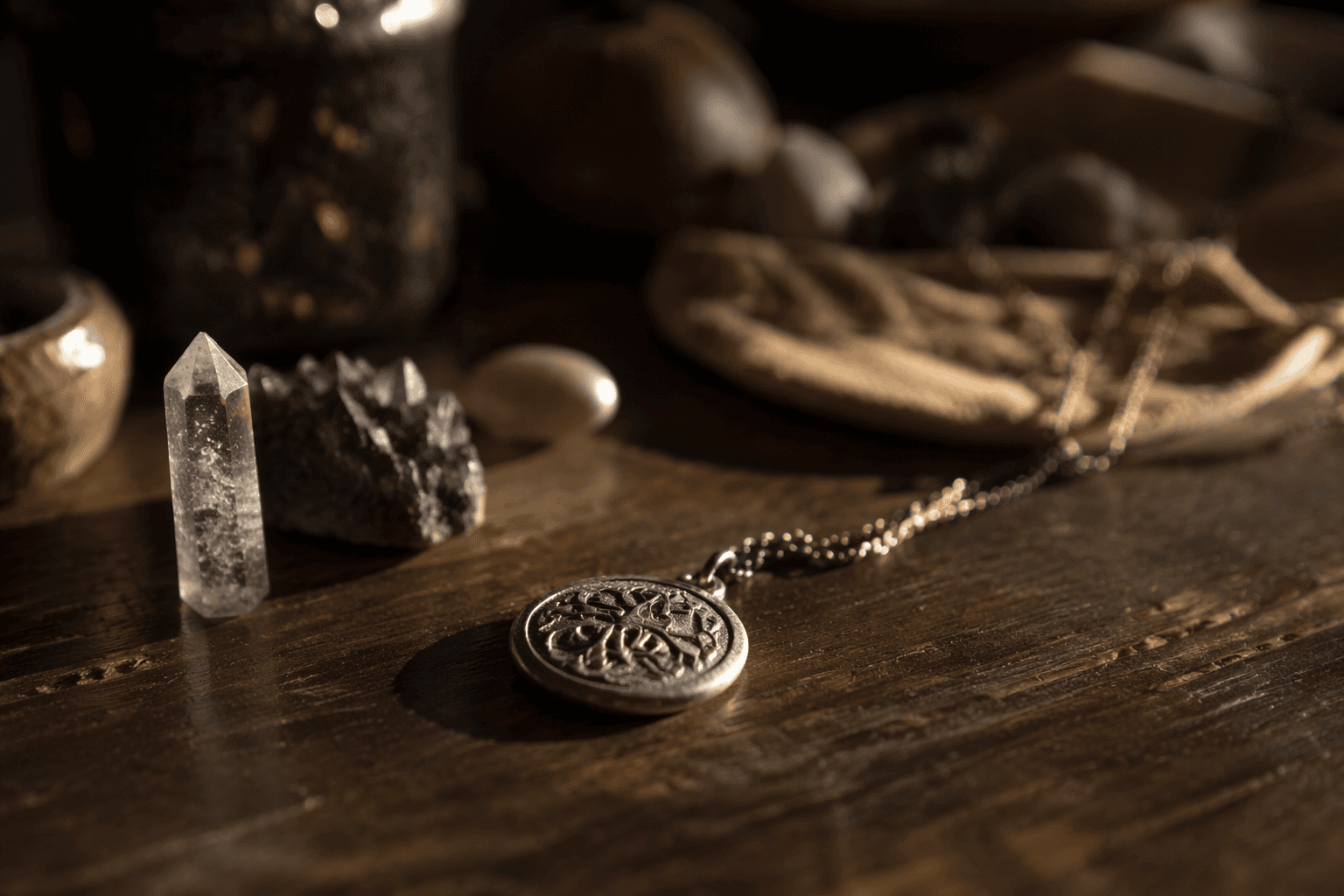
An amulet is not simply a pretty charm with a story attached. Britannica defines it as an object, natural or man-made, believed to protect or bring good fortune, while a talisman is often treated as an engraved amulet. That distinction matters because it reveals how meaning is built into jewelry: sometimes through material, sometimes through inscription, and sometimes through the exact symbol chosen to sit against the skin.
The language of protection
Britannica Dictionary dates the English word “amulet” to 1622, but the impulse behind it is far older than the language. An amulet can be worn on the body or placed in the space it is meant to influence, which is why symbolic jewelry has never belonged to ornament alone. It has always been about proximity, a small object asked to do a large emotional job.
That is the reason amulets and talismans still feel contemporary even when they are ancient in concept. A pendant chosen for luck, a ring engraved with a private mark, or a charm bracelet assembled as a portable record of milestones all follow the same logic: the wearer wants meaning to be visible, not hidden. The form may change, but the intention stays recognizably human.
What ancient Egypt understood about jewelry
The Metropolitan Museum of Art gives this tradition its sharpest historical frame. In ancient Egypt, amulets represented animals, deities, symbols, and objects in miniature, and they were usually worn or placed on the body so their power could transfer directly to the owner. Their force did not come from one element alone, but from a combination of shape, decoration, inscription, color, material, and even words spoken over the piece or acts performed with it.
That is a more sophisticated idea of jewelry than simple adornment. It means the object was never separate from ritual, and that a necklace or pendant could carry layered meaning through design alone. The scale was often intimate, too: ancient Egyptian amulets averaged about two to six centimeters, though funerary pieces such as winged scarabs could reach about twenty-five centimeters wide.
Motifs that carried real weight
The scarab remains one of the clearest examples of how a symbol becomes durable. The Met identifies it as one of the most popular amulets in ancient Egypt because it was associated with the sun god Re and, through that association, with life and regeneration. That meaning grew from a misunderstanding of the scarab beetle’s life cycle, which is a reminder that symbolism in jewelry does not have to begin in accuracy to become powerful.
Other motifs were even more explicit. The sa amulet literally depicts the hieroglyph for protection, turning the message into form. Heart amulets were used on mummies to protect the owner’s heart and help it respond positively at the Weighing of the Heart, while two-finger amulets were reserved exclusively for the dead and placed on the lower left torso to magically heal the embalming incision. Funerary amulets also often took the form of gods with protective roles, including Anubis, which shows how closely jewelry and belief could be bound to one another.
Why the old forms still resonate
Those ancient examples explain why meaningful jewelry remains so compelling now. Protection, remembrance, luck, endurance, transformation, and blessing are not abstract categories when they are translated into objects; they become visible through a scarab carved in metal, a heart motif worked into a pendant, or a guardian figure rendered in miniature. A piece that carries one of those ideas asks to be read before it is admired.
That is also why the amulet-versus-talisman distinction is useful for modern buying. An amulet suggests a general charge of protection or fortune, while a talisman, especially when engraved, feels more specific and deliberate. One might be chosen for the broad promise of safety; the other for a message, a date, a name, or a code known only to the wearer.
How to choose a piece with intention
The most convincing symbolic jewelry starts with a single clear idea. If the intention is protection, look for guardian imagery, protective hands, or motifs with a long ritual history such as the sa. If the intention is remembrance or continuity, heart forms, scarabs, and medallions can carry that weight without looking theatrical. When the intention is luck or renewal, the scarab’s association with Re and regeneration remains one of the most legible symbols in jewelry history.
Format matters as much as motif. A pendant keeps the symbol close to the heart, which suits pieces meant to feel personal and constant. Rings turn meaning into something tactile and cyclical, while charm bracelets allow layers of intention to accumulate over time. A medallion gives a symbol more visual authority, especially when the design is meant to read as a modern heirloom rather than a passing accessory.
How to wear meaning without losing elegance
The quickest way to make symbolic jewelry feel costume-like is to overload it. One focal motif is usually enough, especially when the piece already carries a clear message through shape or engraving. Keep the rest of the look restrained so the symbol has room to register, whether that means a scarab pendant against a clean collarbone, a single engraved ring, or a medallion worn with simple tailoring.
Material choice should reinforce the intention. A polished gold surface can make a symbol feel ceremonial and enduring, while a darker metal or patinated finish gives it a more archival, almost relic-like quality. If the piece includes inscription or engraving, that detail should be legible enough to matter, since the Met’s account of ancient amulets makes clear that words, color, and decoration were part of the object’s force, not decorative afterthoughts.
Meaningful jewelry endures because it asks jewelry to do what people have always wanted from it: hold memory, offer protection, and make hope visible. From the 1622 English word “amulet” to Egyptian scarabs, heart amulets, and protective sa figures, the category has lasted because it is built on something more durable than trend. It is built on the instinct to carry belief close to the body.
This article was produced by Prism’s automated news system from verified source data, official records, and press releases, then run through automated quality and moderation checks before publishing. The system is built and supervised by the people who set the standards it runs under. Read our full AI policy.
Did this article answer your question?