2026 Jewelry Trends Favor Meaning, Individuality, and Organic Design
Jewelry in 2026 is less about adornment and more about authorship, with five defining trends reshaping what collectors and first-time buyers reach for.
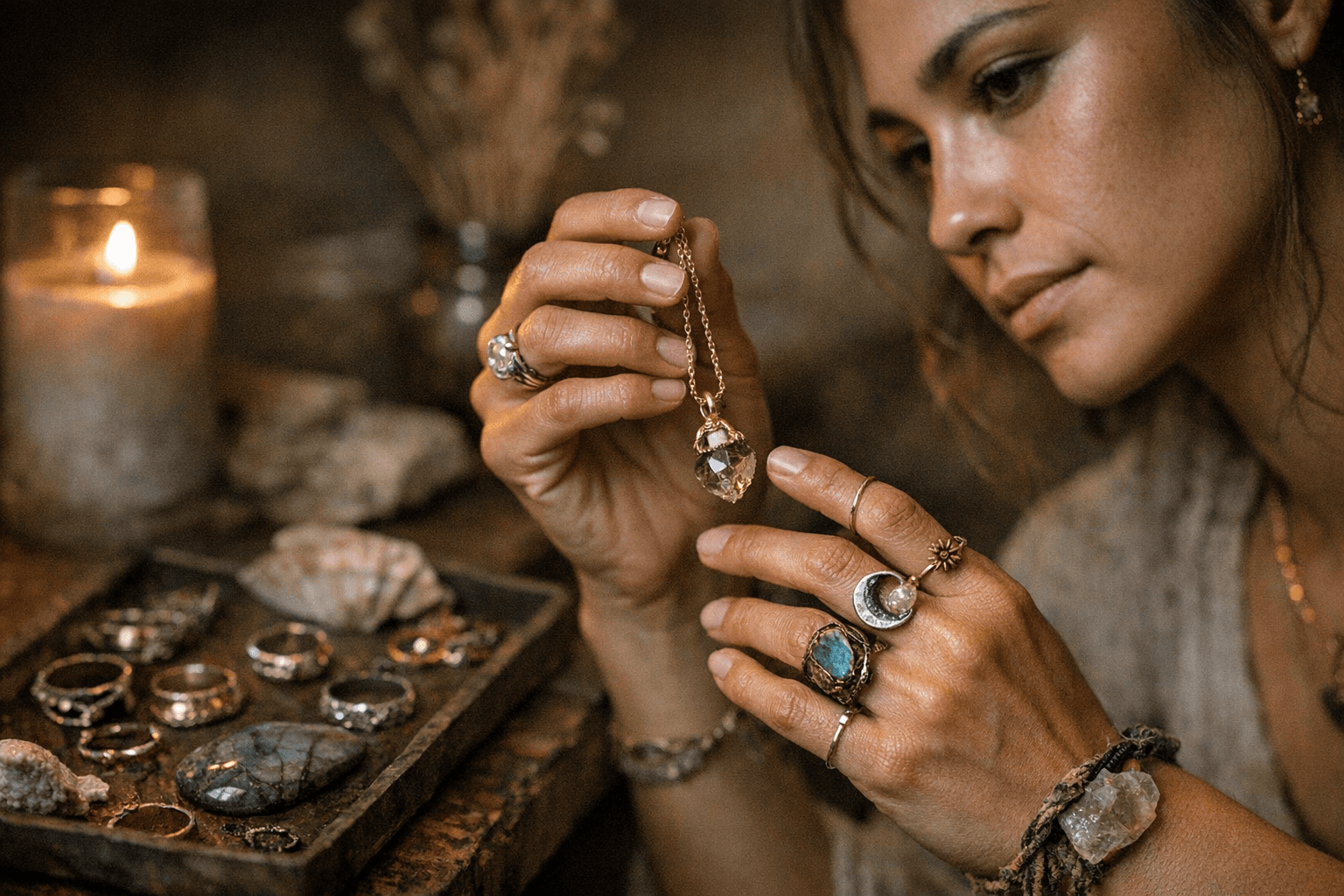
Something has shifted in the way people think about jewelry. Not suddenly, but with the quiet accumulation of cultural pressure that eventually tips into a new aesthetic consensus. The pieces commanding attention in 2026 are not the loudest or the most technically flashy; they are the most considered. According to Rapaport's March 2026 trend analysis, the market is being reshaped by a demand for meaning and individuality rather than pure ornament. Five major themes are driving that shift, and together they form a portrait of a buyer who wants jewelry to say something specific about who they are, where they came from, and what they believe endures.
Vintage-Inspired Design: The Language of Permanence
The first theme centers on vintage-inspired design, and it is worth distinguishing this from simple nostalgia. The pieces gaining traction here are not reproductions or costume approximations of antique jewelry; they are contemporary works that borrow the vocabulary of the past with full awareness of what that vocabulary communicates. Engraving is central to this movement. A milgrain-edged band with hand-engraved scrollwork carries a different weight than a polished plain band, not because the engraving adds structural value, but because it implies intentionality. Someone chose that. Someone took the time.
Antique cuts are equally significant. The old mine cut and the rose cut, both of which predate modern precision faceting, have a different visual quality than a contemporary brilliant. They were cut by hand to dance in candlelight rather than flood artificial rooms with refracted brilliance. When a jeweler today chooses an old mine cut over a round brilliant, they are making a statement about what kind of beauty they admire: warmer, softer, more human in its imperfections. That choice resonates with buyers who are increasingly skeptical of hyper-optimized perfection in any domain. Heritage, in this context, is not backward-looking. It is a form of resistance.
Organic Forms: Jewelry That Breathes
The second major theme is the rise of organic design, and it represents perhaps the most visually distinctive shift in contemporary fine jewelry. Where the dominant aesthetic of the past decade leaned toward geometric precision, clean lines, and architectural symmetry, the organic turn moves toward forms borrowed from the natural world: irregular curves, asymmetrical profiles, surfaces that suggest growth rather than manufacture.
This is not accidental. Organic jewelry sits at the intersection of two powerful cultural currents: a renewed interest in the natural environment and a deeper skepticism of machine-made uniformity. A bezel-set stone nestled in a free-form gold setting that looks as though it grew around the gem rather than being engineered to hold it communicates something fundamentally different from a six-prong Tiffany solitaire. Both are valid; they simply speak different languages. The organic aesthetic says the piece is alive, particular, unrepeatable.
Craftspeople working in this vein are drawing on techniques that require genuine skill, hand-forming metal, creating texture through hammering or granulation, and embracing the slight variations that result from human hands rather than CAD uniformity. The best pieces in this category reward close examination. They are not the same from every angle.
Meaning Over Ornament: The Intentional Piece
Running beneath all five of Rapaport's identified themes is a broader philosophical current that deserves its own examination: the primacy of meaning. The jewelry market has experienced years of fast-fashion influence, producing pieces that are trend-responsive but emotionally thin. What 2026 appears to be correcting for is that thinness. Buyers, from first-time purchasers selecting an initial necklace to serious collectors building a considered wardrobe of fine jewelry, are asking a different question than they asked a decade ago. The question is no longer primarily "Is this beautiful?" but "Does this mean something to me?"
This has practical implications for how jewelry is designed, marketed, and worn. Personalization, long available as an add-on service, has become a design principle. Pieces are being conceived from the start around the idea that the wearer will make them their own through engraving, stone selection, or the layering of multiple pieces that together tell a personal story. The result is jewelry that functions less like decoration and more like autobiography.
Individuality as Aesthetic Principle
Closely related to the meaning trend is the market's embrace of individuality as an aesthetic value in its own right. This is distinct from personalization, though the two overlap. Where personalization says "I added my initials," individuality says "I chose a piece that no one else would choose, and that choice reflects something true about me."
This shows up in the growing appetite for unusual stones, lesser-known gem varieties, and pieces that do not announce themselves immediately as luxury objects. A collector who wears a well-cut demantoid garnet in a hand-formed gold setting is making a different kind of statement than one who wears a flawless diamond solitaire. Neither is wrong; they represent different relationships with the concept of value. The individuality trend rewards connoisseurship, the willingness to do the research, develop a point of view, and commit to it.
The Through Line: Craftsmanship as Credential
If these five themes share a common foundation, it is a renewed seriousness about craftsmanship. Vintage cuts require knowledgeable setters. Organic forms require hand skills that years of CAD-dominant training have allowed to atrophy in parts of the industry. Meaningful personalization requires jewelers who understand both technique and narrative. Individuality requires an industry willing to produce pieces in smaller runs for more discerning audiences.
What Rapaport's analysis reflects, ultimately, is that the most engaged jewelry buyers in 2026 are not passive consumers selecting from a menu. They are participants in a making process, even when they do not hold the tools themselves. They want to understand what they are wearing: how the stone was cut, why the setting was designed the way it was, what tradition the piece draws from and where it departs from that tradition. The jewelry industry that serves them well will be the one that meets that curiosity with genuine depth rather than marketing gloss. The pieces that last, in collections and in culture, have always been the ones that had something to say.
This article was produced by Prism’s automated news system from verified source data, official records, and press releases, then run through automated quality and moderation checks before publishing. The system is built and supervised by the people who set the standards it runs under. Read our full AI policy.
Did this article answer your question?


