Buy slim gold chains and lab-grown diamonds, skip chunky 2026 fads
Choose slim gold chains and lab-grown diamond studs as long‑wear anchors; treat chunky curb chains, wide cuffs and novelty trends as momentary fads you can skip.
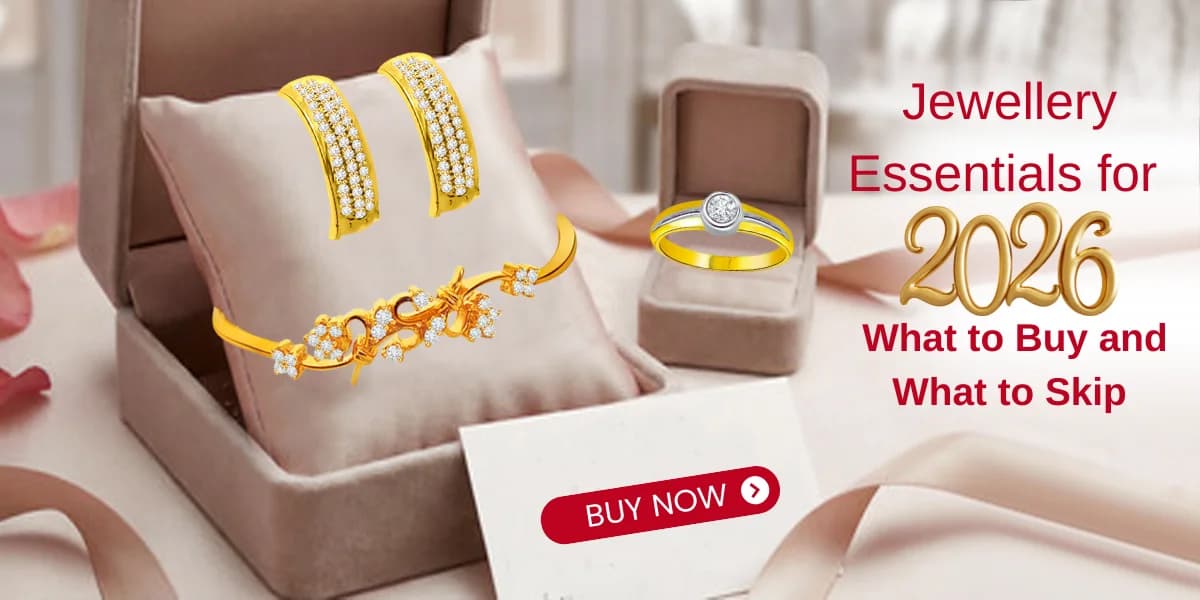
Lead Minimalist essentials should do the heavy lifting of your jewelry wardrobe: slim gold chains and lab‑grown diamond studs or solitaire pendants give daily wearability and resale resilience, while chunky, novelty pieces, though widely touted this season, tend to read like trends, not investments.
1. Slim gold chains
Slim gold chains are the single most useful minimalist purchase for 2026: they layer easily, sit comfortably under collars, and act as the backbone for pendants and charms. The original advisory explicitly recommends “slim gold chains” as a staple; Jewelryshopping’s pricing signals the category’s accessibility, with gold chains for him “starting at $200.” For longevity, choose 14K gold (58.3% pure gold) when you want durability without excessive softness; 14K is called out as “the gold standard for gifts that last a lifetime.” If you see heavier curb chains listed in 18–24 inches, know those are the chunkier alternative, stylistically valid but less aligned with a minimalist, everyday wardrobe.
2. Lab‑grown diamond staples
Lab‑grown diamonds are positioned as one of 2026’s core categories, especially in classic cuts: studs and solitaire pendants. Angara frames this plainly: “Angara’s lab-grown diamonds are physically and chemically identical to mined diamonds, delivering uncompromising quality in designs made to be worn every day.” Anchor purchases, diamond studs or a solitaire pendant, are recommended as first buys because they “support every other trend you layer on later.” Price anchors matter: Jewelryshopping lists diamond stud earrings “starting at $150,” which helps explain why buyers are opting for lab‑grown options as everyday pieces. Do ask for gemological documentation, if a seller leans on chemical or physical equivalence, request independent grading (IGI, GIA lab reports where applicable) so you can compare cut, color and clarity on paper as well as in hand.
3. Delicate stacking: the new rules
Stacking has shifted from maximalism toward curation; Angara puts it clearly: “Layering continues to evolve in 2026, shifting from excess to curation.” A refined pendant, a slim band and a delicate bracelet should form your foundation; Angara’s styling tip, “Stack by spacing, not quantity. Leave visible space between layers so each piece stands out.”, is a practical rule to follow. When mixing metals, use Gabrielfinejewelers’ advice as a visual principle: “When you layer minimalist jewelry with mixed metals, think about creating visual pathways. Your eye should travel smoothly across the pieces rather than jumping erratically. Space out different metal tones, don't cluster all your yellow gold on one hand and white gold on the other.” In practice, that means avoid dense clusters and alternate a slim gold chain with a small white-gold pendant or a tiny silver band spaced below it.
4. What to skip: chunky 2026 fads
Despite minimalist advisories, several sources trumpet bold, sculptural pieces as trending, Angara states “Bold jewelry styles are in for 2026, especially sculptural designs, substantial hoops and statement rings that hold their shape without feeling oversized or costume-like.” Gabrielfinejewelers goes further, listing “Chunky curb chain necklaces (18-24 inches),” “Wide cuff bangles with architectural details,” “Oversized hoop earrings in substantial gauges,” and “Statement signet rings with clean, modern lines.” If your goal is a long‑wear capsule, treat these looks as stylistic accents rather than wardrobe anchors: buy one sculptural cuff or a single signet if you love the look, but avoid building a collection around heavy chains or novelty bead trends that Glamour flags, like mermaid motifs and “summer‑camp” beads, which tend to be seasonal. Consumer voices mirror this caution: one reader noted, “Too many chunky chains or beads looks heavy to my eye,” and preferred layering a statement piece with a shorter, slimmer chain instead.
5. Gifting, sizing and material essentials
If you’re buying for someone else, follow Jewelryshopping’s three steps: consider what the recipient already wears; avoid rings or bracelets unless you know sizes; and choose durable materials. Jewelryshopping explicitly recommends pendants and earrings as “the safest choices because they never require sizing” and highlights materials: “14K gold (58.3% pure gold) is the gold standard for gifts that last a lifetime. Sterling silver (.925 purity) offers beautiful options at lower price points.” Retail shorthand is practical here, shops advertising “Real Gold. 30‑Day Returns. Stamped & Guaranteed.” and thresholds like “Free Shipping on Orders $135+” make returns and authenticity easier for gift buyers. Price anchors to keep in mind: diamond studs from $150, gold chains from $200, and charm pendants for kids from $20.

6. Price tiers and where trends show up
Trends run the gamut from $8 brooches to $395 statement necklaces; Glamour’s curated picks illustrate how to sample looks without overcommitting. Low‑cost trend items include an $8 gold brooch and $14 stretch bracelets; mid‑range pieces include a $46 Mango maxi‑link necklace or a $150 Chan Luu wrap bracelet; splurges like a $395 Lizzie Fortunato necklace sit at the top. Sale pricing can shift the calculus, an Éliou Bodie necklace is shown at ~$180~ $144 (20% off), so if you want a fleeting motif (shell pendants, beaded kitsch), buy it at trend prices and accept it as ephemeral, rather than replacing a minimalist investment.
7. Styling rules you can follow today
Adopt clear, repeatable rules: start with an anchor (slim chain or diamond studs), add one curated layer (a slim band or tiny pendant), and then, if you want a statement, choose one sculptural piece to rotate in. Gabrielfinejewelers’ counsel captures the posture: “You can wear a single sculptural cuff and make more impact than a dozen delicate bangles ever could.” For metal mixing, treat skin tone as “a guide, not a rule,” and space metal tones so the eye reads a pathway. Practically, that might look like a 14K gold neck chain, a white‑gold solitaire pendant, and a single rose‑gold stacking ring spaced across the finger.
- Choose 14K gold or .925 sterling if you want longevity and avoid plated pieces that fade.
- Start with anchors: slim gold chains and lab‑grown diamond studs or solitaire pendants.
- If you chase trends (mermaid motifs, summer‑camp beads, maxi links), buy lower‑cost pieces and accept they may be seasonally popular.
- For gifts, prioritize pendants and earrings, rings and bracelets require sizing.
- Ask for independent gemological documentation on lab‑grown diamonds and confirm any seller’s guarantees and return windows.
8. A final checklist before you buy
Conclusion Make the durable choice your default: slim gold chains and lab‑grown diamond anchors deliver everyday elegance and long‑term utility, while chunky chains, oversized cuffs and novelty motifs read like momentary statements best sampled, not stockpiled. If you want to play with boldness, do it with one considered piece, then let timeless fundamentals carry the rest of your jewelry life.
This article was produced by Prism’s automated news system from verified source data, official records, and press releases, then run through automated quality and moderation checks before publishing. The system is built and supervised by the people who set the standards it runs under. Read our full AI policy.
Did this article answer your question?


