Catherine Allen’s heirloom diamond ring defines her minimalist style
A diamond ring from her grandmother set Catherine Allen’s jewelry standard: one piece, worn daily, loaded with family history and built for repeat wear.
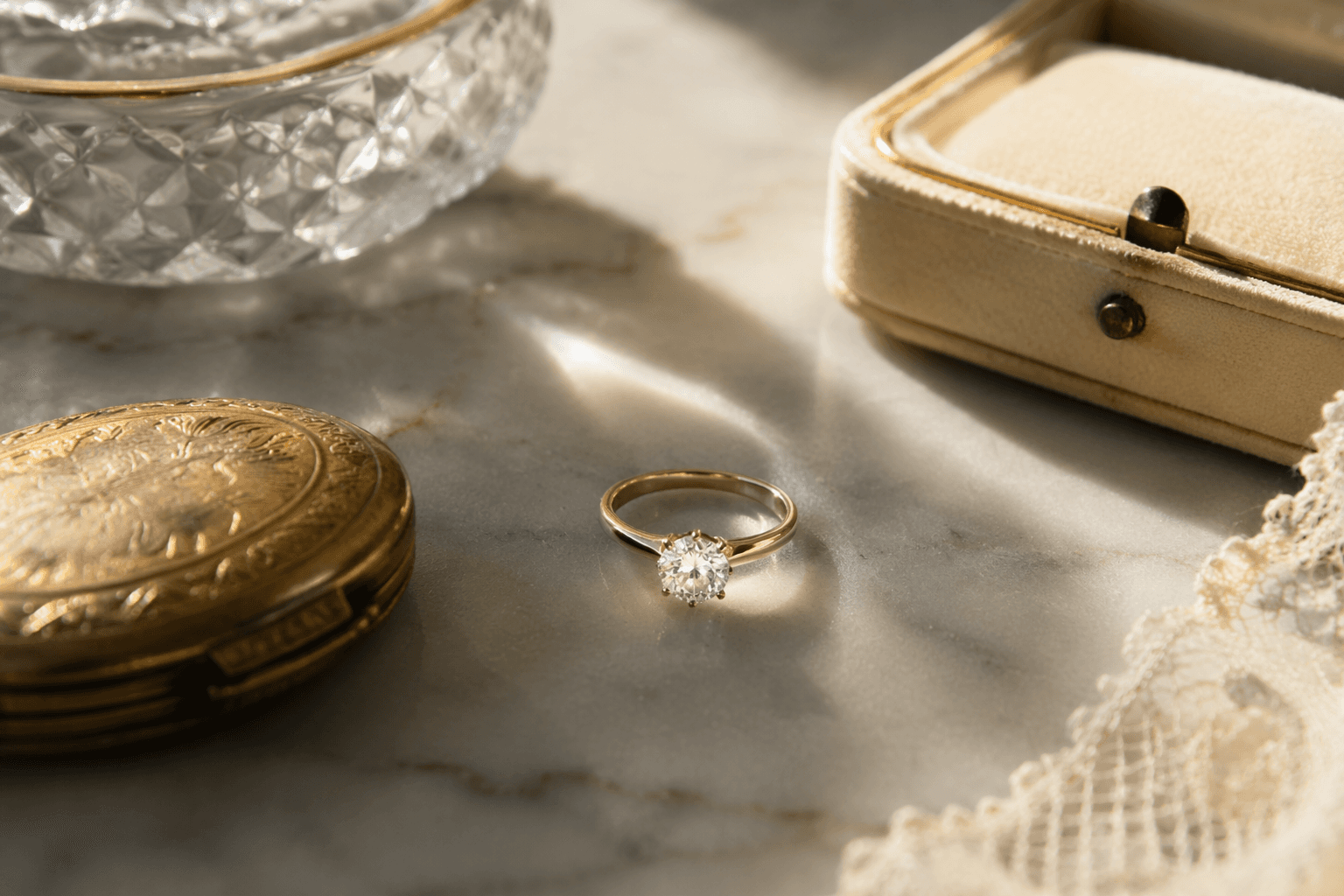
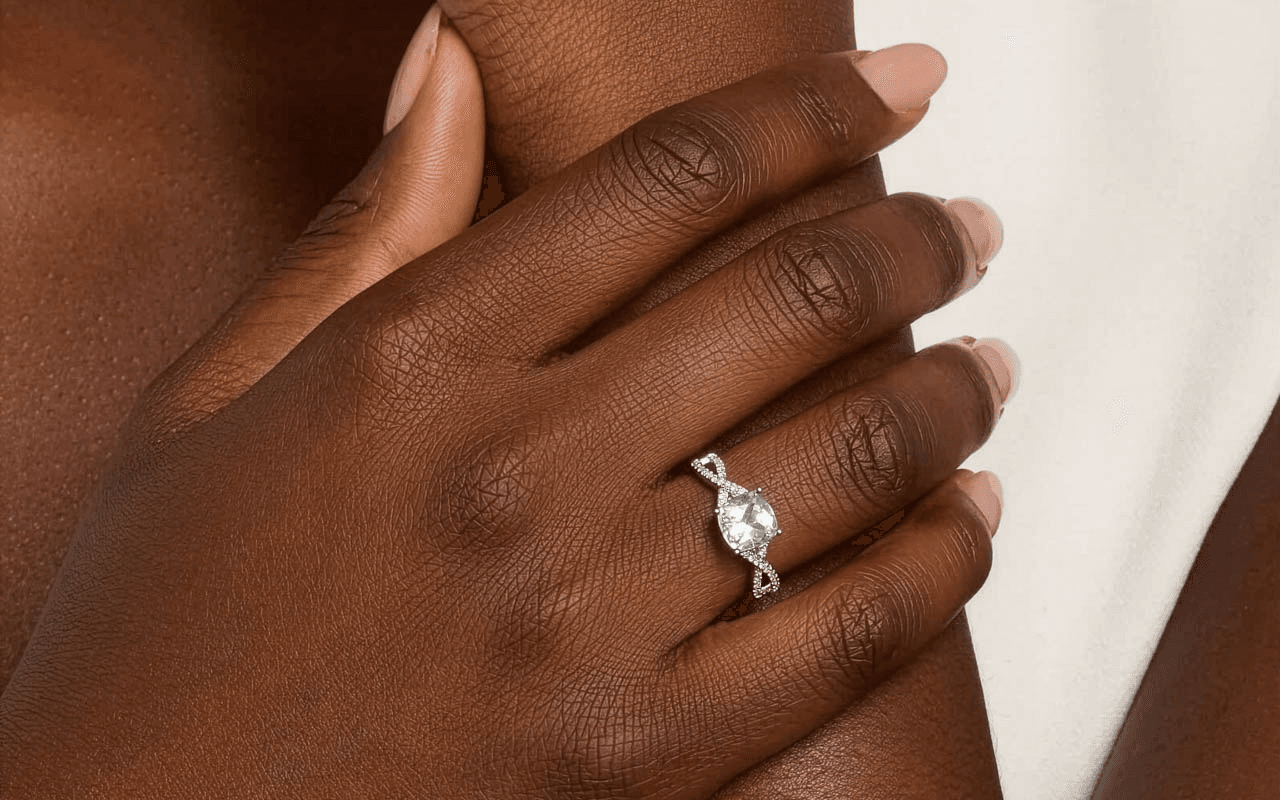
Catherine Allen’s idea of fine jewelry begins with a single diamond ring, one she wears every day and returns to not as an accessory, but as a constant. The ring started with her late grandmother’s diamonds, and on Allen’s 16th birthday her father gave her the stones and the freedom to choose a setting of her own. That gesture made the piece her first real encounter with craftsmanship, and it still reads that way now: personal, restrained, and meant to live on the hand rather than sit in a box.
The heirloom that set the standard
The ring carries more than sentiment because it carries place. Allen’s grandmother owned the Kentucky horse farm that has stayed in the family for more than a century, tying the jewel to the landscape that shaped her childhood. Allen grew up in Lexington, Kentucky, in a blended family of six siblings, with horses always present in the bluegrass region around her. The ring became a private archive of that world, translating inheritance into something she can wear without ceremony, every day.
That is what makes the piece a useful lesson in minimalist jewelry. A simple ring lasts when it is built on memory, not novelty, and when its design leaves room for a life to accumulate around it. Allen’s ring does exactly that: it is specific enough to carry family history, but pared back enough to move from work to errands to evening without ever feeling out of place.
Minimalism with a working life
Allen’s taste for understatement is not a branding pose. She describes herself as the opposite of a jewelry maximalist and says she gravitates toward pieces that are versatile enough for work, the gym, or date night. That instinct matters, because the strongest everyday jewel is rarely the loudest one. It is the piece that can take on different roles in different settings while still feeling like the same signature object.
Her professional life sharpens that preference. Allen works as a school guidance counselor, and after studying exercise science, recreation therapy, and school counseling, she learned how to help people grow and move through challenges. That background helps explain why her jewelry sensibility feels so grounded: she is drawn to objects that hold up to routine, repetition, and real use. In minimalist jewelry, longevity is often less about scarcity than about emotional load and wearability, and Allen’s ring has both.
A horse motif, stripped to its essential line
That same discipline runs through The Gilded Horse, the brand Allen cofounded with her husband, Mitchell, in 2024 while she was on maternity leave with their daughter. The company translates her lifelong connection to horses into necklaces, bracelets, and earrings built around horse-head motifs, but the execution stays controlled rather than ornate. The jewelry is handcrafted in the USA and rooted in Lexington, which gives the line a strong sense of origin without overexplaining itself.
The material palette reinforces that clarity. The Gilded Horse works in sterling silver, 14K solid gold, and diamond accents, a combination that places it squarely in the fine-jewelry lane while preserving the clean silhouettes that make a piece easy to live with. The most effective pieces here are not the most embellished ones, but the ones that understand proportion: a horse motif reduced to a recognizable profile, a pendant scaled to the neck, a medallion that can read as personal rather than precious in the fragile sense.
What the pricing says about the category
The brand’s pricing also tells you how it sees its place in the market. The Classic Anchored horse pendant comes in three sizes and two metals, priced from $675 to $850, which positions it as a considered luxury piece rather than a novelty charm. The Medallion Necklace stretches from $125 in sterling silver to $745 in solid gold and $1,895 in diamond, a range that lets the design move between entry-level precious metal and a far more elevated, stone-set version.
That spread is important because it shows how minimalist jewelry can still offer range without losing identity. The design language remains the same, but material choice changes the mood and the price dramatically. Sterling silver gives the motif an easier, more everyday register; solid gold adds warmth and permanence; diamond pushes the piece into statement territory without abandoning the original form. In a category often crowded with overworked symbols, that restraint is what keeps the pieces legible.
Lexington as the backdrop, not just the address
Allen’s jewelry would not make the same sense anywhere else. Lexington is marketed as the Horse Capital of the World, and VisitLEX says the city has more than 450 horse farms, alongside equine landmarks such as Keeneland and the Kentucky Horse Park. Those are not decorative references in Allen’s story. They are part of the visual and emotional vocabulary of the brand, which makes horse imagery feel local rather than generic.
That connection extends into public appearances as well. The Gilded Horse has shown up around the Kentucky Three-Day Event 2026 at the Kentucky Horse Park, placing the brand in one of the state’s most visible equestrian settings. The effect is subtle but deliberate: the jewelry is meant to sit comfortably in a world that moves between barn and ballroom, between mud and polished metal, between lived-in heritage and polished finish.
The trademark record for The Gilded Horse LLC underscores how quickly that idea became a business. The mark was filed on April 12, 2024, and registered on July 1, 2025, giving the brand formal protection after its launch. That timeline matters because it marks the move from personal heirloom to named design house, with the same family, horse-country, and everyday-wear logic carried into a professional brand identity.
For minimalist jewelry, Allen’s ring is the essential case study. It proves that the most enduring piece is not the most elaborate one, but the one with enough history, versatility, and restraint to become part of the wearer’s uniform.
This article was produced by Prism’s automated news system from verified source data, official records, and press releases, then run through automated quality and moderation checks before publishing. The system is built and supervised by the people who set the standards it runs under. Read our full AI policy.
Did this article answer your question?