Dainty Layered Necklaces to Shop Now, From Minimalist Circles to Delicate Chains
Dainty layered necklaces are having a serious moment right now, with minimalist circles, cable chains, and sinuous snake chains dominating the stack.

A thin gold ring pendant, barely the width of a toothpick, sitting at the collarbone between two fine chains of different lengths: that image has become the defining neckline of 2026. Minimalist layering isn't a new concept, but the way it's being worn right now, with deliberate restraint and considered texture, feels genuinely fresh. The emphasis has shifted from statement-making to quiet intention, and the pieces driving it are accessible, wearable, and built for stacking.
The Case for Dainty Layering
Searches for "layered necklaces" are up 30% year-over-year, and the appetite isn't for chunky maximalism. In 2026, minimalist necklace styles dominate search trends because buyers want jewelry that feels effortless, versatile, and modern, with more people choosing subtle necklaces that work across work, casual, and evening looks. The style isn't trying to compete with your outfit; it completes it.
Layered necklaces have been in the scene for a few years now, and the trend shows no signs of slowing, with fine chains, minimalist pendants, and varying lengths continuing to define the curated look. What's changed is the specificity of what works. The most compelling stacks right now come down to a short list of silhouettes: the open circle, the cable chain, and the snake chain. Each one brings something structurally different to the neckline, and knowing what distinguishes them is the difference between a stack that looks intentional and one that just looks busy.
The Minimalist Circle
The open circle pendant, sometimes called an orbit or halo pendant, is the anchor piece of this moment. Its appeal is almost purely geometric: a fine wire bent into a perfect ring, with no stone, no engraving, just uninterrupted form. It reads as modern without being cold, and it layers naturally because its open silhouette doesn't visually compete with chains running above or below it.
A two-toned interlocking double circle necklace paired with a simple box chain creates a look that feels polished and refined through its mixed metal, multi-layered approach. That combination works precisely because the circle introduces shape while the chain provides texture. When worn at 18 inches, a circle pendant sits just below the collarbone, leaving room for a shorter 16-inch base chain to define the collarbone itself. A 16-inch chain sits at the collarbone and works for most body types, while 18 inches sits just below the collarbone and is ideal for layering.
Cable Chains: The Foundation Piece
A cable chain is a series of small oval rings linked together, making it an ideal choice to host charms or pendants. It's the most structurally versatile option in the minimalist toolkit: understated enough to disappear into a stack, but refined enough to wear alone. Cable and box chains are incredibly versatile and work with virtually any neckline, and for daily wear, they are incredibly durable and low-maintenance.
The key to layering necklace chains is texture and contrast. Starting with a dainty cable chain, adding a chunkier, shorter chain for contrast, or choosing another delicate chain with a different texture creates depth. Keeping bolder chains at a shorter length with daintier necklaces at a longer length tends to look more harmonious and balanced.
From a materials standpoint, this is where the accessible end of the market does a lot of heavy lifting. Gold-filled jewelry has 100 times more gold than gold-plated pieces, with a 5% gold content versus 0.05%, and the gold layer is bonded to a base metal core through heat and pressure rather than simply dipped. For anyone building a layering stack on a modest budget, gold-filled cable chains at 16 or 18 inches represent the most sensible starting point.
Snake Chains: Fluid Minimalism
The snake chain is cable's more sinuous counterpart. Snake chains have a smooth, fluid appearance created by tightly connected metal plates that move like liquid. These chains drape beautifully and feel almost weightless against the skin, and they work wonderfully for layering because of their slim profile and graceful movement.
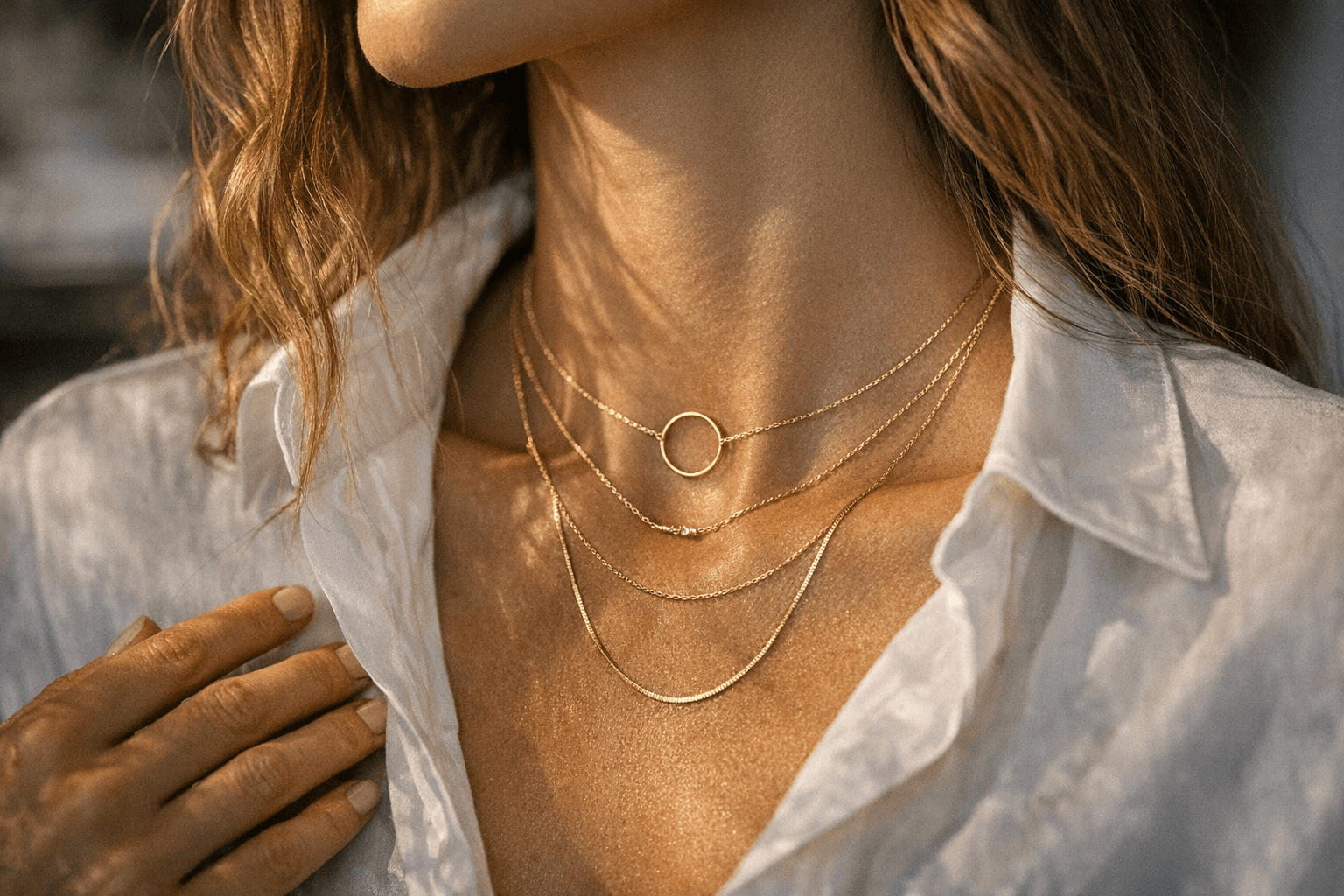
Where a cable chain has a slightly faceted, light-catching texture, a snake chain reads as pure surface: smooth, reflective, almost ribbon-like. That difference matters when you're building a stack. Mixing different chain types for interesting texture combinations, such as pairing a smooth snake chain with a textured rope chain, creates visual interest while still keeping the overall look coherent. In gold vermeil or sterling silver, a 1mm snake chain worn at 20 inches beneath a circle pendant and a 16-inch cable chain creates a three-piece stack that achieves genuine dimension without adding visual weight.
Mixing Metals Without Chaos
One of the most persistent myths in minimalist jewelry is that your metals must match. Mixing metals is not just accepted in 2026; it's encouraged as a sophisticated way to add depth and interest to a necklace stack. The key is intentionality and balance, aiming for a deliberate blend that feels cohesive rather than chaotic.
A popular approach is to choose a dominant metal and then introduce accents of another. Starting with two or three gold pieces, then introducing a single silver or rose gold piece to break up the monochrome, adds dimension without undermining the overall aesthetic. For dainty layering specifically, this translates easily: a gold cable chain base, a silver snake chain at mid-length, and a gold circle pendant at 18 inches creates just enough contrast to make each piece readable while still reading as a unified composition.
Length and Layering Logic
The architecture of a well-executed dainty stack follows a simple principle: each layer needs its own space. The trend is to wear three to four chains of different lengths layered together for a cool yet classic appeal. In practice, that means staggering lengths by at least two inches between each piece.
Starting with a short chain close to the neckline, then adding mid-length and longer chains, and mixing textures and chain styles to add depth, with a meaningful pendant or charm for a personal touch, is the framework that underpins every successful stack. A choker or 14-inch piece anchors the neck. A 16-inch cable chain defines the collarbone. A circle pendant or snake chain at 18 to 20 inches creates the drop that draws the eye down without overwhelming. Three layers, each with a distinct character, each with room to breathe.
Material and Longevity
For anyone serious about building a stack they'll still be wearing in five years, material choice matters more than price point. Gold-filled is the best material for everyday necklaces because it's waterproof, won't tarnish, and lasts 10 to 30 years, while costing a fraction of solid gold while looking identical. Solid 14k gold is the most durable option across all wear conditions, but gold-filled pieces at 16 or 18 inches remain the most practical entry point for a well-considered layering stack.
A common mistake is choosing chains that are too thin and fragile, and another is ignoring clasp quality. With dainty pieces, a lobster clasp that functions reliably is as important as the chain itself. The most beautiful circle pendant is useless if the necklace it's attached to opens unexpectedly. When shopping at the accessible end of the market, particularly through Amazon or mid-range retailers, clasp construction is the detail most likely to be compromised to hit a price point; it's worth checking before buying.
The dainty layered stack at its best is not an accumulation of jewelry. It's a considered arrangement of geometry, texture, and light, where a circle, a cable chain, and a snake chain each contribute something the others can't. The pieces are quiet. The effect, when it's done right, is anything but.
This article was produced by Prism’s automated news system from verified source data, official records, and press releases, then run through automated quality and moderation checks before publishing. The system is built and supervised by the people who set the standards it runs under. Read our full AI policy.
Did this article answer your question?


