Gold Jewelry Gains Appeal as Sculptural, Investment-Minded Pieces Rise
Gold is being worn like a small store of value, not a throwaway trend, and the strongest pieces are sculptural forms that do not need stones to speak.
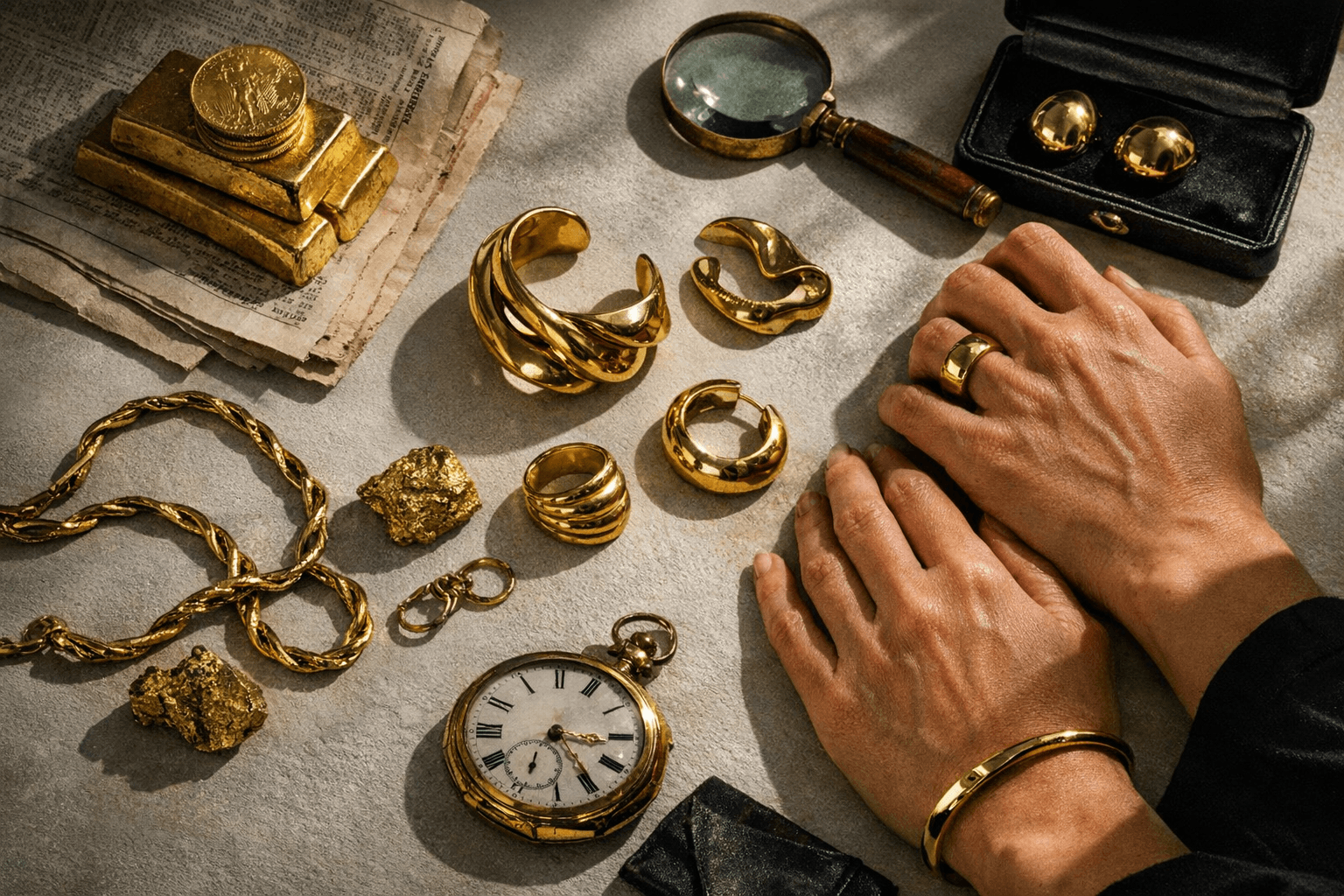
Why gold suddenly feels like the practical choice
Gold is looking less like decoration and more like a decision. In a volatile market, that matters: Randi Molofsky says consumers are wanting gold more than ever, and rising prices have taught buyers to think about jewelry as something with lasting value, not just an outfit finish. She compares the mood to the COVID era, when people spent on jewelry instead of travel or other discretionary luxuries because it felt permanent, and that logic is back in force.
Molofsky, who founded the Los Angeles and New York City branding agency For Future Reference and serves as JCK’s longtime jewelry director, says she has not seen demand dip. Brands she works with are leaning into gold-heavy collections for Las Vegas, and they are keeping the metal at 18k rather than making pieces lighter or hollow. That detail matters. It tells you these are not mood-board baubles built to photograph well and disappear in the hand. They are meant to carry weight, literally and symbolically.
What sculptural gold is replacing
For spring ’26, gold is showing up in oversized, sculptural forms, often with no gemstones and no diamonds at all. The appeal is not excess for its own sake. It is the clean force of a single shape doing the work that once required layering, sparkle, or a stack of mixed metals. In that sense, sculptural gold is becoming the new minimalist statement piece: pared back in components, but not in presence.
That shift lines up with the broader conversation around 2026 jewelry. JCK’s runway roundup framed the season around intentionality, scale, and high-fashion function, with Balenciaga, Michael Kors, Ralph Lauren, Tory Burch, Hermès, Miu Miu, Coperni, and Coach all showing versions of sculptural metal, statement pendants, and utility-driven adornment. The message is clear: jewelry is moving toward form, not clutter. A single cuff, a molten hoop, or a heavy pendant can now stand in for the whole language of layering.
How to tell wearable sculpture from runway fantasy
The difference between a piece that lives on the runway and one that earns space in a real wardrobe usually comes down to proportion, weight, and restraint. The best sculptural gold pieces still move with the body. They sit close enough to the neck, wrist, or ear to feel intentional, not theatrical, and they keep the silhouette clean enough to work with a white shirt, a fine-gauge knit, or a black blazer.
A useful filter is this:
- Choose solid-feeling construction over gimmicks. Molofsky’s emphasis on 18k gold is a clue that substance still reads as luxury.
- Favor one strong shape over decorative noise. A single sweeping curve or irregular form looks more current than multiple competing details.
- Look for pieces without stones if you want the line to stay clean. When gold is already sculptural, diamonds can make it feel overworked.
- Be wary of designs that look dramatic only from the front. The best pieces hold up from the side and back, where the body actually meets the metal.
Jewelers Mutual’s 2026 forecast adds another layer to that reading. It points to soft geometry, fluid shapes, and pieces that feel more like sculpture than ornaments, while also predicting cleaner, more curated stacking and a quiet-luxury mood built around unbranded, high-quality design. In other words, the market is not abandoning minimalism. It is sharpening it.
The new minimalism is not thin, it is decisive
This is where sculptural gold gets interesting for readers who do not want a drawer full of trend pieces. Minimalism used to mean barely-there chains and near-invisible hoops. Now it can mean one bold object worn with discipline. A thick gold collar over a crisp shirt has more editorial force than five necklaces fighting for attention. A single oversized ring can feel more modern than a hand crowded with bands.
Marie Claire UK’s December trend coverage, which singled out sculptural silver as one of the defining jewelry directions for 2026, reinforces the same point from a different metal. The story is not just that gold is rising. It is that shape itself has become the luxury signal. Whether the metal is gold or silver, buyers are gravitating toward pieces that read as wearable art, not disposable ornament.
How to style one standout piece with an ordinary wardrobe
The easiest way to wear this look is to let the jewelry set the tone and keep everything else quiet. Sculptural gold thrives against simple clothes because the contrast makes the silhouette legible. A white T-shirt and tailored trousers give a heavy cuff room to breathe. A ribbed knit makes a molten pendant look even more deliberate. A blazer, buttoned to the waist, turns one strong earring or a compact collar into the full statement.
The trick is not to overload the rest of the outfit with more trend language. If the jewelry is oversized, let the clothing stay clean. If the gold is highly shaped, keep the neckline uncluttered. If the piece is one-of-a-kind, make it the only thing in the frame that asks for attention.
That is why this moment feels so pragmatic as well as beautiful. Buyers are reading gold as both style and storehouse, and designers are responding with pieces that are substantial enough to feel worth keeping. In a season defined by higher prices, softer geometry, and less interest in decoration for decoration’s sake, the most convincing gold is the kind that looks considered on day one and still looks inevitable years later.
This article was produced by Prism’s automated news system from verified source data, official records, and press releases, then run through automated quality and moderation checks before publishing. The system is built and supervised by the people who set the standards it runs under. Read our full AI policy.
Did this article answer your question?


