Gold surge pushes minimalist jewelers toward thinner, smaller collections
Thin chains and smaller runs are replacing heavy gold basics as designers lean on wood, leather and smarter construction to keep minimalism sharp.
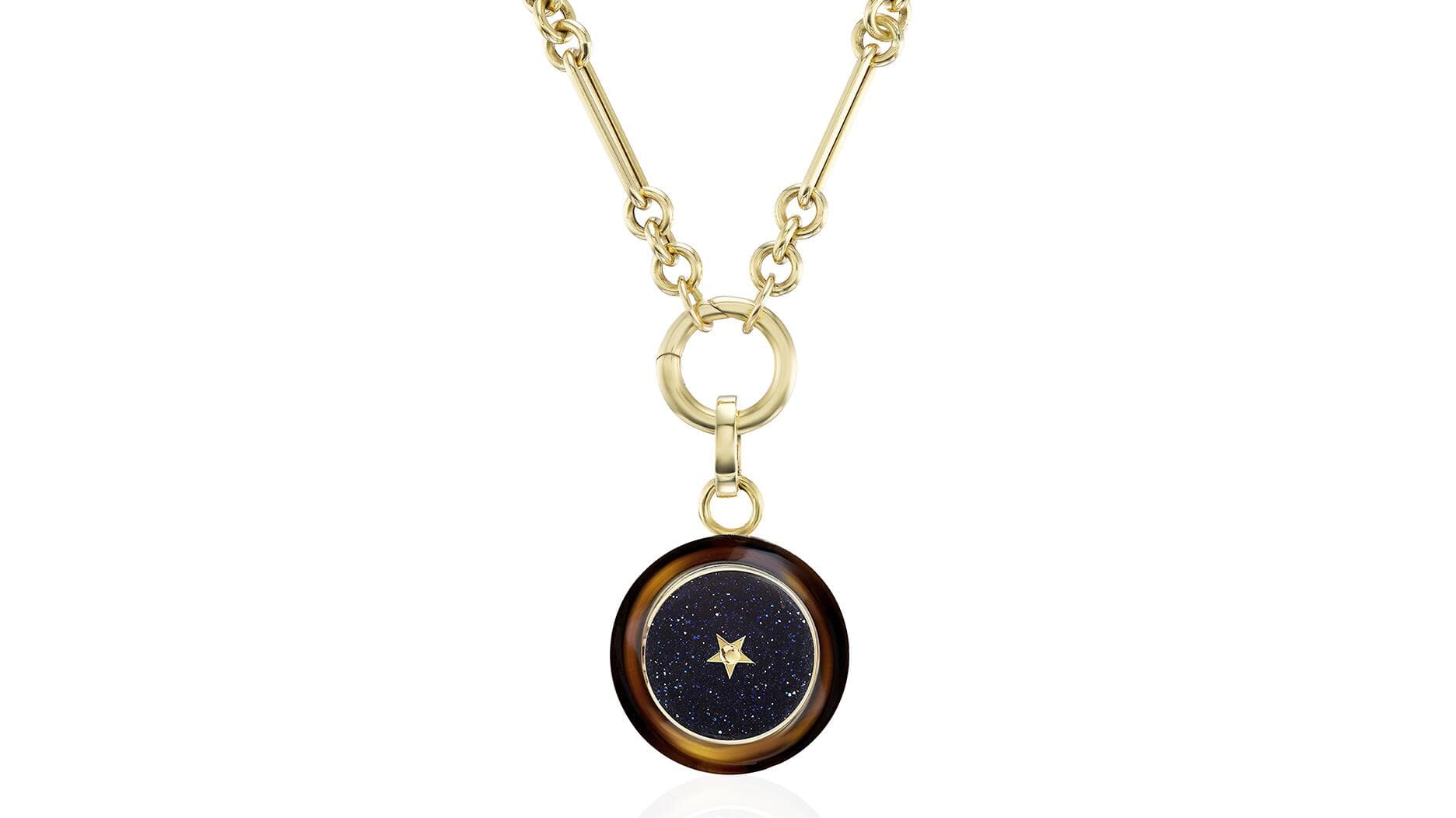
Gold is changing the proportions of minimalist jewelry
The rise in gold prices is not just making minimalist jewelry more expensive. It is changing what minimalism looks like on the body. Designers are cutting back on metal weight, tightening their assortments, and rethinking whether a piece needs to be all gold at all in order to still read as refined.
That shift matters because minimalist jewelry depends on proportion. A thin chain has to hang with intention, a small hoop has to feel crisp rather than flimsy, and a delicate ring has to look resolved, not reduced. The best response to higher gold costs is not to simply make everything smaller. It is to make the line cleaner, the construction smarter, and the collection more disciplined.
Why the market pressure is forcing design decisions
Gold was $2,625 an ounce in 2025. So far in 2026, it has basically doubled, with $5,340 cited as its peak as of press time. Platinum has not offered much relief either, rising from $800 an ounce in 2025 to about $1,960. When both the hero metal and its closest counterpart become more expensive, the pressure reaches beyond pricing and into the structure of the product itself.
That is why designers are narrowing collections instead of flooding the market with variations. Smaller, more intentional assortments reduce risk and force clarity. A brand can no longer rely on volume or on repeatedly repricing the same bangle, chain, or hoop. It has to ask what deserves to exist in the first place, and that question is reshaping the minimalist category from the inside out.
What the strongest designers are doing differently
The most interesting response is not austerity for its own sake. It is flexibility. David Siminski of United Precious Metals has pointed to a market in which gold and the other precious metals are all moving in the same costly direction, and the designers who stand out are the ones who respond with creativity and intent rather than simple markup.
That means thinner pieces, but also better editing. It means fewer styles, but stronger distinctions between them. It means collections that feel assembled, not padded. In minimalist jewelry, where every millimeter counts, that kind of discipline becomes visible immediately: the clasp sits cleaner, the profile reads lighter, and the surface treatment feels deliberate instead of economical.
Materials are broadening the language of minimalism
One of the clearest signs of innovation is the move beyond gold alone. National Jeweler highlighted materials such as wood and leather, a reminder that minimalism does not have to mean metal-only purity. When used well, those materials can soften a design, lower its overall weight, and create a more tactile, less predictable kind of restraint.
For shoppers, that shift is important because it changes the definition of value. A minimalist piece can now be judged not just by how little material it uses, but by how convincingly it balances texture, comfort, and durability. A slim gold element paired with leather, or a restrained gold frame set against wood, can look more contemporary than an all-metal piece that has been stripped down to the point of feeling generic.
How to spot true innovation, not just a smaller version of the same thing
The most convincing minimalist jewelry in this environment does not merely shrink. It solves a design problem. Look for pieces where the reduction in metal is paired with a stronger silhouette, a more thoughtful closure, or a material contrast that gives the piece visual structure.
- Thin chains that still hold their line instead of collapsing into fragility
- Small hoops with clean finishing and a precise hinge or click closure
- Delicate rings with balanced shanks, so they feel intentional rather than underbuilt
- Mixed-material pieces that use wood or leather to create contrast without clutter
- Collections that feel tightly edited, with each style earning its place
This is especially important in minimalist jewelry because excess has always been the enemy. Higher gold prices are simply exposing which brands understood that lesson all along. If a piece still feels elegant after losing weight, that usually means the designer got the architecture right.
Why independents are under the most pressure
Independent fine jewelers are having to move fastest. Sarah Müllertz, founder of the Copenhagen-based Kinraden, called it “a difficult landscape for independent jewelry designers.” That captures the imbalance neatly. Large houses can hedge gold, buy in bulk, and absorb volatility in ways smaller brands cannot.
That difference is pushing independents toward sharper business decisions as well as sharper design. They are rethinking production runs, changing how they position their work, and leaning into originality rather than commodity logic. Some are making the scarcity of the piece part of the appeal. Others are emphasizing the way gold holds value as a material, which gives the purchase a second dimension beyond ornament.
The wider market explains the shift
The broader gold market helps explain why this is happening now. The World Gold Council said total gold demand in 2025, including OTC, exceeded 5,000 tonnes for the first time. It also said gold set 53 new all-time highs during the year, producing an unprecedented value of US$555 billion.
That kind of momentum changes consumer psychology as much as design practice. Gold is no longer just a precious metal in the abstract. It is also an asset with an unusually visible price trajectory, and minimalist jewelers are beginning to treat that reality as part of the story. In this climate, a slim gold bracelet or pared-back pair of earrings can feel less like a decorative afterthought and more like a concentrated choice: less metal, more meaning.
What to buy now
The smartest buys in minimalist jewelry right now are the pieces that look inevitable, not merely reduced. A thin chain should still have presence. A small hoop should still define the ear. A delicate ring should still feel finished from every angle. When gold is expensive, the goal is not to hide the constraint. It is to turn constraint into clarity.
That is why the most compelling minimalist collections are becoming smaller, leaner, and more material-aware. They are not abandoning luxury. They are refining it until every gram, joint, and surface detail has a reason to be there.
This article was produced by Prism’s automated news system from verified source data, official records, and press releases, then run through automated quality and moderation checks before publishing. The system is built and supervised by the people who set the standards it runs under. Read our full AI policy.
Did this article answer your question?


