How to Clean Sterling Silver Jewelry Safely, Step by Step
That dull chain you reached for this morning isn't ruined — it just needs five minutes and the right method. Here's exactly what to do, and what to skip entirely.
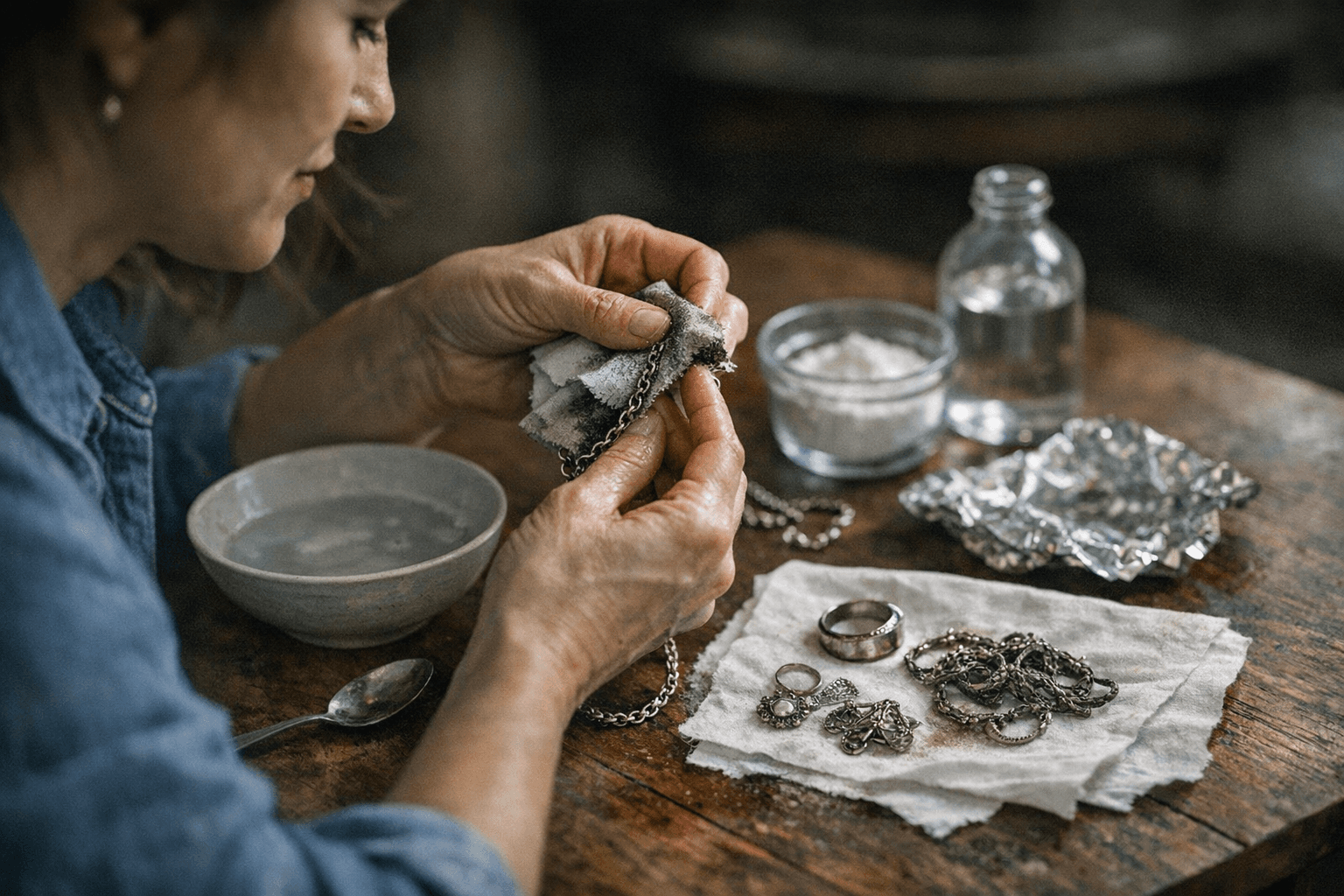
The thin sterling chain you bought yourself last year, the one that sits at the collarbone and catches light in that barely-there way, will tarnish. Not because you're careless, but because sterling silver is engineered to. The alloy is stamped "925" for a reason: it is 92.5% pure silver and 7.5% copper, and that copper is both what gives the metal its durability and what makes it chemically reactive. When copper meets sulfur compounds in the air, your skincare products, or even the eggs you had for breakfast, it forms silver sulfide, the grayish-brown film that turns a dainty stacking ring from luminous to flat. Understanding this reaction is the first step to reversing it cleanly, without the accidental damage that so many well-intentioned kitchen remedies cause.
What Never to Use on Delicate Sterling Silver
The internet is dense with shortcuts, and most of them will cost you. Toothpaste is the most pervasive offender. Toothpaste ingredients including fluoride compounds such as sodium fluoride and stannous fluoride, as well as baking soda, can be corrosive to metal, while hydrogen peroxide, another common toothpaste ingredient, can be reactive with metals and semi-precious stones. On a thin chain or a wire-set ring, that abrasion does not buff away tarnish so much as it scores the surface, creating microscopic scratches that scatter light rather than reflect it. The dullness becomes permanent.
Baking soda paste is another common misstep, and one that requires careful distinction: abrasive cleaners, toothpaste, or baking soda pastes can easily scratch sterling silver's surface. Note the word "paste" — baking soda dissolved in water behaves very differently, and is the basis of the electrolyte method described below. But applied as a gritty scrub, baking soda is too harsh for the fine details of minimalist pieces.
Chlorine and bleach are the most structurally damaging of all. Harsh chemicals like bleach or chlorine can permanently discolor or damage precious metals, which is why you should always remove rings before getting in a pool or hot tub. The chlorine can strip the shine right off gemstones and dull the metal. The same goes for boiling water used without proper context: plunging pieces into boiling water at home can cause thermal shock, and that sudden, extreme temperature change can crack sensitive gemstones like emeralds, opals, and tanzanite, and weaken the structure of settings over time. Acidic household staples, specifically vinegar and lemon juice, round out the list. Acidic substances like vinegar or lemon juice can damage porous gemstones like pearls and opals and may even corrode the metal on plated pieces.
The Everyday Method: Warm Soap and Water
For routine maintenance — after a long day, after a workout, before storing a piece for a week — a mild soap soak is all you need, and it is backed by conservation science. Conservation institutions like the Canadian Conservation Institute recommend washing silver with a mild, non-ionic or anionic detergent diluted in warm water. This is not a compromise method; it is the starting point the professionals use.
1. Mix two or three drops of mild dish soap into a small bowl of warm (not hot) water.
2. Submerge the piece and let it soak for up to five minutes.
3. Use a very soft baby toothbrush to work gently into any textured surfaces, prong bases, or chain links where oils accumulate.
4. Rinse thoroughly under clean warm water, making sure no soap residue remains. Soap film left behind will dull the finish almost as quickly as tarnish.
5. Pat dry with a microfiber cloth. Never use paper towels, polyester, or facial tissue, all of which can leave fine scratches on silver.
This method handles the everyday accumulation of skin oils, perfume residue, and environmental grime that accelerates sulfide formation. Regular cleaning is, functionally, tarnish prevention.
The Deeper Clean: Electrolyte Method for Heavy Tarnish
When a piece has darkened significantly and the soap method is not enough, the aluminum foil and baking soda soak is the most effective at-home option. It works through electrochemistry rather than abrasion: the baking soda dissolved in hot water creates an electrolyte solution, and the aluminum foil acts as the anode in a galvanic reaction that reverses silver sulfide back into silver. The aluminum soak is especially effective at eliminating tarnish caused by sulfur, as it helps separate sulfur and silver atoms.
1. Line a small glass or ceramic bowl with aluminum foil, shiny side up.
2. Dissolve one tablespoon of baking soda per cup of hot water and pour it into the bowl.
3. Place your jewelry in the solution so that each piece is in direct contact with the foil.
4. Leave for two to five minutes. You will see the solution bubble as the reaction begins.
5. Remove carefully — the pieces will be warm. Rinse with cool water and dry thoroughly with a soft cloth.
One critical caveat: the aluminum foil method damages many gemstones including pearls, opals, turquoise, amber, and coral, can loosen silver plating, and removes intentional patina from antique pieces. Use it only on solid sterling silver pieces without gemstones or delicate components.
Pieces with Stones or Glued Settings
A bezel-set opal or a pearl strung on a dainty ring requires a completely different approach. Never submerge jewelry with porous stones like opals, pearls, or turquoise in water, as this can damage the stone and loosen the setting's adhesive. Instead, use a targeted method: dip a cotton swab in a mild soap solution and clean only the metal, steering clear of the stone itself. For the stone, a soft damp cloth, applied with minimal pressure, is sufficient. Glued settings are equally vulnerable — soaking softens the adhesive gradually, and you may not notice the loosening until a stone shifts or is lost entirely.
The Polishing Cloth: Your Between-Cleans Essential
A treated silver polishing cloth does double duty: it lifts light surface tarnish and leaves behind a micro-thin anti-tarnish layer. Rubbing the cloth against the silver metal easily removes grime and tarnish without compromising fine pieces, and professional polishing every three to five years is recommended for designer sterling silver pieces. Use long, back-and-forth strokes rather than circular buffing, which can create swirl marks on a high-polish finish. And one counterintuitive rule almost everyone ignores: never wash your polishing cloth. Washing removes the anti-tarnish treatment. Store used cloths in a sealed bag to prevent transferring sulfur compounds, and replace cloths every six to twelve months with regular use.
Aftercare: Drying, Storage, and Daily Habits
The cleaning itself is only half the equation. How you store silver after cleaning determines how quickly tarnish returns.
- Dry every piece completely before storing. Moisture trapped against metal accelerates sulfide formation dramatically.
- Store pieces in a cool, dark, dry place, ideally in a felt-lined jewelry box. Consider adding silica gel packs, anti-tarnish strips, or even a piece of chalk or charcoal to keep the air inside dry.
- Keep pieces in anti-tarnish cloth pouches or bags, never plastic, which traps moisture and accelerates tarnishing. Store pieces separately to prevent scratching and tangling.
- Keep jewelry separate from oils, lotions, sunscreen, makeup, and perfume. Putting on your jewelry should be the last step in your getting-ready process, after skin and hair products have had time to absorb fully.
- Remove sterling silver before swimming, cleaning with household products, or washing dishes.
When to Stop and See a Jeweler
There is a point at which home cleaning becomes counterproductive. If a sterling silver piece has turned entirely black, household methods may work on pure silver but do not always react the same way with alloys like sterling silver, and they can leave the surface dull or uneven. For high-value or sentimental pieces, the safest option is a professional jeweler who can clean it using controlled, conservation-friendly methods. Professional workshops are equipped with ultrasonic cleaners and specialized polishing compounds calibrated for silver alloys specifically. If a prong looks bent, a stone sits unevenly, or the chain has a weak link, cleaning becomes secondary: structural issues that cleaning can obscure should be addressed before anything else.
A piece of delicate sterling silver is not fragile, but it is specific. It responds best to methods that work with its chemistry rather than against it — and the five minutes it takes to clean it correctly are, in the long run, the reason it stays worth wearing.
This article was produced by Prism’s automated news system from verified source data, official records, and press releases, then run through automated quality and moderation checks before publishing. The system is built and supervised by the people who set the standards it runs under. Read our full AI policy.
Did this article answer your question?


