How to Prevent Silver Tarnish With Safe Storage and Cleaning
Seal silver away from air and moisture, and tarnish slows before it starts. Clean only as gently as the piece allows, especially when stones are involved.
Why silver turns dark in the first place
The fastest way to slow tarnish is also the simplest: keep silver dry, sealed, and out of sulfur-rich air. Sterling silver is 92.5 percent silver and 7.5 percent other metal, usually copper, and that alloy is part of what gives a slender chain or a polished ring its strength. It is also why even beautiful, high-quality pieces can react with the environment and develop that dull gray film that jewelry owners know too well.
Tarnish is not dirt. It is chemistry. Silver reacts with sulfur compounds in the air and forms silver sulfide on the surface, which is why a piece left in a drawer, a dish, or an open pouch can change even when it is rarely worn. That makes storage a bigger issue than most people realize. A necklace may sit untouched for months and still lose its brightness if air and moisture are allowed to work on it.
Store it like you mean to preserve it
The most protective habit is the least dramatic one. Put silver away only when it is dry, then seal it in a zip-top bag with a moisture absorber such as chalk or silica gel. That small barrier matters because it slows the exposure that feeds tarnish, especially in humid rooms, bathroom vanities, and catchall trays where jewelry often lands at the end of the day.
- Dry the piece completely before storing it.
- Place it in a zip-top bag rather than leaving it exposed to open air.
- Add a moisture absorber, such as chalk or silica gel, to reduce humidity inside the bag.
- Keep pieces separated so chains do not knot and polished surfaces do not rub against harder metal edges.
This is the kind of preventative care museums build into routine handling, and for good reason. The Metropolitan Museum of Art describes the care and handling of objects as a shared responsibility among conservators, technicians, collections managers, art handlers, scientists, and curators, and its holdings include more than one million objects, some as small as jewelry. That scale is a reminder that preservation is not a luxury add-on. It is the work that keeps objects legible over time.
Clean sterling silver with restraint
When a piece does need cleaning, the safest approach for everyday silver is usually the gentlest one. A common home method uses aluminum foil, hot water, baking soda, and salt. In this method, the tarnish is lifted through ion exchange, which makes it useful for plain sterling silver that needs a refresh rather than a rescue.
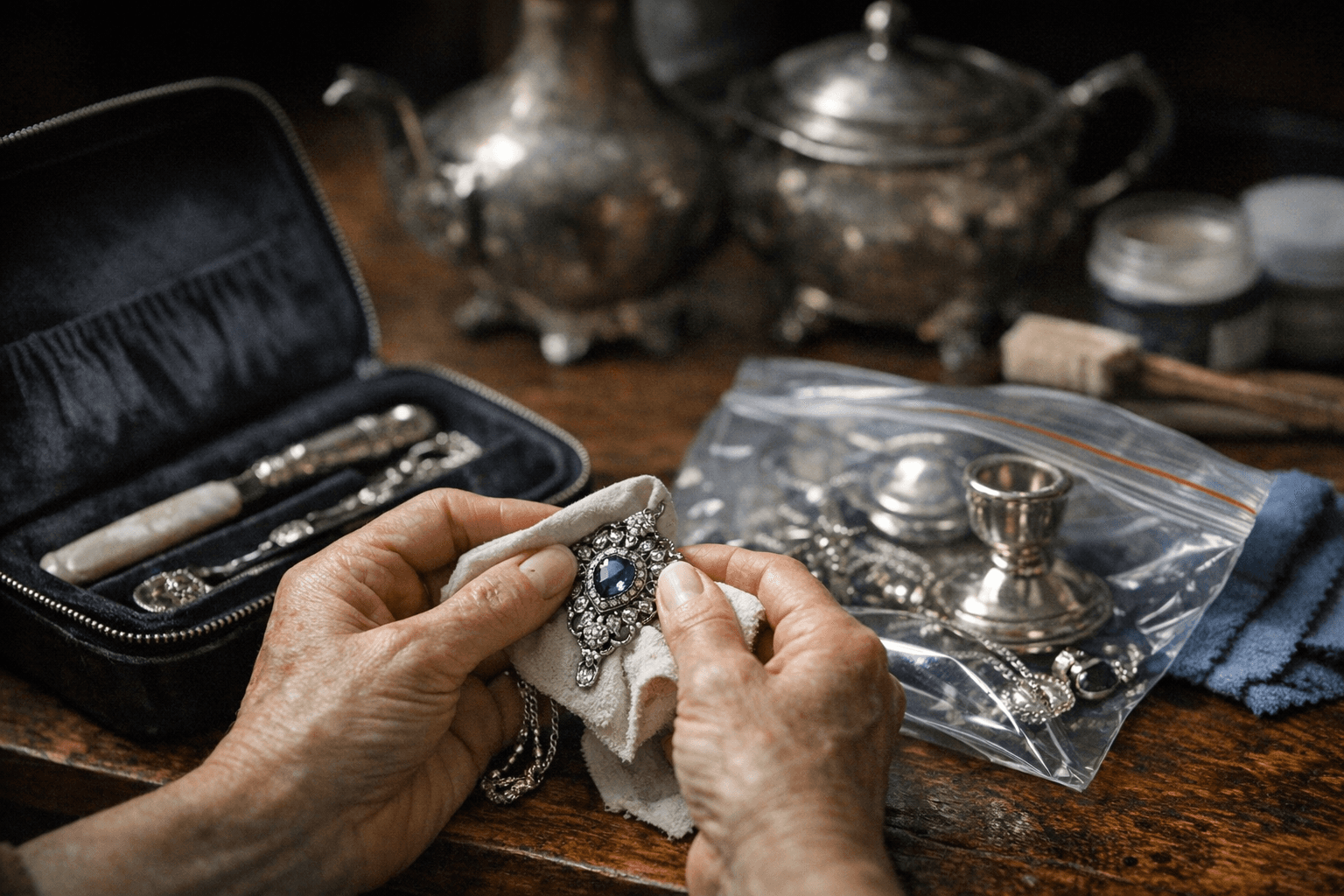
Use it carefully:
1. Line the bottom of a deep, non-metallic container with aluminum foil.
2. Fill the container with hot water.
3. Add baking soda and salt.
4. Place the tarnished sterling silver in the bath, let the chemistry do the work, then rinse and dry the piece thoroughly.
That bath works best for simple silver pieces without fragile add-ons. It is designed for the metal, not for every material that might share the setting. If the piece includes pearls, opals, amber, or porous stones such as turquoise, leave ammonia-based solutions and similarly harsh methods out of the equation. Those materials are more vulnerable than sterling silver itself, and a cleaning shortcut that helps the chain can easily damage the stone or its finish.
Know when the piece is mixed-material, not just silver
Minimalist jewelry often looks uncomplicated, but its construction can be more delicate than it appears. A thin silver pendant may be set with a small cabochon, coated with a finish, or built around a clasp that does not like repeated abrasion. That is why the right cleaning method depends not only on the metal, but also on any gemstones, settings, coatings, or finishes on the piece.
For mixed-material jewelry, think in terms of caution, not speed. If a piece includes porous gems or a fragile surface, the safest choice is the least aggressive one. Mechanical cleaning methods such as ultrasonic, steam, and boiling systems belong in the professional category, not the casual sink-side routine. The same applies when tarnish is severe, or when the piece is especially valuable and worth preserving with more careful handling than repeated scrubbing can offer.
What not to do, even when the silver looks tired
The temptation with tarnished jewelry is to attack the problem until the shine returns. That is the mistake to avoid. Heavy rubbing can be hard on a fine finish, and aggressive cleaning methods can do more damage than the tarnish itself, especially once stones, coatings, or delicate settings are involved.
The cleanest-looking silver is often the piece that has been handled with the most patience. For everyday wear, that means removing moisture before storage, using the foil-and-hot-water method only when the material is appropriate, and stepping back when the piece asks for professional care. A silver chain should not come out of a cleaning session thinner in spirit than it went in.
The real secret is storage
Improper storage speeds tarnish even when jewelry is barely worn, because the enemy is not only use but exposure. Air, moisture, and sulfur compounds keep working in the background whether the piece is on a wrist or sitting in a box. Seal the silver well, keep it dry, and treat cleaning as a precise intervention rather than a ritual of rescue. That is how a minimal piece stays crisp, bright, and ready to be worn without losing the sharpness that makes it beautiful in the first place.
This article was produced by Prism’s automated news system from verified source data, official records, and press releases, then run through automated quality and moderation checks before publishing. The system is built and supervised by the people who set the standards it runs under. Read our full AI policy.
Did this article answer your question?


