How to Tell Real Sterling Silver from Plated Jewelry
A real silver piece should carry the right stamp, feel substantial, and disclose any plating. The magnet helps, but the mark and the metal matter more.
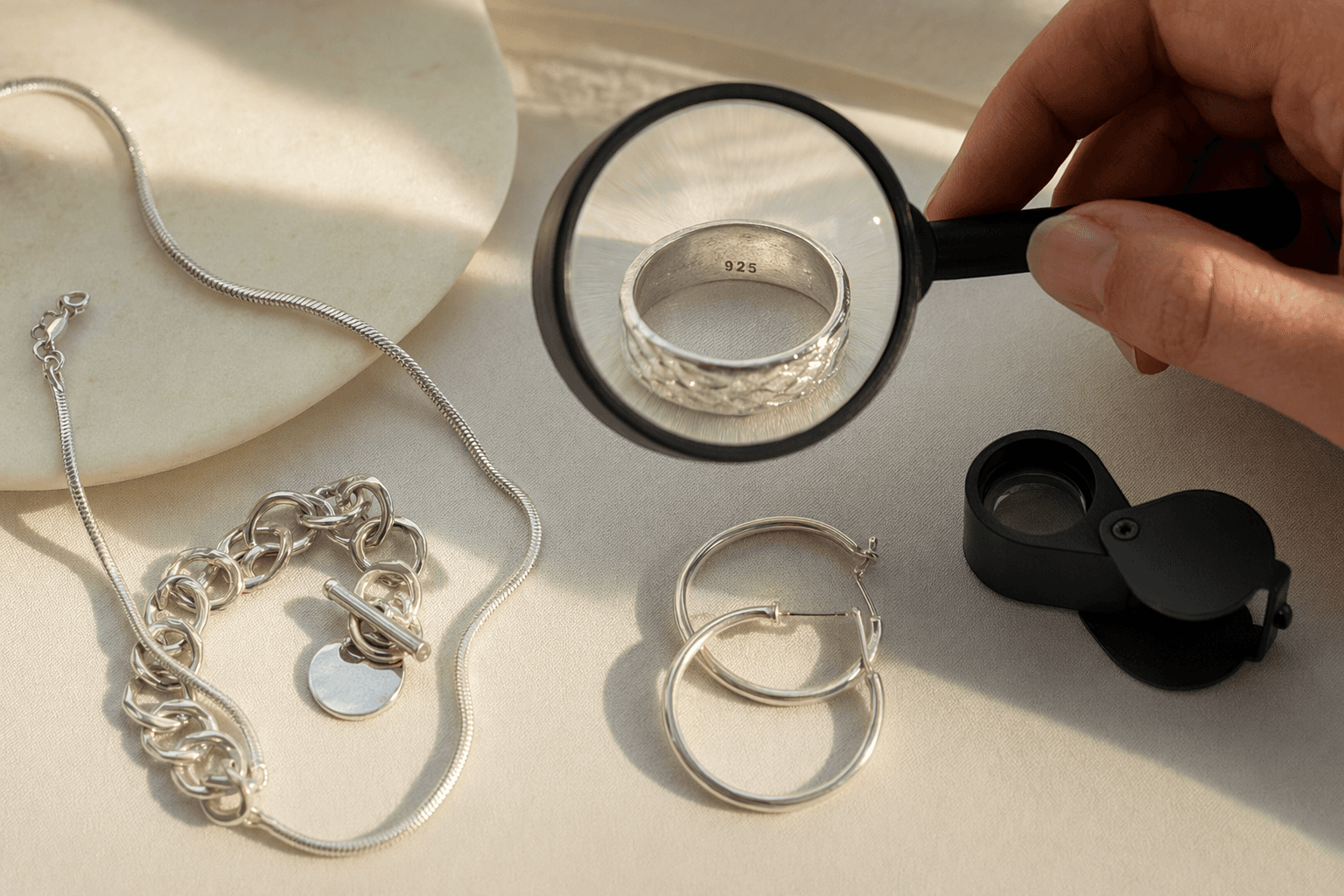
Start with the stamp
The thin sterling chain in your hand is often where the truth begins. A tiny 925 or sterling mark can tell you far more than a polished listing photo ever will, especially when a resale site, a vintage case, or a gift box is trying to convince you with shine alone.
Sterling silver is defined by its alloy: 92.5 percent silver and 7.5 percent another metal, usually copper. That 925 fineness is the number to remember, because it is the standard purity reference for sterling and the quickest clue that a piece may be what it claims to be.
Read the metal, not the marketing
The most useful first check is simple: look for 925, sterling, or sterling silver stamped on the piece. Those markings suggest the item is meant to be sold as sterling, but the stamp still needs to make sense alongside the rest of the piece, because silver-colored is not the same thing as silver content.
That distinction matters under U.S. Federal Trade Commission Jewelry Guides, which cover silver, precious-metal alloys, and imitations. The FTC says it is deceptive to misrepresent a product as containing silver, or to misrepresent silver plating or coating. It also says plated silver products should be disclosed as having only a surface layer of precious metal, which is exactly the kind of language shoppers should look for when a listing seems vague.
For a quick home check, move in this order:
1. Find the stamp first. 925 and sterling are the clearest starting points.
2. Read the listing or receipt next. Words like plated, coated, or silver-toned tell a different story.
3. Check whether the seller identifies the base metal if the piece is not solid sterling.
4. Compare the stamp to the construction. A heavy bangle or chain marked sterling is more plausible than a light piece with no clear disclosure.
Use weight, magnet, and tarnish as supporting clues
Real sterling usually has a satisfying heft. It feels denser than many plated pieces, and that weight is one reason sterling jewelry often reads as quietly luxurious rather than merely shiny. Still, weight alone is not proof, because hollow construction, hollow beads, or heavy plating can complicate the feel of a piece.
The magnet test is useful, but only as one clue. Sterling silver itself is not magnetic, so a strong magnet may help expose a base metal pretending to be silver. But a nonmagnetic result does not guarantee sterling, because some plated pieces also avoid magnetic metals, and mixed components such as clasps, springs, or findings can behave differently from the main body of the jewelry.
Tarnish is another clue, and it is one of the reasons sterling has a particular romance. Because sterling contains copper, it can darken over time, especially in recessed areas, on the underside of a pendant, or along a chain that has not been worn in months. That soft dimming is often part of sterling’s life, while silver-plated pieces may show wear more abruptly, with the finish thinning at edges and revealing a different metal beneath.
Know the silver standards before you pay
Not all silver marks mean the same thing. Sterling is 92.5 percent silver, but Britannica notes that jewelry silver can also refer to an 80 percent silver, 20 percent copper alloy, often described as 800 fine. Coin silver is different again, usually 90 percent silver and 10 percent copper.
That hierarchy matters when you are comparing vintage finds or resale listings. A piece marked 800 or coin silver may still be genuine silver, but it is not sterling, and it should be priced, described, and cared for accordingly. For a buyer, the number on the metal is not trivia, it is the difference between a true sterling jewel, a lower-grade silver alloy, and something that is only silver in color.
Hallmarks, history, and why regulation matters
Britain’s hallmarking system shows how long silver authenticity has been treated as a consumer issue, not just an aesthetic one. Hallmarks are official marks that indicate metal purity, and in Great Britain most articles must be hallmarked before sale, with some exemptions. The mark means the silver has been sampled and tested at an authorized assay office, a level of accountability that gives the buyer far more than a pretty surface.
That tradition has deep roots. Britannica traces the word sterling to medieval England, with one theory linking it to coinage reforms under Henry II between 1154 and 1189, and another to the Old English word steorling. However the word developed, the idea behind it has stayed remarkably modern: silver should be identifiable, testable, and honestly described.
How to shop wisely for resale, vintage, and gifts
On a resale site, the safest pieces are the ones that tell a consistent story. The stamp, the weight, the wear pattern, and the seller’s description should all line up. On vintage jewelry, that matters even more, because older silver can carry different standards, and a mark like 800 or coin silver may be authentic without being sterling.
For gifting, the practical question is not just whether the jewelry looks silver. It is whether the piece has the material value it appears to promise. A sterling chain can be cherished, repaired, and resold with more confidence than a silver-toned trinket whose finish may wear away. If the listing uses slippery language, such as silver-colored or silver-plated without clear disclosure, assume the shine is cosmetic until proven otherwise.
- Trust the stamp, but verify it with weight and wear.
- Treat the magnet as a clue, not a verdict.
- Expect sterling to tarnish over time.
- Remember that plated jewelry must be disclosed as plated.
- When in doubt, ask whether the piece is sterling silver, silver-plated, or merely silver-toned.
A quick, reliable habit makes all the difference:
The difference is not subtle once you know where to look. Real sterling is a material claim, a legal claim, and a craft claim all at once, while plated jewelry is only borrowing the language of silver for the surface alone.
This article was produced by Prism’s automated news system from verified source data, official records, and press releases, then run through automated quality and moderation checks before publishing. The system is built and supervised by the people who set the standards it runs under. Read our full AI policy.
Did this article answer your question?


