How to Wear Minimalist Jewelry at Work: Scale, Placement, Subtlety
Keep one small focal piece, place it deliberately, and favor quiet craftsmanship so minimalist jewelry reads professional and considered.
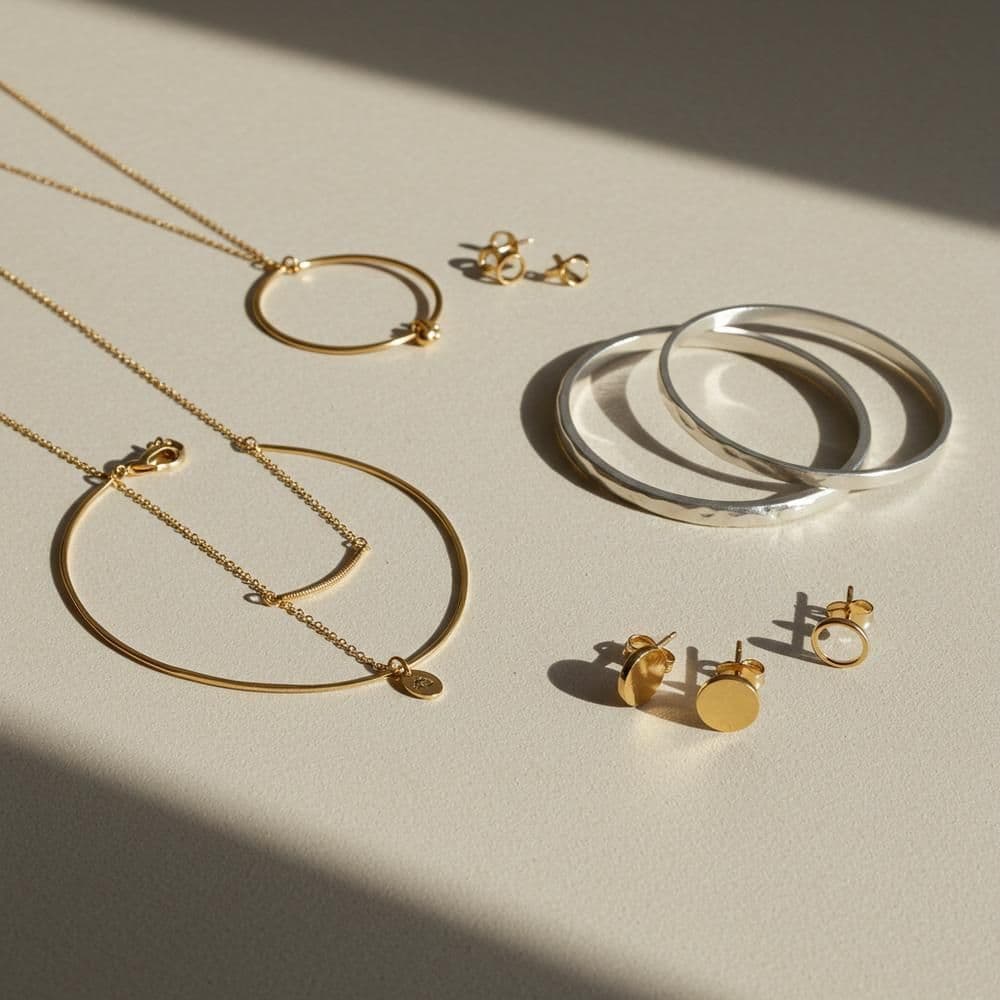
A compact, practical guide to wearing minimalist jewelry in professional settings without undermining the clean, subtle aesthetic. Minimalist jewelry at work is less about absence and more about intention: choose one restrained point of focus, place it for conversation and comfort, and favor finishes and settings that read refined at arm’s length.
1. Scale
Scale begins with the simple principle captured in the core playbook: choose small focal points, a single dainty pendant. A pendant no larger than a fingertip or a single bezel-set stud creates presence without competing with your wardrobe; it reads as deliberate rather than accidental. For rings and bracelets, opt for low-profile bands and narrow bangles that sit close to the wrist, these maintain the streamlined silhouette minimalism requires and avoid clinking or catching during meetings. Small gemstones, think single melee diamonds or cabochon sapphires under 3–4 mm in appearance, register on camera and in person without announcing themselves; the result is a professional silhouette that complements rather than distracts.
- Keep one piece slightly more prominent (a pendant, a signet, a watch) and scale all accompanying pieces down to half or less of its visual weight.
- Favor single-stone pieces or plain metal forms over clusters or oversized motifs to preserve a minimal line.
2. Placement
Placement is the practical half of minimalism: where you put jewelry determines how people perceive it. Place that single dainty pendant at the collarbone or just below the neckline so it sits in your line of sight and frames your face; a pendant tucked too far down becomes a forgotten accessory and undermines the clean, subtle aesthetic you’re cultivating. For ears, stick to one pair of small studs or short huggies; if you wear a stud, let it be the only ear focal point, or complement it with a tiny second earring that mirrors the same metal and finish. On hands, keep stacking to two low-profile bands per hand at most, and place rings so that the dominant piece is on the hand you use less for gesturing, this reduces visual noise during presentations.
- Neck: center a dainty pendant with a 16–18 inch chain for most necklines; shorter chains read crisp under collared shirts.
- Ears: choose studs or sub-12 mm huggies to keep attention in the face rather than the hair.
- Wrists/hands: a thin bangle or a slim-link watch paired with one narrow ring reads intentional rather than cluttered.
3. Subtlety
Subtlety is craftsmanship wearing a whisper. The clean, subtle aesthetic depends on finishes, settings, and proportion: high-polish gold or satin-finished white metal reads more refined than high-shine costume plating, and solid-gold weight carries both tactile quality and visual confidence. When a gemstone is used, a bezel setting is often preferable in workplace pieces because it secures and protects the stone, presenting a smooth silhouette; prong settings can be appropriate, but choose low-profile prongs to avoid catching on fabric. Small diamonds or colored stones set flush or in micro-pavé must be executed cleanly, well-cut stones with precise setting work look luminous without being flashy, which is the essence of subtlety.
- Metal choice: warm yellow gold reads softer under warm lighting, while white gold or platinum integrates with cool-toned suiting; choose metal to harmonize with your wardrobe palette.
- Settings: favor bezels or flush settings for daily wear; use prongs sparingly and keep stone sizes modest.
4. Material honesty and maintenance
Minimalist jewelry shows its quality in the details: weight, finish, and the honesty of materials. Solid metals (14k or 18k gold, platinum) will patina and wear predictably; vermeil and gold plating can be beautiful but require more frequent maintenance if worn daily. If you choose a “compact, practical” piece for work, plan for regular servicing, tightening prongs, checking bezels, and polishing finishes, to keep it looking considered and to protect small stones from loss. The investment return in minimalist pieces lies in their longevity: a well-made gold chain and a perfectly set stud will integrate into every outfit for years.

- Look for hallmarks and maker’s stamps; they signal metal purity and help value retention.
- Keep a small jewelry roll at work or in your bag for safe storage during lunch or travel.
5. Layering with restraint
Layering need not be antithetical to minimalism; it is an exercise in proportion and repetition. If you layer necklaces, make each one visibly lighter than the one above it and maintain a maximum of three chains, with the single dainty pendant as the anchor piece. Repeat metal and form, two narrow gold bands plus a gold pendant, or a slim chain with a tiny pearl and a matching stud, so the eye reads a curated set rather than a collection of competing accents. When in doubt, remove the extra layer; an intentional absence often communicates sophistication in the workplace more effectively than additional adornment.
- Limit layers to three or fewer and maintain a single metal tone for cohesiveness.
- Use different textures (satiny chain, cable chain, box chain) sparingly to create depth without distraction.
6. Practical considerations for daily wear
Minimalist jewelry must survive the rhythms of a workday: typing, phone calls, coffee, and commuting. Choose settings that resist snagging, bezels and flush mounts, and prefer closed-back studs and secure clasps; lobster clasps or spring rings with safety catches offer practical reliability. If your role involves frequent handwashing or wearing gloves, consider single polished bands or ceramic-accent pieces that tolerate frequent cleaning. Keep an itemized list and photographs of higher-value pieces for insurance and servicing needs; simple documentation preserves both value and peace of mind.
- Prefer low-profile clasps and settings to reduce wear and tear.
- Reserve delicate micro-pavé or fringe details for special meetings or after-hours occasions rather than every day.
Conclusion Wearing minimalist jewelry at work is an act of selective restraint: choose one small focal piece, a single dainty pendant, a flawless stud, a slim watch, place it where it punctuates your presence, and trust subtle craftsmanship to do the talking. The clean, subtle aesthetic is not about invisibility; it’s about making a quiet, enduring statement through scale, placement, and material honesty. Invest in pieces that are well set, responsibly made, and easy to maintain, and they will repay you with composure and clarity in every professional setting.
This article was produced by Prism’s automated news system from verified source data, official records, and press releases, then run through automated quality and moderation checks before publishing. The system is built and supervised by the people who set the standards it runs under. Read our full AI policy.
Did this article answer your question?


