Huggie earrings define the minimalist sweet spot for everyday wear
Huggies solve the minimalist earring problem: they sit close, stay comfortable, and stack cleanly from office hours to a second piercing.
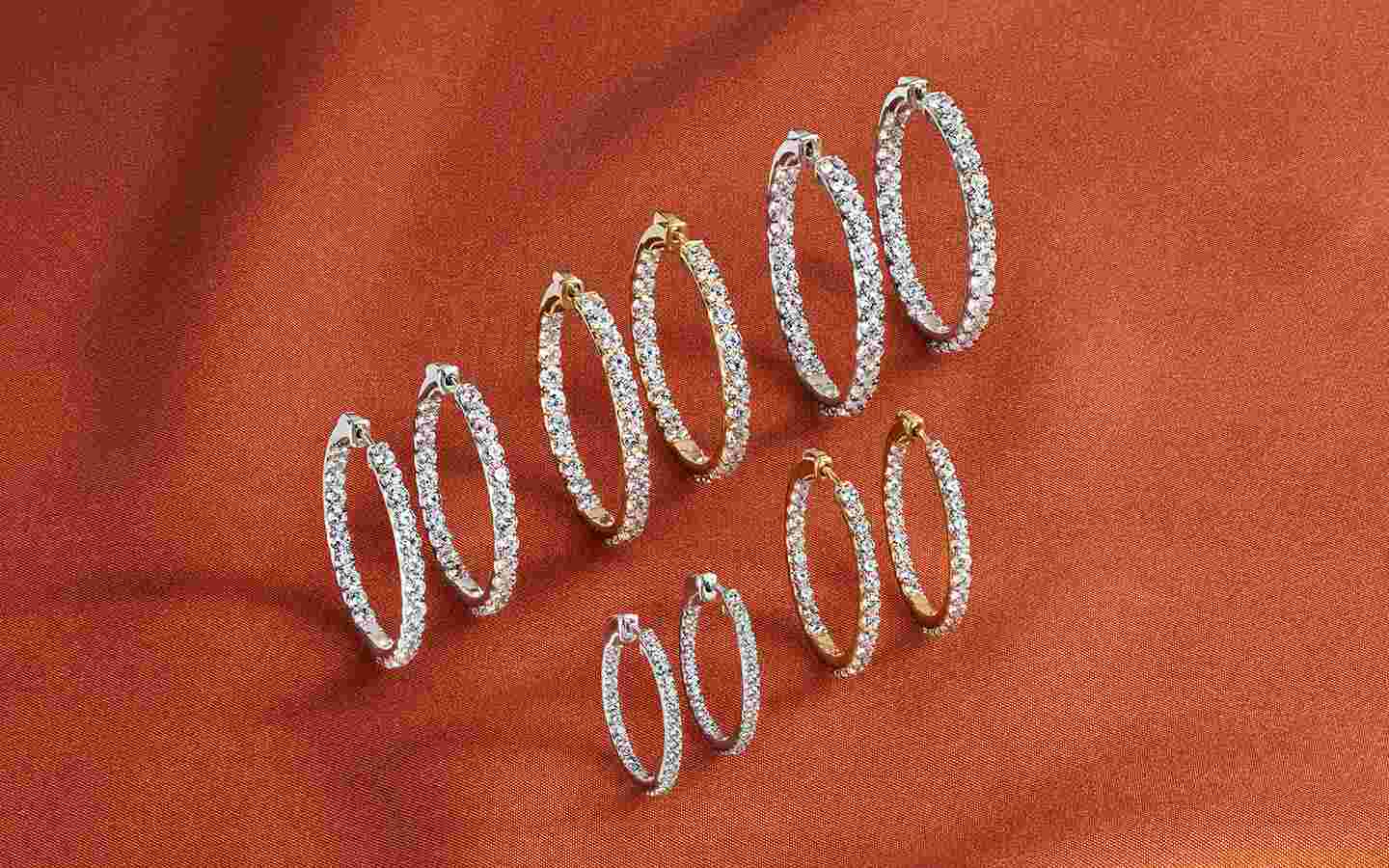
A huggie’s appeal begins with a single, exacting detail: the hoop does not swing far from the lobe. That snug geometry is what gives the silhouette its authority, because it stays visually quiet while still reading as jewelry, not an afterthought. In the minimalist wardrobe, that balance is rare, and it is why huggies have become the small hoop that can do the most.
Why scale is the whole story
The category makes sense when you look at the millimeters. Monica Vinader’s size guide places mini huggies at 9 to 10 mm, huggies at 11 to 14 mm, and small hoops at 15 to 20 mm, which draws a clean boundary between a true huggie and a more visible hoop. That difference matters in practice: once the diameter grows, the earring stops hugging the ear and starts projecting away from it.
Blue Nile describes huggies as small-diameter hoops that sit snugly on the earlobe, and Studs calls them a smaller version of the classic hoop made to hug the ear. Those definitions sound simple, but they explain why the style reads so neatly in a minimalist rotation. A huggie gives you the line of a hoop with less movement, less bulk, and less visual interruption around the face.
The daily-wear advantage
For everyday wear, the chief advantage is comfort. Blue Nile notes that the close fit makes huggies comfortable for frequent wear, and that is exactly where larger hoops can lose ground. A bigger hoop catches on scarves, hair, sunglasses, and jacket collars; a snug huggie stays tucked in place and keeps its profile low from morning to night.
That makes the style especially useful for office dressing, where polish has to survive long hours and constant motion. A huggie can sit beside a white shirt collar or a blazer lapel without competing with either. It is present, but not loud, which is the quality many people want from a weekday earring that has to work as hard as a watch.
Travel is another setting where huggies outperform larger hoops. They are less likely to snag during a long flight, a packed commute, or a day spent taking earrings in and out for security and sleep. Because they stay close to the ear, they also feel more discreet when you are wearing headphones, a scarf, or a high-neck knit.

Sleeping is where the difference becomes most obvious. A hoop that extends farther from the ear can press into the side of the head, but a huggie’s compact curve reduces that awkward angle. The style was built for frequent wear, and that includes the hours when jewelry should almost disappear.
How huggies fit the curated ear
The modern ear is rarely styled as a single point of light anymore. Retail Dive has described the “curated ear” as a mix of multiple piercings and different jewelry types, and huggies are one of the cleanest building blocks for that look. Their scale makes them ideal in a second or third piercing, where a larger hoop can overwhelm the ear and a stud can feel too static.
That is also why huggies work so well as the base layer in an ear stack. Blue Nile notes that small huggies can be worn alone or paired with studs, while Who What Wear has described them as teeny-tiny hoops that can stand alone or work across second, third, or fourth piercings. The result is a practical styling system: one huggie in the first hole, a diamond stud or tiny pearl in the second, and the ear suddenly has rhythm without excess.
Studs has leaned into this logic with its Earscape styling language, which treats huggies as part of a broader composition rather than a single isolated purchase. That framing fits the way people actually wear them. A huggie can be the anchor that makes a mixed ear feel intentional, not crowded.
Materials keep the look minimal, not bland
The silhouette is only half the equation. Material choice determines whether a huggie feels crisp, soft, warm, or slightly more jeweled. Monica Vinader offers the style in gold, sterling silver, and rose gold, while Blue Nile positions huggies in platinum, gold, and silver, a range that keeps the category firmly inside minimalist territory.

Tiffany & Co. shows how the same compact form can move a little more polished without losing restraint. Its T:T1 Half Pavé Diamond Huggie Earrings in Yellow Gold are crafted in 18k yellow gold with a beveled edge traced with pavé diamonds. The diamonds add light, but the silhouette remains contained, which is the whole appeal of the category when it is done well.
Tiffany’s hoop-earring pages also place huggies and small hoops inside the jewelry box canon, describing hoops as an essential that works for day or night. That positioning is useful because it clarifies the stylistic range: huggies can be the plain gold pair you wear every day, or the slightly more finished version you choose when you want something cleaner than a drop earring but more defined than a stud.
What to look for before you buy
The best huggie is not just the prettiest one. It is the pair whose diameter, metal, and closure suit the way your ear is actually shaped and worn. A 9 to 10 mm mini huggie will sit tighter and look more discreet; an 11 to 14 mm version has a little more presence while still reading as compact. Once you move into the 15 to 20 mm range, you are closer to a small hoop than a true huggie.
The market also makes clear that this is not an all-or-nothing category. Studs sells earrings in singles and pairs, with prices ranging from $10 to $99, and its huggie assortment runs from simple micro styles to more embellished versions. That spread shows why the style reaches so many wardrobes: the entry point is accessible, but the form can still support precious metal, higher polish, and finer craftsmanship.
For a minimalist jewelry collection, huggies answer a very specific problem. They give you the clean line of a hoop without the drag of a larger circle, the comfort of a close fit without the severity of a stud, and enough flexibility to move from solo wear to layered styling. In jewelry, that kind of precision is not a compromise. It is the point.
This article was produced by Prism’s automated news system from verified source data, official records, and press releases, then run through automated quality and moderation checks before publishing. The system is built and supervised by the people who set the standards it runs under. Read our full AI policy.
Did this article answer your question?