Why tennis bracelets are the ultimate minimalist sparkle
A tennis bracelet can be the cleanest way to wear sparkle: the right carat weight, setting, and clasp keep it polished instead of loud.
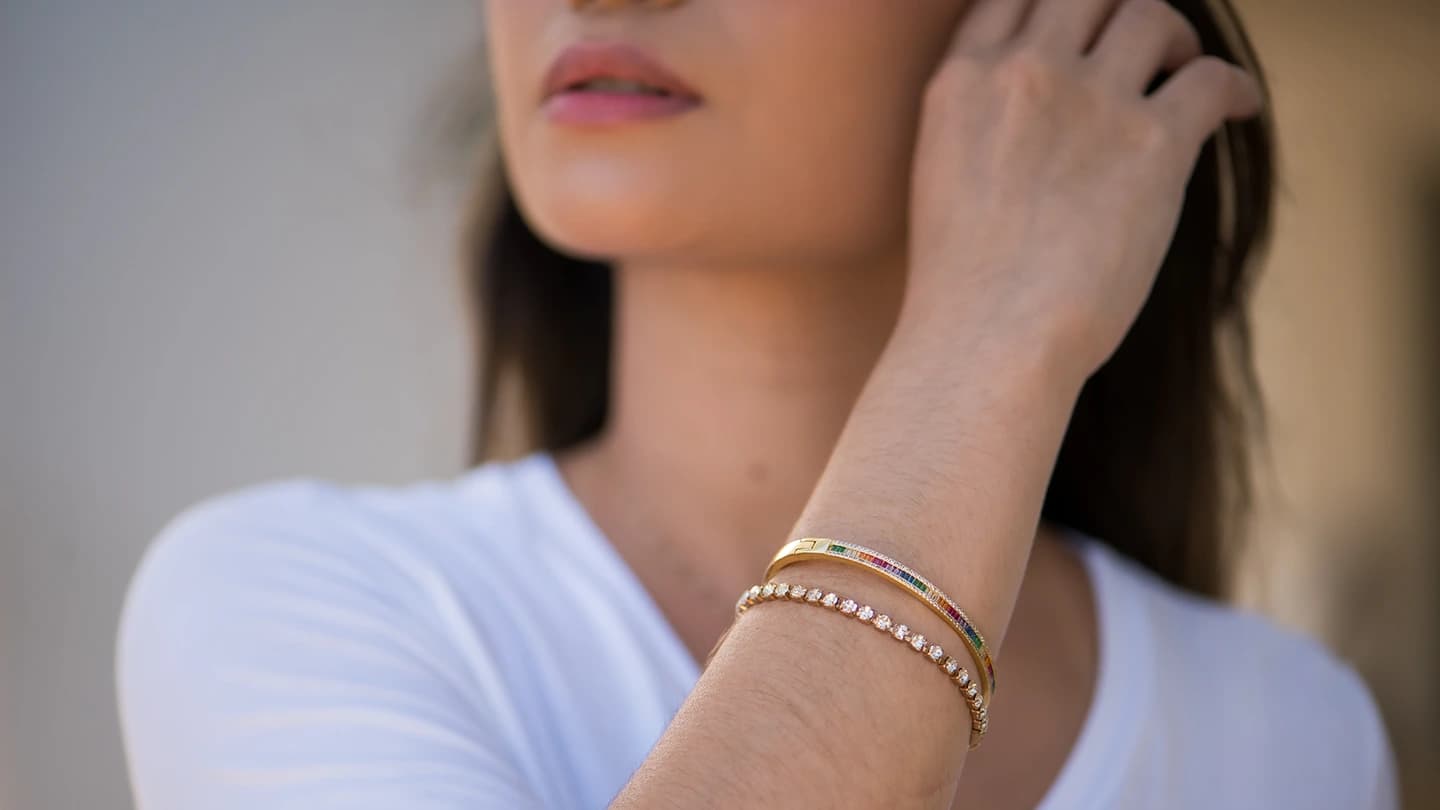
Chris Evert’s bracelet pause at the 1987 U.S. Open gave the tennis bracelet its name. It is a row of stones built to move with you, not against you, and the style works in both diamonds and gemstones, which makes it unusually useful for minimalist dressing.
Why the tennis bracelet reads so clean
The best tennis bracelets look less like ornament and more like structure: one uninterrupted line of light around the wrist. That linear silhouette keeps the style from tipping into excess, even when the stones are substantial. A tennis bracelet is still understood as a bracelet that pauses, flexes, and returns to form without losing its polish.
Morgan Saatchi of SVS Fine Jewelry, where clients in Oceanside have been choosing tennis bracelets for more than two decades, works in exactly that space between beauty and practicality. The bracelet has to look elegant in motion, but it also has to stay put, which is where the buyer’s eye should slow down and start reading construction rather than just sparkle.
Start with carat weight, not stone count
Total carat weight tells you far more than the number of stones does. The visual effect depends on how much diamond or gemstone is distributed around the wrist, not simply how many links there are, which is why a bracelet with fewer, larger stones can read bolder even when the design remains linear. Delicate tennis bracelets often begin around 1 carat total weight, refined everyday versions usually fall between 2 and 4 carats total weight, and statement pieces can climb past 10 carats total weight.
Around 1 carat, the shimmer is subtle and airy, almost like a whisper of brightness. In the 2 to 4 carat zone, the bracelet gains presence without losing its clean line, which is the sweet spot for a daily signature piece. Once you move beyond 10 carats total weight, the bracelet becomes much more visibly luxurious and far less reserved, even if the silhouette is still technically the same.
Fit is part of the design
A tennis bracelet should sit close to the wrist without pinching, twisting, or feeling as though it needs to be constantly adjusted. Standard lengths are commonly listed around 6.5 to 8 inches, and that range gives you a useful starting point, but wrist measurement still matters because elegance here depends on balance. Too loose and the bracelet starts to rotate and distract; too tight and the whole line loses its ease.
The bracelet should feel like something you can forget until you catch it in the light, not something that keeps announcing itself by sliding, snagging, or turning over.
Setting profile decides whether the bracelet feels airy or architectural
Prong, channel, and bezel
The setting is where the bracelet’s personality becomes legible. A prong setting holds each stone with small metal claws, which leaves more of the gem exposed and lets in more light. That openness is why prong-set tennis bracelets often look brighter and more classic, especially when the stones are diamonds.
Channel and bezel settings move the mood in a cleaner, more edited direction. Channel settings cover the girdle and create a continuous metal wall around the stones, which gives the bracelet a sleek profile and improves snag resistance. Bezel settings wrap metal fully around each stone, creating a low, smooth outline that catches less on clothing and reads especially refined for anyone who prefers a slightly more architectural finish.
Prongs give you sparkle and lift; channel and bezel settings give you a more disciplined line. If your jewelry collection already leans simple, a channel-set or bezel-set bracelet often feels more elevated because the line stays uninterrupted even when the stones are generous.
Choose the metal like you are choosing the frame
Metal color does real work in a tennis bracelet because the setting is always visible. White gold is bright, sleek, and a natural match for diamonds, which helps the bracelet look crisp and modern without drawing attention to the metal itself. Yellow gold brings warmth and a more vintage-leaning character, which can soften the brilliance of the stones and make the bracelet feel a little less icy.
White gold tends to dissolve into a cooler wardrobe and keeps the eye on the stones. Yellow gold gives the bracelet a little more personality while preserving the line.
The clasp should be as invisible as the line of stones
A tennis bracelet is only truly effortless when the closure is secure. Box clasps with safety latches are a common choice, and low-profile options such as hidden or under-lock clasps preserve the cleanest visual line. That matters because the bracelet is meant to sit close and move quietly; if the clasp looks bulky, the illusion of one continuous strand starts to break.
Security also affects how often you will actually wear the piece. A bracelet that feels delicate but not fragile becomes part of your routine, while one that makes you nervous quickly migrates to special-occasion status.
How to keep the look elevated, not flashy
The bracelet’s visual width is shaped by stone size, spacing, and overall carat weight. Smaller stones create a soft, continuous shimmer that reads almost like a line drawing on the wrist, while larger stones widen the visual footprint and make the bracelet feel more like a statement cuff made of diamonds or colored gems. If you want the most restrained effect, aim for a slender profile, modest stone sizes, and enough negative space in the design to keep the line light.
Layering should stay disciplined as well. A tennis bracelet already brings a complete visual idea to the wrist, so the cleanest styling usually means wearing it alone or with one quiet companion, such as a watch. Once you start stacking multiple bracelets around it, the clarity that makes the style so compelling begins to blur.
When it is worth investing in one
The tennis bracelet earns its place when you want one piece that can move from day to night without changing character. If your goal is a daily signature, the strongest case is a bracelet in the 2 to 4 carat total weight range, with a secure clasp, a low-profile setting such as channel or bezel, and a metal color that already lives in your wardrobe. Diamonds will give you the most neutral, light-catching version of the style, while sapphires, emeralds, rubies, and other gemstones keep the same minimalist structure with more color.
This article was produced by Prism’s automated news system from verified source data, official records, and press releases, then run through automated quality and moderation checks before publishing. The system is built and supervised by the people who set the standards it runs under. Read our full AI policy.
Did this article answer your question?