Kering award spotlights gemstone traceability and sustainable jewelry design
A gemstone-tracing startup and a disc-based jewel won Kering's Paris prize, showing sustainability here means testable origins and reuse, not vague green claims.
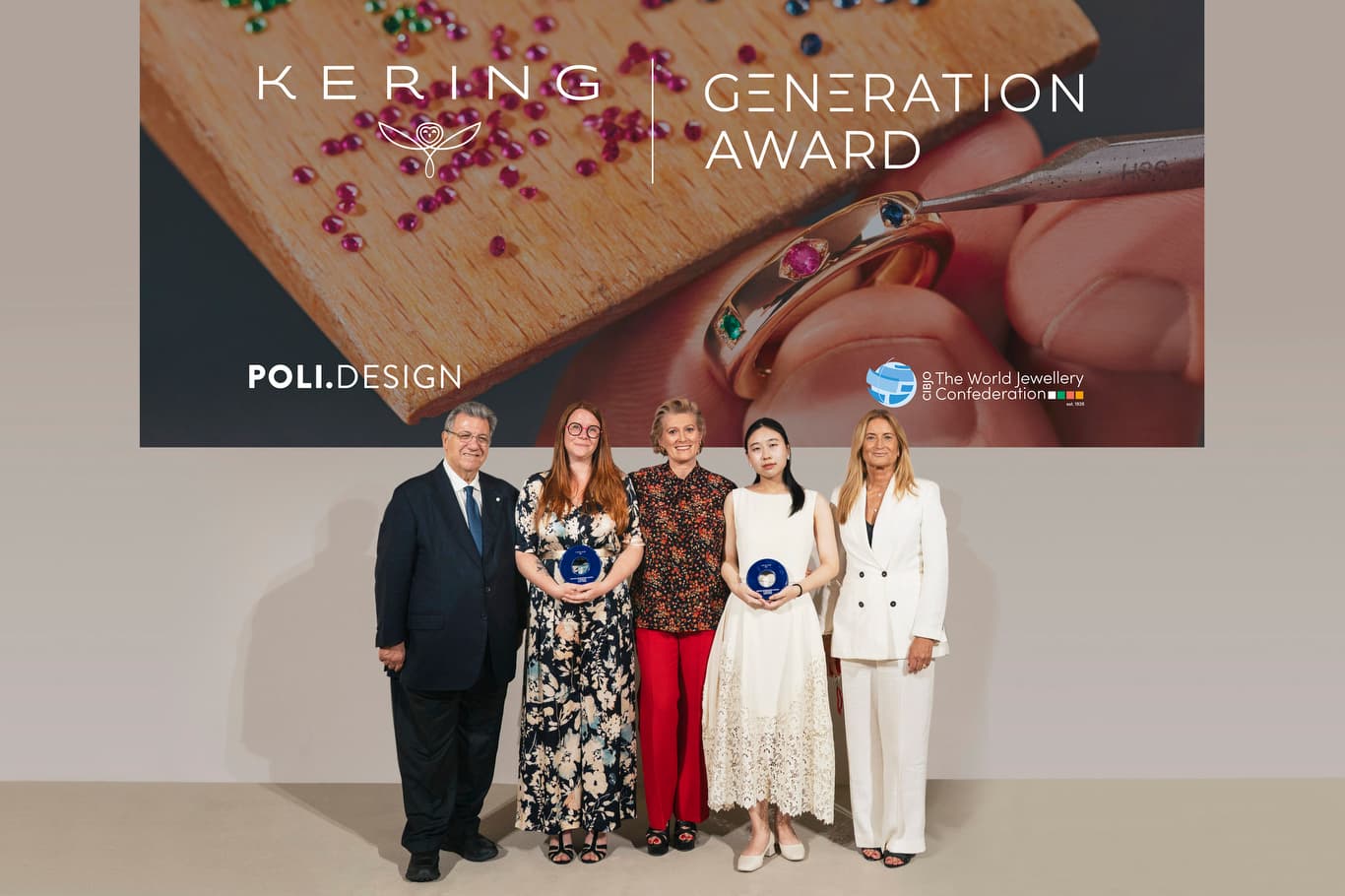
A Paris headquarters ceremony put gemstone traceability at the center of minimalist jewelry on July 9, when GeoGems and Beijing Institute of Fashion Technology student Yang Yuchan won the second Kering Generation Award X Jewelry during Paris Haute Couture Week. The competition, organized by Kering with CIBJO and Poli.Design at Politecnico di Milano, drew 44 startups and students from 10 universities and academies around the theme “Second Chance, First Choice.”
GeoGems, founded by Lauriane Pinsault, won the startup category for OriGems, a project built around making gemstone origin scientifically verifiable. That is the kind of sustainability claim the jewelry trade still struggles to prove: not a broad promise about responsibility, but a mechanism that can trace where a stone came from and how it moved through the supply chain. In minimalist jewelry, where a single small gem or an almost invisible setting can carry the whole piece, provenance matters as much as polish.
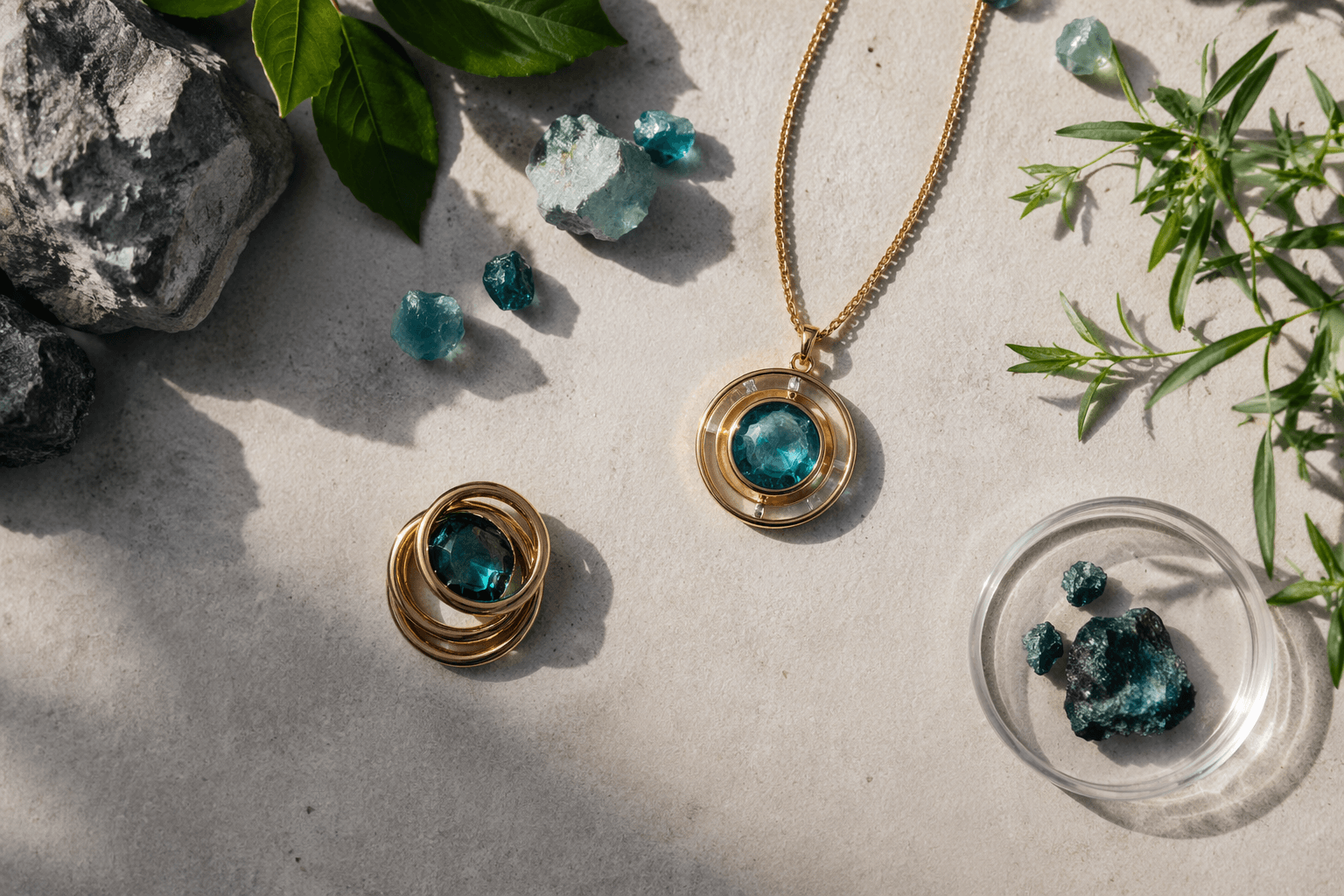
Yang’s Perching Willow took the student prize with a very different answer to the same problem. The piece was made from discarded compact discs and finished with traditional Chinese lacquer techniques and mother-of-pearl inlay, turning waste into a polished contemporary object rather than hiding the material behind an expensive-looking surface. The student winner will receive a six-month internship with Kering’s Pomellato brand, while GeoGems will get mentorship from Politecnico di Milano experts.
The finalists widened the design conversation beyond gemstones alone. Jill Schmid of the Rochester Institute of Technology presented Acacia, which turns wood shavings into fine jewelry, while Japan’s Novanoma also reached the final round. That mix of material reuse, craft knowledge and technical tracing is what gives the award its edge over the usual language of sustainability, which too often stops at recycled packaging and vague sourcing language.
Kering launched the broader Generation Award in China in 2018 and expanded it to jewelry in 2024. The first jewelry edition was awarded at JCK Las Vegas in June 2025 to Lee Min Seo and Ianyan, both for waste-based designs. Marie-Claire Daveu has framed the program as proof that the next generation is ready to reinvent jewelry through the intersection of craftsmanship, technology and environmental responsibility, and this year’s field suggested that the real test for minimalist pieces is no longer how little they do, but how clearly they can account for every material they use.
This article was produced by Prism’s automated news system from verified source data, official records, and press releases, then run through automated quality and moderation checks before publishing. The system is built and supervised by the people who set the standards it runs under. Read our full AI policy.
Did this article answer your question?

