Richemont jewelry maisons post seventh straight quarter of double-digit growth
Cartier, Van Cleef & Arpels, Buccellati and Vhernier pushed Richemont jewelry sales up 24%, a seventh straight quarter of double-digit growth.
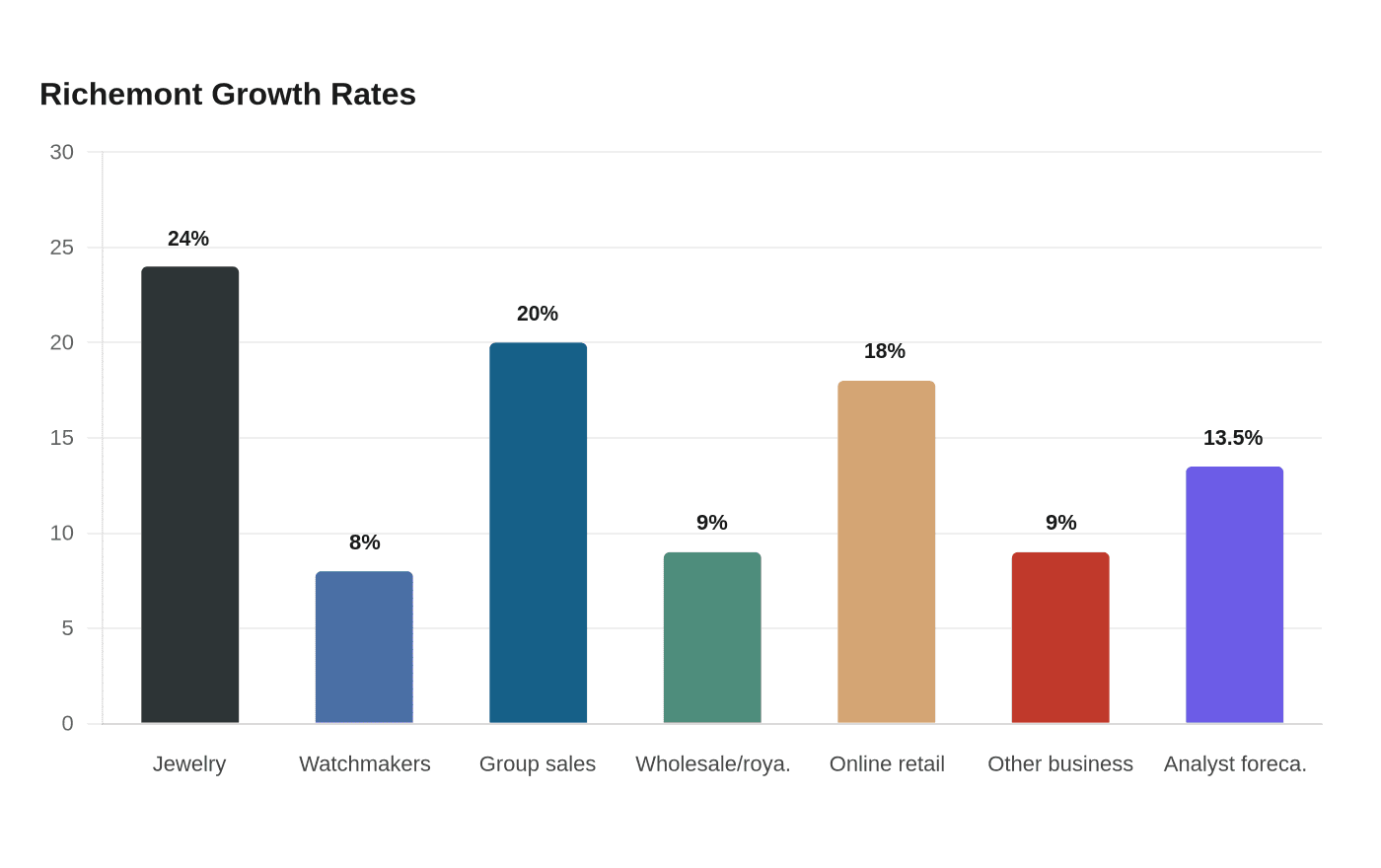
Richemont’s jewelry maisons kept the luxury group’s engine running, with sales at Cartier, Van Cleef & Arpels, Buccellati and Vhernier rising 24% at constant exchange rates in the three months ended 30 June 2026. The €4.732 billion haul marked the division’s seventh straight quarter of double-digit growth and accounted for most of the group’s momentum, even as specialist watchmakers advanced at a slower 8%.
The numbers point to where luxury demand is concentrating: not in noisy fashion statements, but in houses built around recognizable, high-ticket signatures that shoppers can buy once and keep. Richemont said group sales reached €6.3 billion, up 20% at constant exchange rates and 17% at actual rates, while retail remained the largest channel at €4.504 billion, or 71% of sales. For buyers, that kind of mix usually favors pieces that carry the maison name first and the trend second, the sort of jewelry that can hold value in perception because it is instantly legible from across a room.

Retail did the heaviest lifting, and Richemont said wholesale and royalty income rose 9% to €1.452 billion, online retail increased 18% to €373 million, and the “other” business area, which includes fashion and accessories maisons such as Montblanc, TimeVallée and Watchfinder & Co., rose 9% to €724 million. The jewelry business also outpaced analysts’ expectations, which had centered on roughly 13.5% growth, and investors took comfort in Richemont’s upbeat remarks on greater China.
The regional picture was broad, with double-digit gains in the Americas, Asia Pacific, Japan and Europe, and a return to growth in Middle East & Africa. In Asia Pacific, Richemont said its jewelry maisons posted double-digit sales increases in China, Hong Kong and Macau combined. In Europe, demand came from both local customers and tourists, especially North American and Middle Eastern buyers. In the Americas, Richemont said sales benefited from continued strength in local demand.
That is the commercial backdrop behind the jewelry market’s quietest-looking winners: pieces that are easy to wear, easy to recognize and hard to dismiss as temporary fashion. Richemont ended the quarter with a €9.1 billion net cash position, including a €0.4 billion inflow from the disposal of its Avolta stake, giving the company room to keep its maisons disciplined on supply, pricing and presentation while the market still pays up for the brands that feel most permanent.
This article was produced by Prism’s automated news system from verified source data, official records, and press releases, then run through automated quality and moderation checks before publishing. The system is built and supervised by the people who set the standards it runs under. Read our full AI policy.
Did this article answer your question?