Minimalist jewelry gets bolder, everyday pieces lead 2026 trends
Minimalism is getting sharper, not quieter: the best 2026 pieces are the ones that finish a white tee, knit or blazer in one clean, considered move.
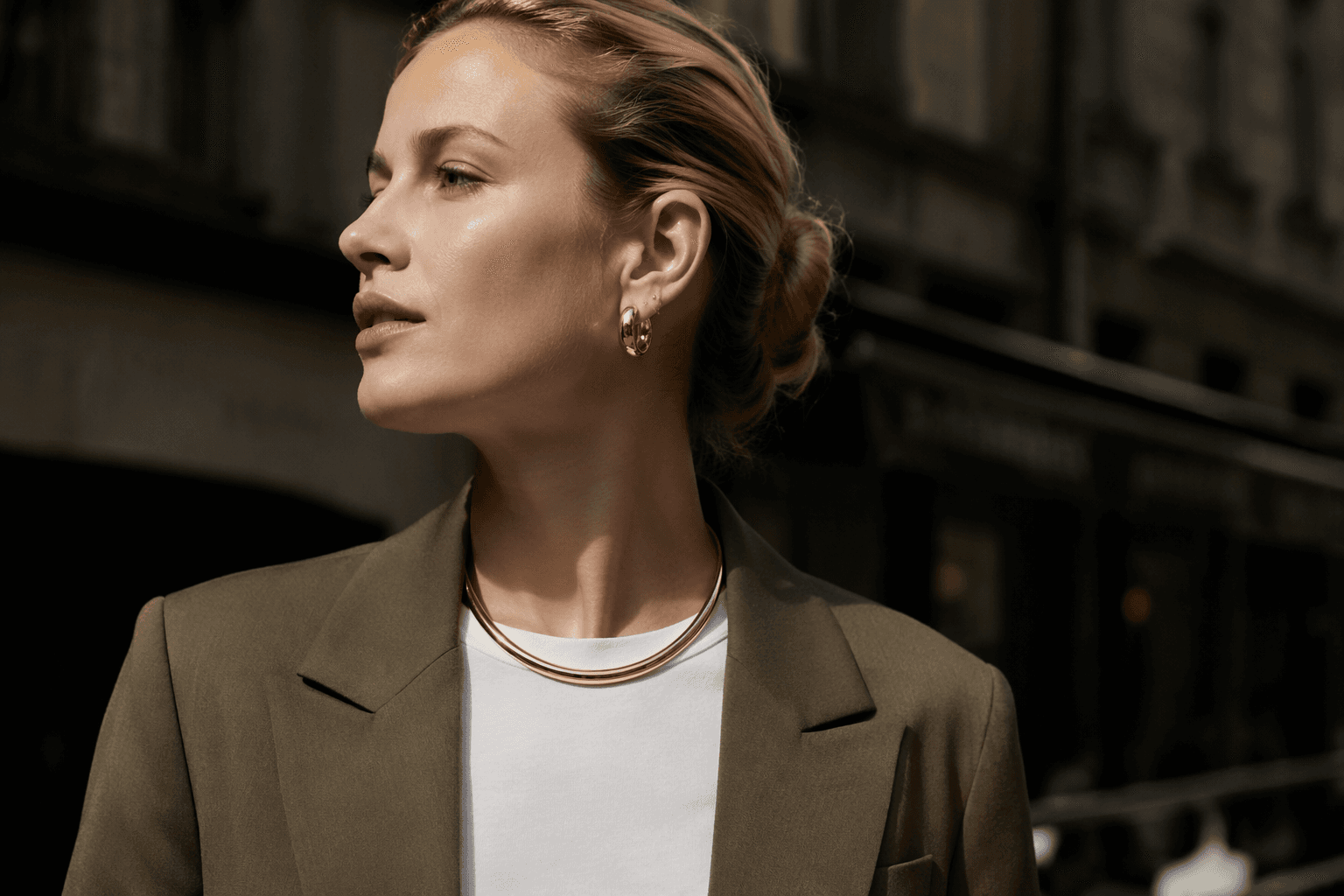
The new minimalist brief
A tennis bracelet does more for a white tee than a closet full of trend experiments. The minimalist jewelry worth wearing in 2026 is not shy, but it is disciplined: clean studs, slim pendants, small hoops, fine chains, and bracelets that flash just enough to sharpen knits, shirting, and workwear without taking over the look.
The larger mood has shifted after several seasons of quiet-luxury restraint. Jewelry is being treated again as a place to invest, experiment, and have fun, with diamonds worn daily, color back in the conversation, and styling that feels more personal than prescribed. The difference now is that the strongest pieces still respect the line of a pared-back wardrobe.
What actually translates from the runway
Spring 2026 jewelry at Paris Fashion Week made the case clearly: minimal lines were shown alongside chunkier, more sculptural pieces. That matters because it separates what looks compelling under lights from what really earns its place in a weekday wardrobe. The loudest silhouettes may drive the image, but the cleanest ones are the pieces you can imagine keeping on for a client meeting, then dinner.
This is where minimalist jewelry becomes a filter rather than a trend report. A slim pendant reads as intention when it sits just above a V-neck knit. A small hoop gives the face structure without interrupting a blazer collar. A tennis bracelet adds polish at the wrist in a way that feels permanent, not costume-like.
Tennis bracelets, stud earrings, and slender pendants
If one category anchors the 2026 minimalist story, it is everyday jewelry that does its work quietly and visibly. Bustle’s framing is exactly right here: tennis bracelets, simple stud earrings, and minimal pendant necklaces are the pieces that change the feel of basics without forcing a wardrobe overhaul. They are low effort, but they are not low impact.
The tennis bracelet has lasted because it moves with the body and catches light in a restrained line. Clean studs do something similar for the face, especially when the stone size stays modest and the setting stays close. Slim pendants, meanwhile, are the easiest way to bring shine to white tees, cashmere, and poplin shirts, because they sit in the negative space rather than fighting with it.
Why earrings feel more curated now
Who What Wear is right to call 2026 earrings a matter of “reorientation rather than reinvention.” The classic pieces still matter, but the styling language has become more edited, with a renewed interest in curated ear stacks and earrings that feel considered rather than merely decorative. That means one well-shaped hoop, one crisp stud, or a pairing that looks intentional from across the room.
The best minimalist earrings now have a little more presence than their recent predecessors. Think small hoops with a more substantial profile, studs with a precise silhouette, or a two-piercing arrangement that creates rhythm without clutter. The goal is not volume for its own sake, but a frame for the face that reads polished in profile and effortless head-on.
The materials that keep the look grounded
Minimalist jewelry depends on construction as much as design. Thin chains need enough substance to avoid feeling fragile, which is why 14k links often strike the right balance between durability and shine. Pieces in 9K to 18K gold can work beautifully in this register, but the metal should feel deliberate, not diluted.
Settings matter, too. A bezel setting wraps the stone in metal, which gives even a small diamond or colored stone a cleaner, more graphic outline and makes it less likely to snag on knits or cuffs. A prong setting shows more of the stone and can bring more brilliance, but it also nudges the piece toward a slightly airier, more conspicuous effect. For everyday minimalist wear, the bezel often wins because it sits close to the body and behaves well in real life.
That practicality is part of the appeal. The most convincing minimalist jewelry is made to survive repetition, whether it is worn under a trench, with a ribbed knit, or on the commute with a blazer and denim. The luxury is not in excess; it is in the precision of the details.
Why the category is getting bolder
The business case helps explain the styling shift. Statista projects global jewelry revenue will reach US$408.64 billion in 2026, and 75% of sales will come from non-luxury jewelry. That scale underlines how important approachable, everyday-friendly pieces are across the market, from first-time buyers to collectors who want something they will actually wear.
The U.S. retail picture tells the same story. Statista says there were about 17,600 jewelry stores operating in the United States in 2023, which shows how broad the ecosystem is for this kind of buying. Minimalist jewelry is not a niche indulgence; it is the category’s most versatile entry point, the place where style, price sensitivity, and daily use meet.
The metal market is shaping taste, too
There is also a more practical pressure behind the move toward smaller, sharper pieces. WWD reported that jewelry growth is expected to fall between 4% and 6% in fiscal 2025, even as luxury jewelry is forecast to grow at an 8.7% CAGR through 2030. At the same time, gold hit a record $4,524.40 an ounce on Dec. 24, 2025, and silver reached $71.66 an ounce that same day.
When metals are priced that high, scale matters. A well-cut pendant, a disciplined bracelet, or a pair of exacting studs can feel smarter than a larger piece that spends more to say less. The result is a minimalist language that is not austere, but efficient.
How to wear it with basics
The easiest way to keep minimalist jewelry feeling current is to let it update clothes you already own. A tennis bracelet softens the severity of a black blazer and white shirt. Small hoops and a slim chain lift a sweatshirt or crewneck knit without making it look styled to death. Clean studs are the rare finishing touch that works at the office and still makes sense when the day spills into evening.
This is also where named houses continue to matter. Brands such as Tiffany & Co., Laura Vann Jewellery, and Heavenly London have kept the minimalist lane credible by treating restraint as a craft, not a lack of imagination. Their appeal is not that they make jewelry disappear, but that they know how to make a quiet piece feel resolved.
The best minimalist jewelry in 2026 is bolder in presence, not louder in design. It brings light to the wrist, shape to the ear, and clean lines to the neckline, then lets the clothes remain the point.
This article was produced by Prism’s automated news system from verified source data, official records, and press releases, then run through automated quality and moderation checks before publishing. The system is built and supervised by the people who set the standards it runs under. Read our full AI policy.
Know something we missed? Have a correction or additional information?
Submit a Tip

