Minimalist necklaces return to favor, bold collars and sculptural pendants lead
A single necklace placed between collarbone and bust is replacing busy stacks, bringing sharper lines, bolder pendants, and cleaner minimalist dressing.
The new sweet spot
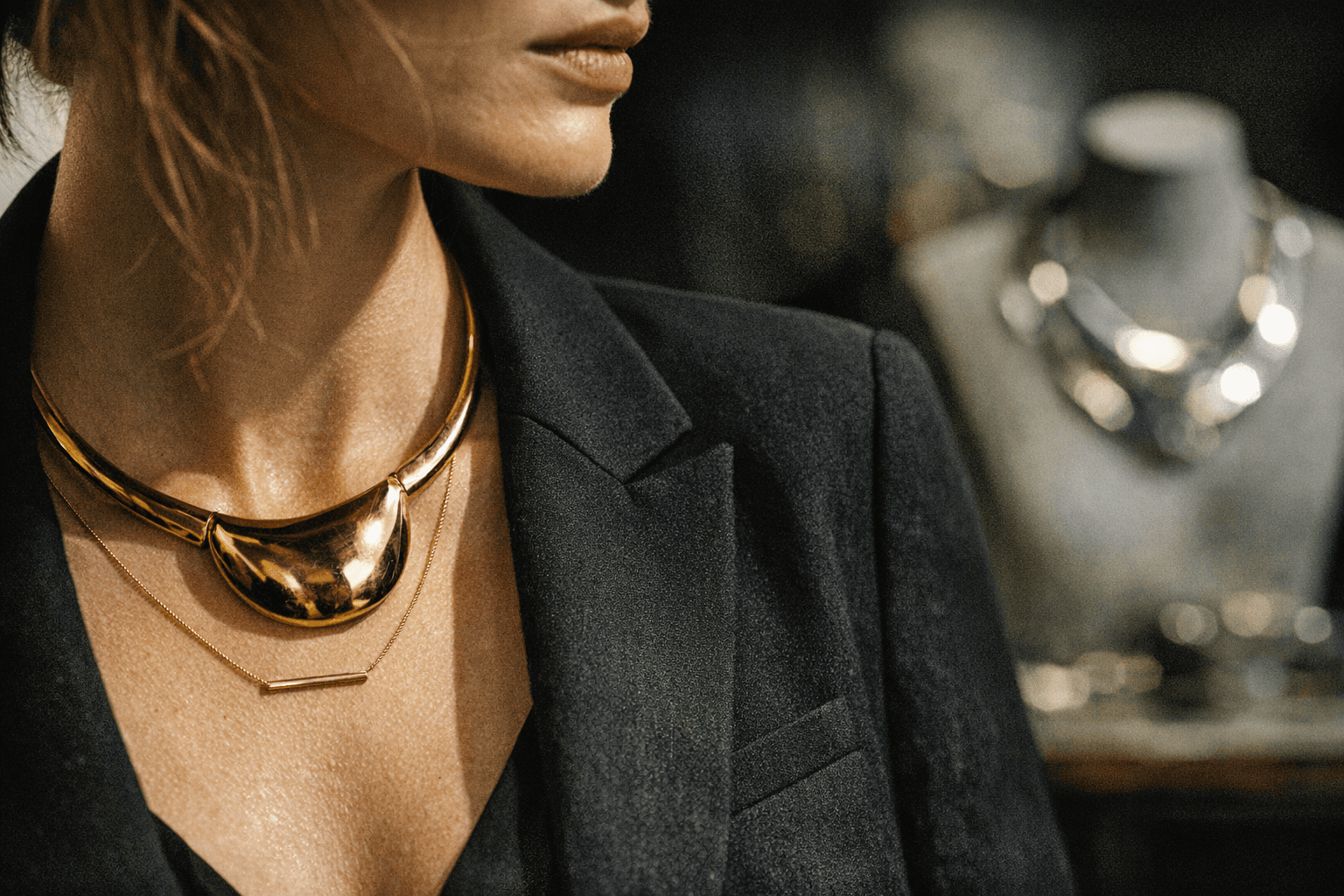
The most compelling necklace right now is not the one that piles on. It is the one that lands exactly in the space between the collarbone and the bust, where a single, intentional piece can do more for a plain outfit than a whole stack of chains. That placement, now neatly dubbed “neckollatage,” turns the upper torso into part of the design and gives even the simplest knit or shirt a deliberate finish.
What makes the idea feel fresh is how little it actually asks for. JCK’s case for neckollatage favors one well-placed necklace with minimalist clothing, then lets the silhouette do the work. The emphasis is on substance, not fuss: metal with presence, pearls with a clear shape, beadwork with enough volume to read from across a room, and sculptural pendants that feel built for a specific neckline.
Why the silhouette works
Neckollatage is really a lesson in proportion. A necklace sitting too high can feel severe, while one dropped too low can lose its relationship to the clothes. The zone between the collarbone and bust gives the eye a resting place, which is why a single collar, torque, or pendant can sharpen a white T-shirt, a fine-gauge sweater, or a strapless dress more effectively than a layered spread of delicate chains.
That is also why the look has an easy minimalism to it. The clothing stays clean and unfussy, and the jewelry carries the point of view. A polished shirt with the top button undone, a boatneck knit, a narrow crewneck, or a strapless column dress all leave enough negative space for one necklace to read as intention rather than decoration.
The best materials are the ones with presence
The neckollatage argument is strongest when the necklace has enough physical weight to hold the frame. That is where substantial metal, pearls, beadwork, and sculptural pendants matter most. Delicate chains can disappear into the outfit, but a rigid collar, a torque, or a pendant with volume gives the neckline architecture and keeps the look from feeling underdressed.
That emphasis also explains why the current mood is leaning away from feather-light prettiness and toward pieces with body. A collar necklace frames the neck like a line drawing. A torque sits high and decisive. A pendant-heavy necklace can land lower, but still command the space if the form is bold enough and the chain is restrained enough to avoid visual clutter.
How to wear it with specific necklines
The easiest way to make neckollatage feel modern is to start with a neckline that leaves room for it to breathe. Crewnecks, boatnecks, open collars, square necks, and strapless cuts all give a necklace room to occupy that middle zone without competing with fabric. With higher necklines, the piece should be more architectural and closer to the neck; with open necklines, it can drop a little lower and still feel deliberate.
A few styling formulas work especially well:
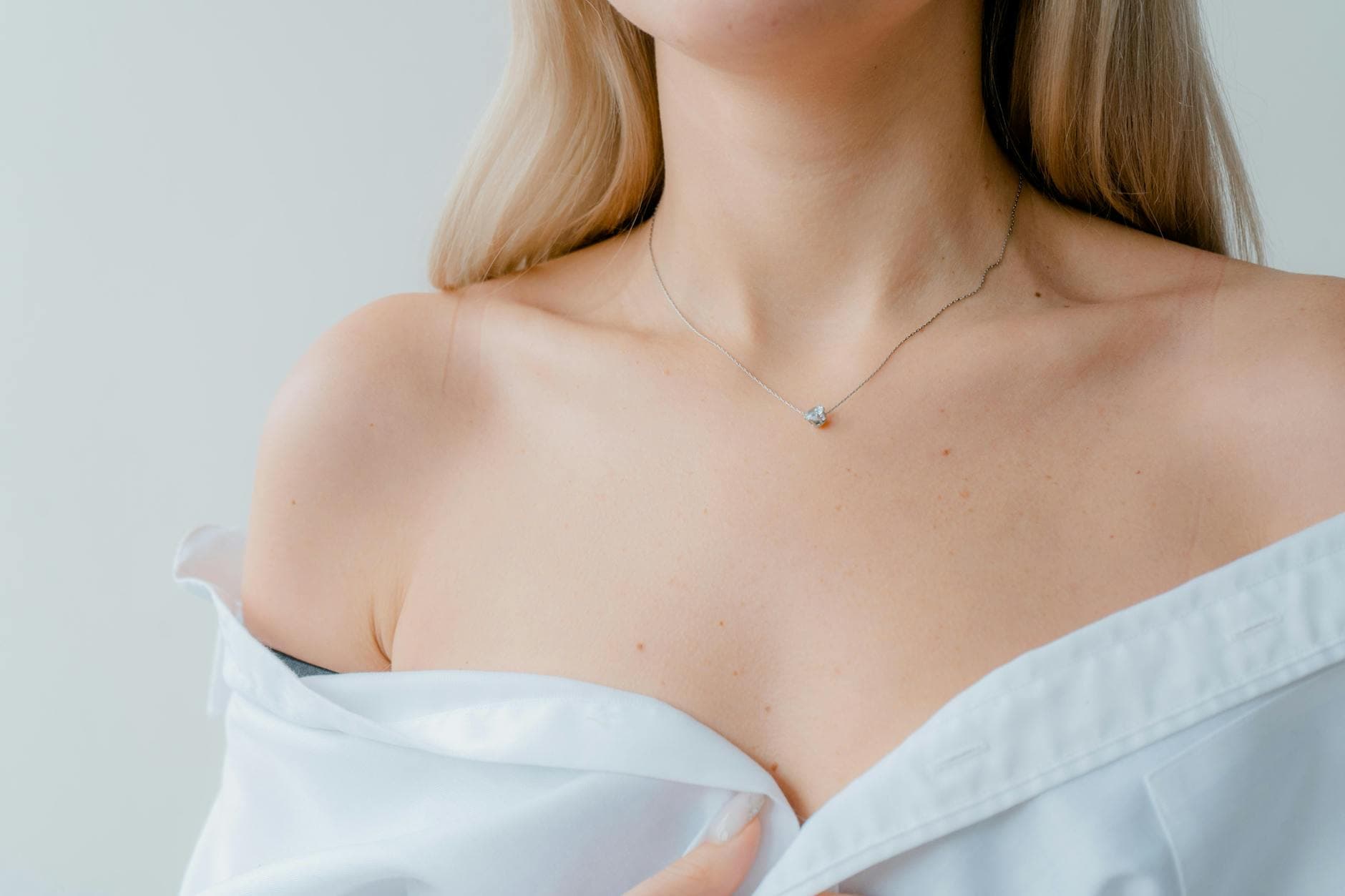
- A crisp white shirt with the collar open, worn with a single collar necklace in yellow gold for structure.
- A black ribbed knit with a torque or rigid metal collar that creates a hard line against the softness of the fabric.
- A strapless dress with a sculptural pendant that sits squarely between collarbone and bust, turning the chest into a clean field.
- A simple blazer over a bare neckline with a substantial pearl necklace that reads polished rather than precious.
The point is to keep everything else quiet. When the necklace is the statement, the outfit should support it instead of competing with it.
Why this keeps coming back
The interesting thing about neckollatage is that it is not really new. JCK published a collarbone-hugging necklace piece in 2014, showing how long this exact styling instinct has been resurfacing. In 2024, JCK called torque necklaces a designer favorite again and traced the style back to the ancient Celts, which makes the current revival feel less like a fad than a return to a recurring form.
JCK’s 2025 Las Vegas jewelry trend coverage sharpened that point further, reporting that during brand visits it often saw at least one version of a collar, torque, or choker, usually in yellow gold and sometimes in silver. That pattern fits a broader trend cycle: collar necklaces were described by Who What Wear as one of the year’s most significant jewelry trends, while PORTER noted in August 2024 that necklace layering had moved from FW24 runway shows to red carpets. WWD also reported growing demand for charm necklaces as a statement category, proving the market is currently open to both pared-back styling and louder forms.
The market is telling the same story
There is a practical reason these silhouettes keep returning. Jewelry is a massive business, and the appetite for it remains strong across both minimalist and statement directions. Statista put the global luxury jewelry market at about 31 billion euros in 2024, while Signet Jewelers posted more than $7.1 billion in sales in the same year.
That scale helps explain why the neckollatage sweet spot feels so useful to editors, stylists, and shoppers alike. It is visually simple but commercially durable, and it offers a way to wear one excellent piece well instead of treating jewelry as an afterthought. In a category as old as adornment itself, with prehistoric necklaces made from shells, bones, teeth, and claws, the most persuasive modern move is sometimes the most restrained one: one necklace, one clean line, and one carefully chosen place on the body.
This article was produced by Prism’s automated news system from verified source data, official records, and press releases, then run through automated quality and moderation checks before publishing. The system is built and supervised by the people who set the standards it runs under. Read our full AI policy.
Did this article answer your question?


