Viral aluminum-foil trick restores tarnished silver jewelry to new shine
A plain sterling-silver chain can go from gray to gleaming in one foil bath, but the trick is chemistry, not a cure-all. Know when it works and when it can ruin the finish.
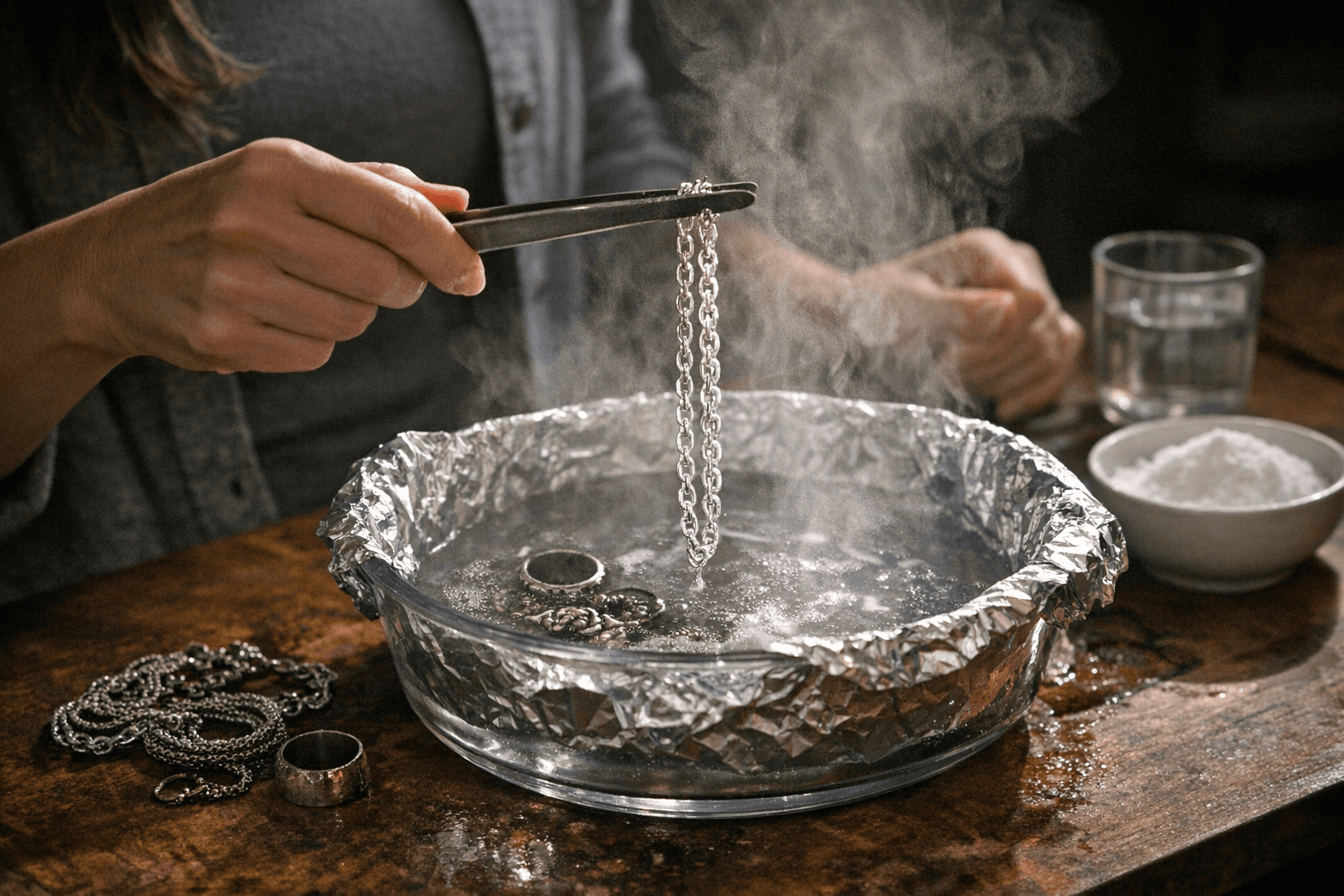
Why a dull silver necklace suddenly looks alive again
A thin sterling-silver chain that has gone flat against the collarbone can lose its light long before it looks truly dirty. The culprit is tarnish, a dark film of silver sulfide that forms when silver meets sulfur-containing compounds in the air. That is why the before-and-after is so startling: the metal does not just get cleaner, it looks as if it has been brought back to its original brightness.
Silver has always been prized for its decorative beauty, and its conductivity is part of the reason this trick works at all. The same properties that make it useful and beautiful also make it vulnerable to sulfur-rich environments, which is why preservation experts treat tarnish as routine maintenance rather than a flaw.
What the aluminum-foil method is actually doing
The viral appeal of the method is its simplicity, but the science is the point. Aluminum is the more reactive metal, so when tarnished silver touches aluminum in a conductive solution, an electrochemical reaction takes place. In plain English, the sulfur that darkened the silver is transferred away, and the shine returns.
Chemistry LibreTexts explains that the silver and aluminum must be in contact because a small electric current flows between them during the reaction. The Royal Society of Chemistry and the Canadian Conservation Institute describe the same principle from the conservation side: the aluminum gives up and the tarnish is lifted off the silver surface. That is why this is more than a kitchen hack. It is a controlled chemical exchange.
How to do it
1. Line the bottom of a heat-safe plastic, glass, or ceramic container with aluminum foil.
2. Place the tarnished silver directly on the foil so the metals touch.
3. Sprinkle baking soda over the piece.
4. Pour in hot or boiling water until the silver is covered.
5. Let the reaction work, then lift out the jewelry, rinse if needed, and dry it thoroughly.
Consumer Reports describes the classic at-home version exactly this way, and the Royal Society of Chemistry gives a similar setup using a casserole dish, foil, baking soda, and hot water. Tom’s Guide’s version of the trick uses a scrunched-up ball of aluminum foil, but the core requirement is the same: the silver has to contact the aluminum in a conductive bath.
When it is safe to use on minimalist silver
This method is best reserved for plain sterling-silver pieces, especially minimalist jewelry that depends on a clean surface rather than ornament. A simple chain, a smooth cuff, a polished band, or an unadorned pair of hoops can usually handle the bath well if there are no stones, no plating, and no intentional dark finish. For those pieces, it can be a fast, low-cost way to restore the crisp look that makes minimalist silver feel sharp instead of tired.
That is why the trick feels so satisfying on everyday jewelry. It is designed for the kind of pieces many people wear constantly and forget until the surface goes dull. On the right item, it can make a necklace or bracelet look freshly polished without an expensive trip to a jeweler.
When to avoid it completely
The aluminum-foil bath is not a universal cleaner. The Gemological Institute of America warns that silver jewelry can be damaged by chemicals, chlorine, ammonia, steam, and ultrasonic cleaners, and it also notes that not every gemstone or treated stone should be cleaned the same way. That caution matters here because the foil method is wet, hot, and reactive.
Skip it on pieces with oxidized finishes, where the darkened detail is intentional. Avoid it on glued settings, where heat and moisture can weaken adhesives. Keep it away from mixed-material jewelry, too, because leather, enamel, fabric, wood, and other nonmetal elements do not belong in a hot chemical bath. What restores one plain silver surface can strip character from another piece entirely.
Why the hack spread so quickly
Tom’s Guide tested the foil method and found the result surprisingly dramatic, which explains why the trick keeps circulating through home-care feeds. A single inexpensive household material can turn a neglected silver piece into something that looks newly worn in, and that transformation is easy to understand at a glance. In a world where minimalist jewelry is often chosen for its clarity and restraint, the difference between tarnished and polished is immediate and visible.
The real value of the hack is not novelty. It is that it gives silver owners a practical option for everyday maintenance, especially when the jewelry is simple enough to tolerate the process. The limit is just as important as the shine: the foil bath belongs to plain sterling silver, and nowhere else.
The bottom line
Used on the right piece, the aluminum-foil method is a real at-home fix, not a myth. Used on the wrong one, it can flatten oxidized detail, stress glued settings, or compromise mixed materials, which is why the smartest silver care is never just about making jewelry brighter. It is about keeping the piece looking like itself.
This article was produced by Prism’s automated news system from verified source data, official records, and press releases, then run through automated quality and moderation checks before publishing. The system is built and supervised by the people who set the standards it runs under. Read our full AI policy.
Did this article answer your question?


