Modular Jewelry Design Reshapes How Collectors Wear and Express Themselves
Modular jewelry lets you swap steel and 18k gold links to mark milestones — and a new generation is treating these pieces as personal archives, not accessories.
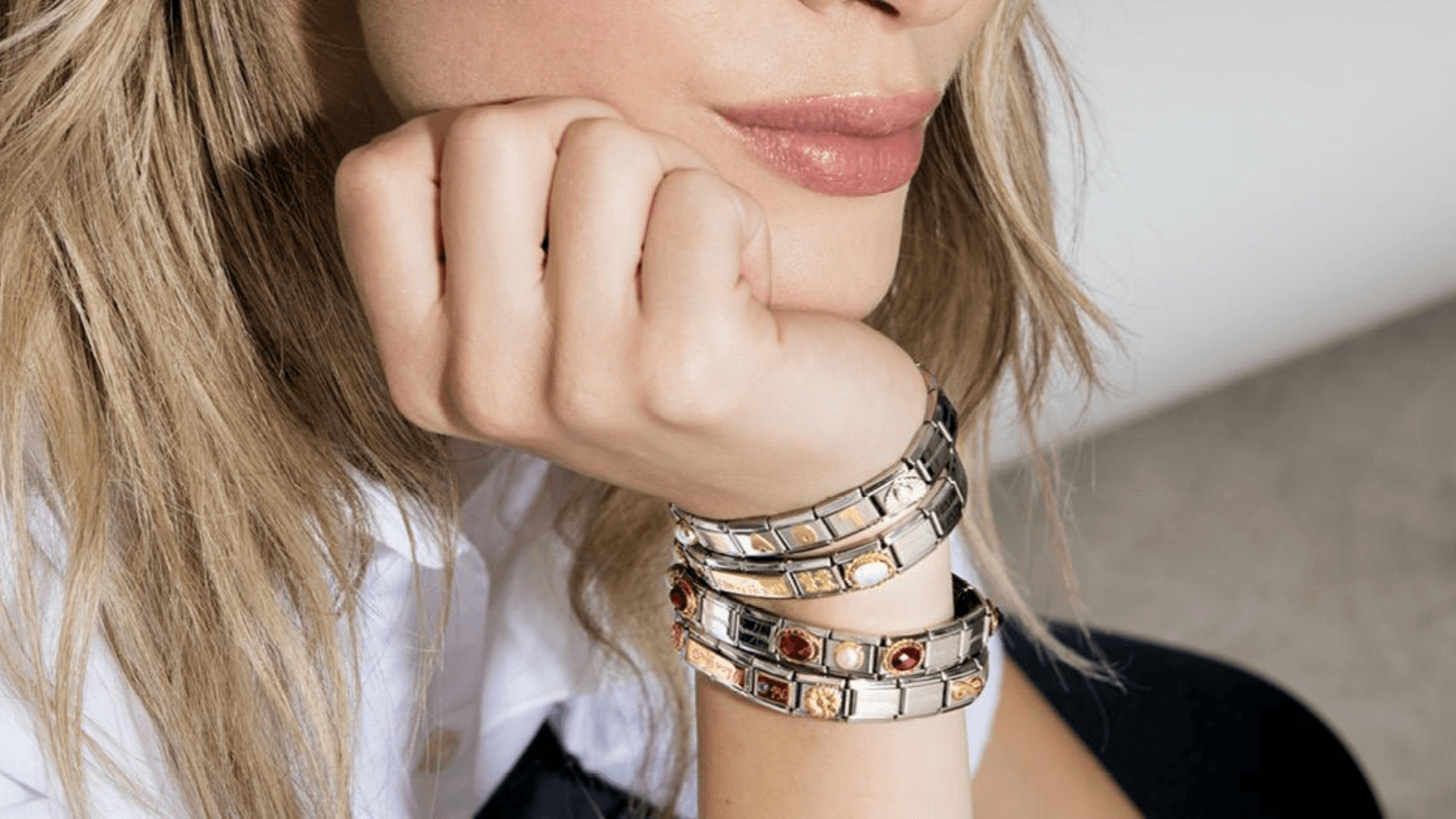
Picture a bracelet that gains a new link every time you land a promotion, board a plane to somewhere new, or welcome someone into your family. That is the precise proposition behind modular jewelry systems, and it is reshaping how collectors think about what they wear on their wrists, necks, and ears.
By 2026, a meaningful shift in consumer behavior has moved the focus of fine jewelry away from static status symbols toward something more intimate: jewelry as a medium for personal narrative. The "Made in Italy" designation, long synonymous with formal gold pieces and high-fashion leather goods in the American market, is now attached to a category built entirely around adaptability and individual storytelling.
The Mechanics of Modular Design
Three formats dominate the modular jewelry conversation right now: link-based bracelets, stud add-ons, and slide-on necklace charms. Each system operates on the same foundational logic, allowing the wearer to act as an editor of their own collection, adding, removing, or rearranging components as their life and style evolve.
Link-based bracelets, most prominently associated with Nomination s.r.l., are the clearest illustration of how the format works. The bracelet itself functions as a framework, and each individual link is a discrete decision. That decision can be aesthetic, material, or deeply personal.
The "curation" process that modular wearers describe tends to fall into three distinct patterns:
- Milestone markers: Adding links that represent professional achievements, travel destinations, or family events, turning the bracelet into a wearable timeline rather than a decorative object.
- Material mixing: Combining the cool, industrial tone of steel with the warmth of 18k yellow or rose gold within a single piece, creating contrast that would be impossible in a traditionally cast bracelet.
- Styling versatility: Stacking multiple thin bracelets to build a textured, layered look that reads differently dressed up versus dressed down.
The material specifics matter here. The pairing of steel and 18k gold is not a casual choice. Steel brings durability and a contemporary edge; 18k yellow or rose gold carries the warmth and precious-metal legitimacy that fine jewelry buyers expect. Together, they create a bracelet that sits at an interesting intersection: accessible enough to wear daily, considered enough to feel intentional.
Nostalgia and the "New Vintage" Aesthetic
The resurgence of modular jewelry does not exist in a cultural vacuum. It maps directly onto what trend analysts are calling the "New Vintage" movement, driven by Gen Z and Millennial consumers who grew up with the charm bracelets and link accessories of the early 2000s but now want that aesthetic produced to a higher standard.
This demographic is not chasing nostalgia blindly. They are looking for what might be called "legacy" items: pieces that carry the visual language of an earlier era while incorporating contemporary design motifs, from geometric patterns to modern symbolic imagery embedded within the classic link structure. Italian designers, working within a manufacturing tradition that prizes precision and material integrity, have been particularly well positioned to meet this demand.
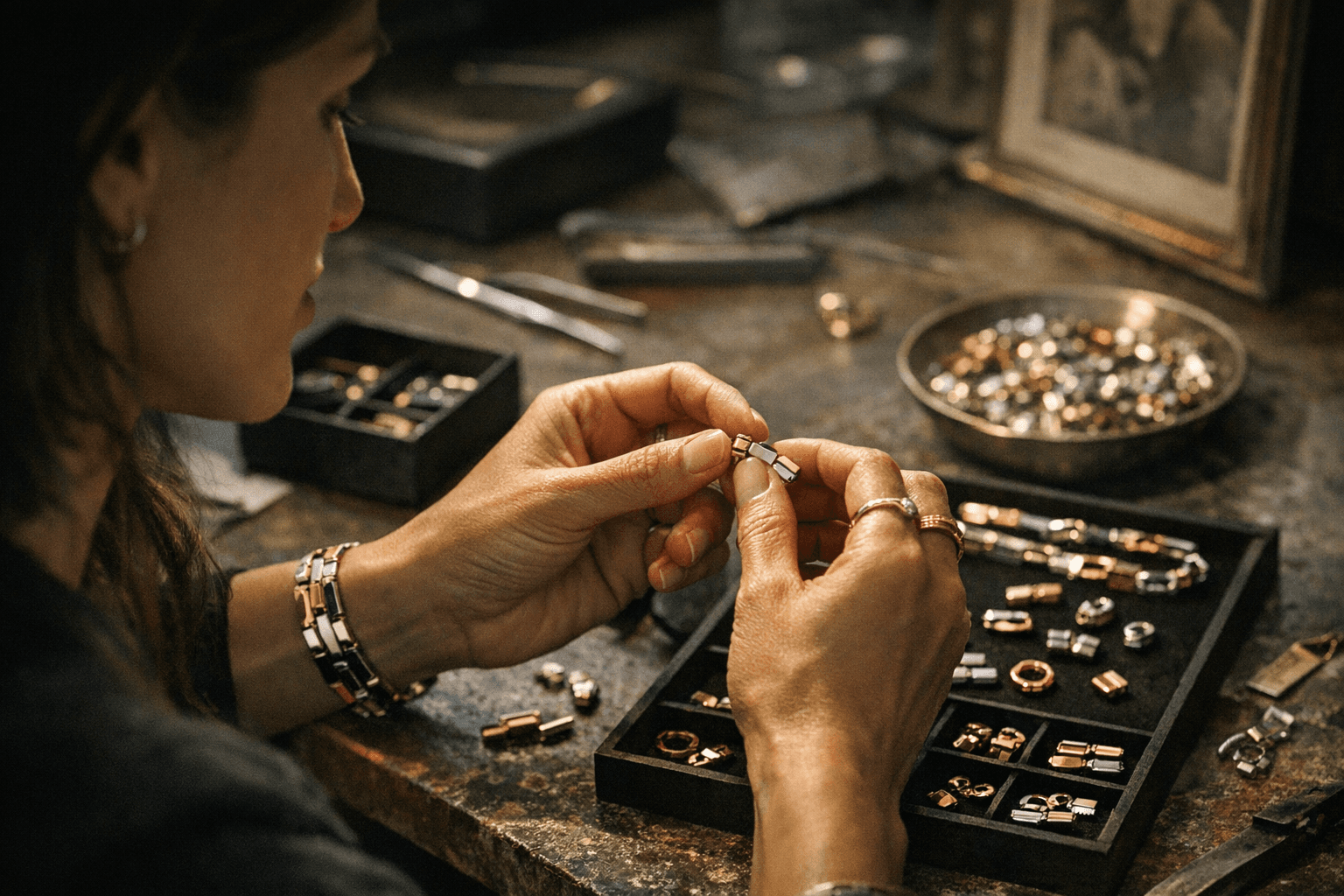
The result is a category of jewelry that bridges generational and stylistic divides. A piece that references early-2000s charm culture while being constructed from properly hallmarked 18k gold and precision-fitted steel components occupies genuinely new territory. It is neither purely nostalgic nor purely forward-looking, and that tension appears to be exactly what collectors find compelling.
What "Made in Italy" Means in This Context
The Italian craftsmanship context is worth pausing on, because it does real work in this conversation. When the link-based bracelet format became associated with Italian production standards, it carried with it an implicit guarantee of quality: consistent link sizing, secure clasps, metals that meet hallmarking requirements. For a modular system to function over years of use, with links being added and removed repeatedly, that construction integrity is not decorative, it is functional.
Historically, "Made in Italy" in American fashion pointed toward tailoring, leather goods, and formal gold jewelry. The shift toward modular, wearable-narrative pieces represents a genuine expansion of what that designation covers, and it reflects the same underlying craft values applied to a format designed for everyday life rather than special occasions.
A Shift Toward Longevity
The cultural implication that sits beneath all of this is significant: the preference for modular jewelry reflects a broader rejection of "throwaway" culture. Consumers are increasingly viewing their purchases as long-term investments in their personal brand, to use the language of the moment, rather than trend-driven acquisitions that lose relevance in eighteen months.
This is a meaningfully different relationship with jewelry than previous generations had with fast-fashion accessories. A bracelet that you add a link to every year for a decade is not the same object at year ten as it was at year one. It has accumulated both material and personal value in a way that a static piece simply cannot.
For collectors, this changes the calculus around what constitutes a worthwhile purchase. The question is no longer only about the quality of a single piece but about the quality of the system it belongs to: whether the links hold their finish over time, whether the brand's design vocabulary will still feel relevant in five years, whether the modular architecture allows for genuine personalization or only the illusion of it.
The modular jewelry category, led by Italian manufacturers like Nomination s.r.l. and buoyed by the "New Vintage" aesthetic preferences of younger collectors, is making a credible case that jewelry can function as something closer to a personal archive. Each link, charm, or stud added to the system is a small, considered act, and the accumulation of those acts over time is what gives the piece its meaning. That is a compelling value proposition, and it is one that the jewelry market is only beginning to fully reckon with.
Know something we missed? Have a correction or additional information?
Submit a Tip