Mother’s Day tennis bracelets, petite diamonds to budget-friendly sparkle
Mother’s Day tennis bracelets can look quietly expensive without going heirloom-level. The smartest pick depends on carat weight, bracelet length, and whether you want diamond, lab-grown, CZ, or vermeil.

The bracelet that looks like a little line of light
A tennis bracelet works because it is controlled sparkle, not spectacle: a flexible row of individually set stones, usually diamonds, that drapes cleanly around the wrist. That crisp line is what makes it read polished with a T-shirt and still elegant with a dress, which is why it has moved so easily from special-occasion jewelry into everyday quiet luxury.
The name itself carries a famous pause. Chris Evert’s diamond bracelet came loose during the 1987 U.S. Open, and the moment helped turn a simple diamond line bracelet into the tennis bracelet we know now. That origin story still explains the appeal: it is sporty in spirit, refined in execution, and easy to wear when you want the wrist to look finished without looking dressed up.
How to think about the style before you buy
StyleCaster’s Mother’s Day edit treats the tennis bracelet as a gift that can feel thoughtful rather than flashy, which is exactly why the category now stretches far beyond one diamond-heavy formula. Petite diamond versions keep the look delicate, half-tennis styles leave part of the bracelet in plain metal for a lighter visual effect, and lab-grown, cubic-zirconia, gold-vermeil, and budget-friendly versions all offer different ways to get that same fine line of shine.
The key is deciding what kind of presence you want on the wrist. Petite stones and half-tennis designs tend to look the most restrained, which makes them especially good for daily wear and stacking. Larger stone sizes, by contrast, push the piece closer to statement territory, even when the design is still technically minimal.
Petite diamond, half-tennis, and the cleanest everyday look
If you want the most restrained version, petite diamonds are the safest place to land. Smaller stones keep the bracelet visually light, which helps it sit neatly beside a watch or a slim bangle without taking over the wrist. Half-tennis bracelets do something similar through structure: by spacing sparkle with metal, they preserve the tennis-bracelet silhouette while making the piece feel a little airier and often easier on the budget.
These are the versions that usually look most refined in real life, especially if you wear jewelry daily rather than reserving it for dinners and weddings. They have enough shimmer to catch light at the cuff of a sweater or the edge of a sleeve, but they do not read loud. For anyone buying a Mother’s Day gift that should feel considered, not showy, this is the lane to stay in.
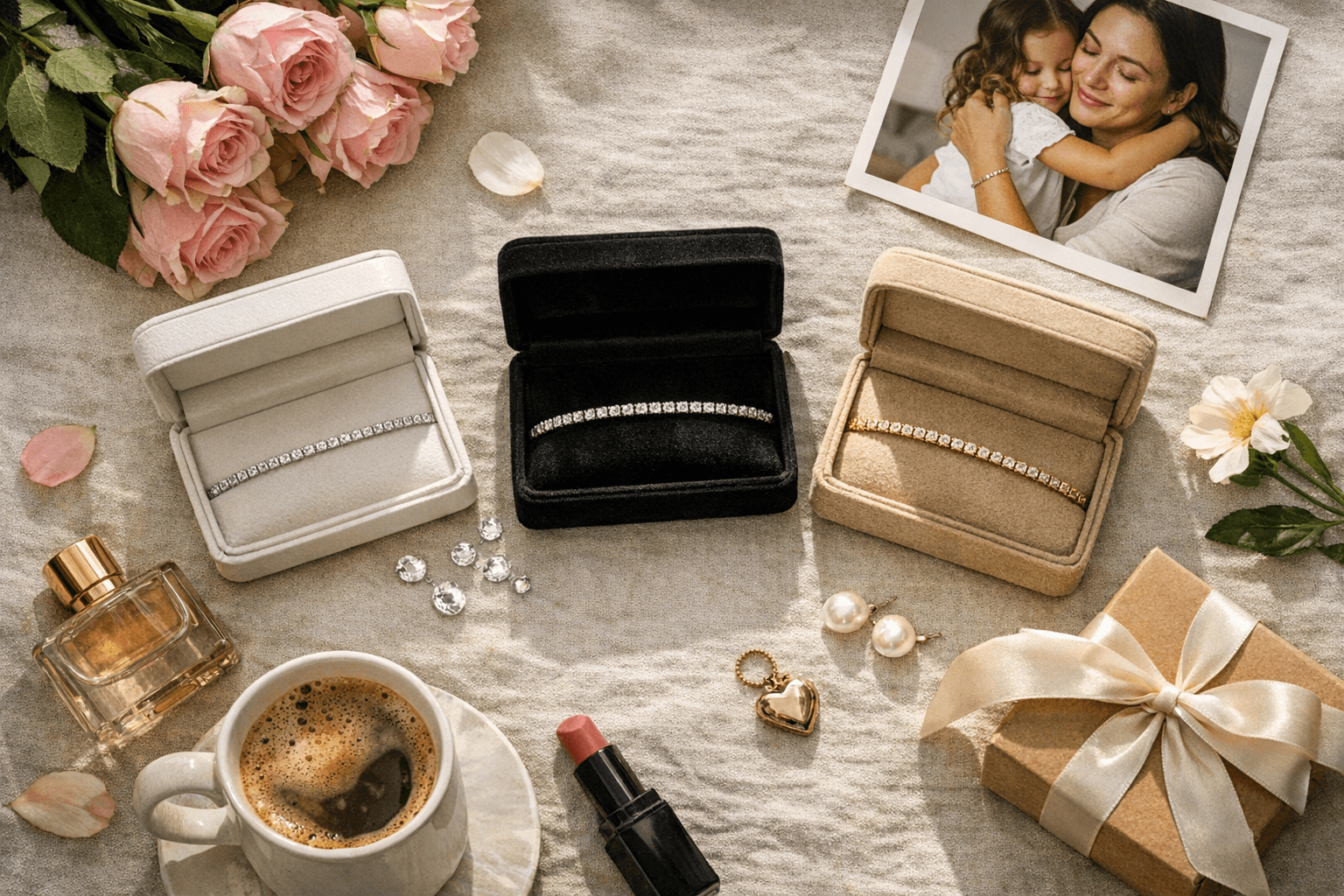
Lab-grown, cubic zirconia, and vermeil when budget matters
The category has widened because buyers want the same visual effect at very different price points. Forbes Vetted’s 2026 guide says lab-grown diamond tennis bracelets offer affordability, reduced environmental impact, and the same brilliance as natural stones, and it notes that its editors reviewed more than a dozen styles. That combination has made lab-grown one of the most important entry points for shoppers who want diamond sparkle without natural-diamond pricing.
The broader market suggests why. One update put global lab-grown jewelry sales at about 20 percent last year, while another estimate placed lab-grown at 14 percent of the market in 2024, with the United States accounting for roughly 80 percent of that market. In plain terms, lab-grown is no longer a niche alternative; it is a major part of how the jewelry case now looks.
Cubic zirconia and gold vermeil serve a different purpose. They are the easiest way to get the tennis-bracelet line at a lower cost, and they are especially useful if the goal is a polished look for occasional wear rather than an investment piece. Vermeil adds the warm look of gold over a silver base, while CZ keeps the sparkle high and the price low. These versions can be convincing at a glance, but they do not carry the same material weight as diamond or lab-grown diamond bracelets, so they make the most sense when style, not long-term value, is the point.
Carat weight changes the mood more than people expect
Carat weight matters here because it changes both the scale and the tone of the bracelet. In tennis bracelets, total carat weight, or CTTW, refers to the combined weight of all the stones, not one individual diamond. As that total rises, the stones are usually larger, the bracelet gets wider, and the line on the wrist becomes more obvious.
Brilliant Earth’s comparison chart places common tennis-bracelet weights in the 1 to 5 CTTW range. It lists 1 CTTW at $1,500-plus, 2 CTTW at $2,000-plus, and 3 CTTW at $2,500-plus. It also notes that a 1 CTTW bracelet can run to around 67 to 80 stones, which is a useful reminder that the tennis-bracelet look is often built from many tiny diamonds, not a few large ones. If you want understatement, stay closer to the lower end of the scale. If you want more presence, the bracelet begins to look fuller quickly.
Bracelet length is part of the design, not just the fit
Length changes the way a tennis bracelet sits and moves, and that changes the look as much as the stones do. Retail sizing guides commonly use 7 inches as the baseline, with many women falling between 6 and 7.5 inches depending on wrist size and preferred drape. Brilliant Earth says tennis bracelet lengths generally fall in that same 6 to 7.5 inch range.
A shorter fit can make the bracelet look tighter and more tailored, while a little extra length gives it a softer drape and more movement. That matters in stacking, too. A bracelet that is too loose can tangle with a watch or another bangle, while one that is too snug can lose the easy, floating effect that makes the style so appealing in the first place.
What the price range says about the category
Kay’s category page shows how broad the tennis-bracelet market has become. Its offerings range from sterling silver and lab-created styles at about $239.99 to lab-grown diamond bracelets in 10K white gold from roughly $1,119.99 to $3,499.99, with diamond styles reaching about $4,549.99. That spread makes one thing clear: the category now covers impulse-friendly sparkle, serious diamond jewelry, and everything in between.
That range also helps separate true investment pieces from style-first buys. At the lower end, sterling silver and CZ-style bracelets are about achieving the look. At the middle, lab-grown diamond versions deliver the strongest value case for shoppers who want real diamond brilliance without paying natural-diamond premiums. At the top, natural diamond bracelets justify their cost through material heft, but only if the size and setting are in proportion to the wrist.
The bracelet worth giving, and the one worth keeping
For Mother’s Day, the best tennis bracelet is not necessarily the biggest or the blingiest. It is the one that matches the wearer’s life, whether that means a petite diamond line that disappears under a sleeve, a half-tennis style that feels modern and low-key, or a lab-grown version that delivers real diamond sparkle at a more accessible level. Cubic zirconia and vermeil have their place too, especially when the aim is the clean silhouette rather than the long-term value.
The line between tasteful and flashy is thinner here than it looks, and that is the beauty of the category. Keep the stones small if you want quiet luxury, let the carat weight rise only if you want the bracelet to announce itself, and choose the length that lets it sit naturally on the wrist. That is how a tennis bracelet stays elegant instead of expensive-looking for the sake of it.
This article was produced by Prism’s automated news system from verified source data, official records, and press releases, then run through automated quality and moderation checks before publishing. The system is built and supervised by the people who set the standards it runs under. Read our full AI policy.
Did this article answer your question?


