Museum of Fine Arts, Houston mounts first U.S. Bernhard Schobinger retrospective
A necklace of iron nails, turquoise and gold anchors MFAH’s Bernhard Schobinger show, which turns scavenged materials into sharp, political jewelry.
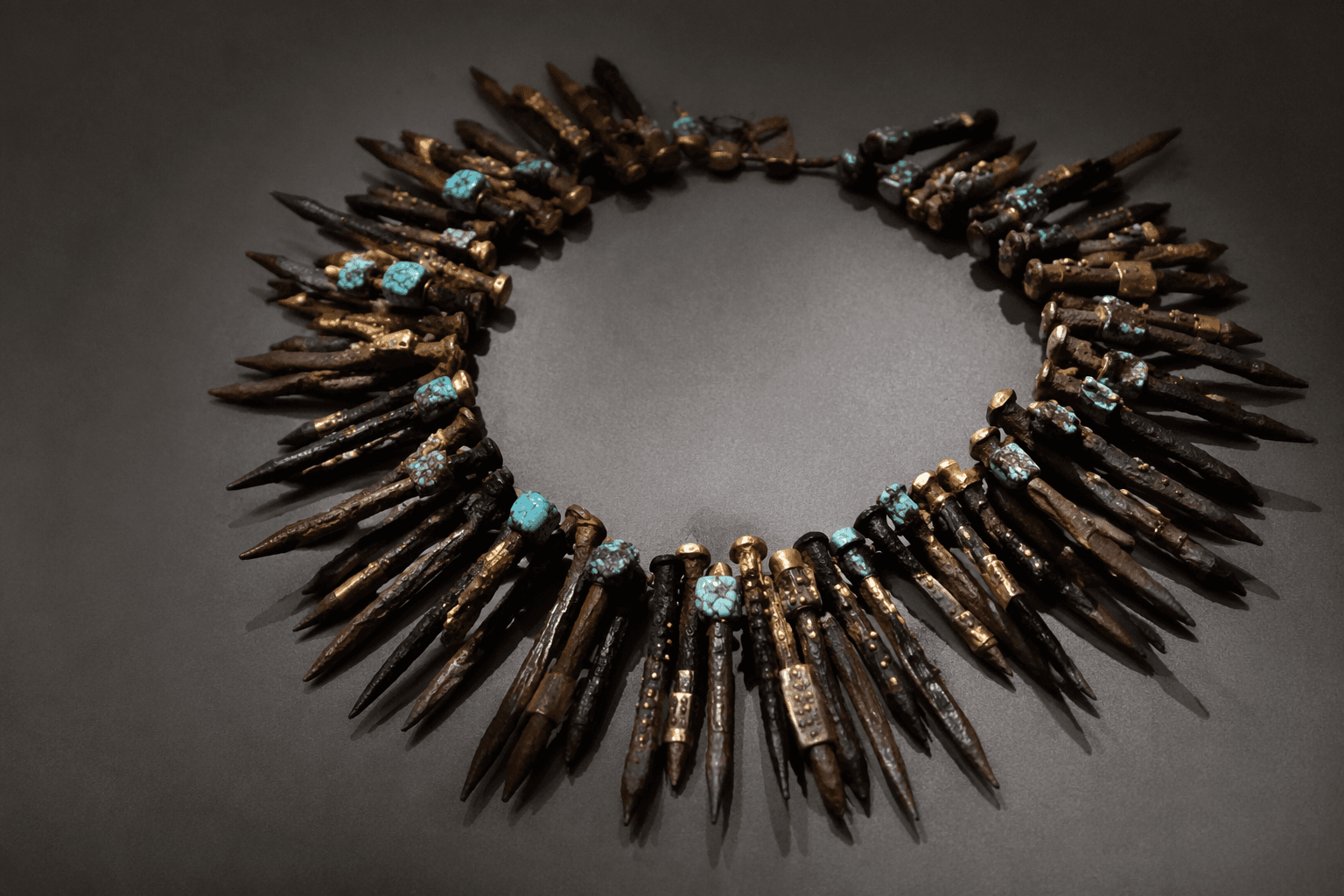
A necklace of iron nails, Iranian turquoise and gold now hangs inside the Museum of Fine Arts, Houston as part of Bernhard Schobinger’s first U.S. retrospective. Going Underground: The Jewels of Bernhard Schobinger brings together 53 works from 1968 to the present, including necklaces, bracelets, rings and selected sculptures drawn from prominent private collections and the museum’s own holdings.
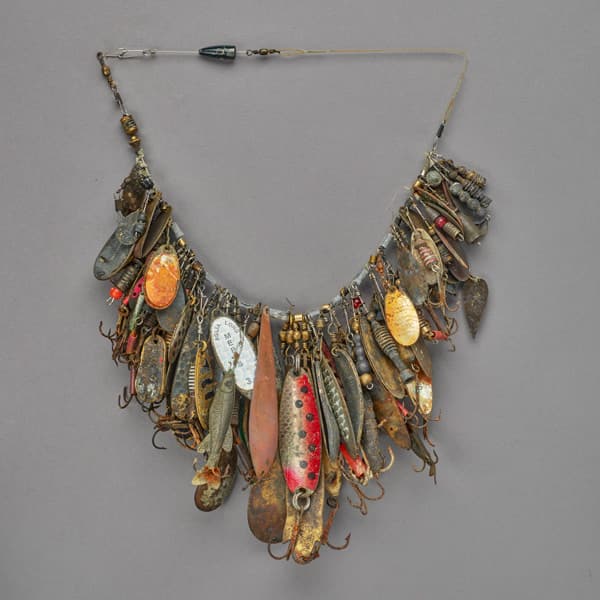
Schobinger’s work has never depended on the calm, polished vocabulary that still defines much minimalist jewelry. The MFAH frames him as one of the most significant artists working in contemporary jewelry, and the show leans into that claim with pieces built from scavenged and alternative materials that read as both elegant and unruly. In the museum’s collection, Schobinger appears in metal and asphalt, antique crystal beads with television bulbs and a German Coca-Cola bottle, porcelain and nylon, and a see-saw ring made with Toluca meteorite and fine gold. That range makes the clean-line gold chain look almost timid by comparison.
Born January 18, 1946, in Zurich, Schobinger trained as a goldsmith from 1963 to 1967 at E. Kundig & Co. in Zurich before maintaining an independent studio in Richterswil, Switzerland, from 1968 onward. The retrospective places that long career in critical dialogue with the shadow of World War II, punk music, and the political and cultural forces that shaped him. That context matters because Schobinger’s jewelry does not merely decorate the body; it argues with it, using tension, abrasion and negative space as actively as metal.
MFAH’s public programming extends the exhibition beyond the cases. A curator tour is scheduled with Elizabeth Essner, the Windgate Foundation Associate Curator of Craft, and Meagan Howard, a curatorial assistant in decorative arts, craft and design. The museum also notes that on Thursdays admission to the permanent collections is free, while special exhibitions require a discounted ALL ACCESS ticket.
For minimalist designers, Schobinger offers a harder lesson than restraint alone. His pieces are pared back, but never empty, and their power comes from materials that carry residue, history and friction. In a field that often equates luxury with visual quiet, his work shows how a ring, a necklace or a bracelet can stay wearable while still feeling like a provocation.
This article was produced by Prism’s automated news system from verified source data, official records, and press releases, then run through automated quality and moderation checks before publishing. The system is built and supervised by the people who set the standards it runs under. Read our full AI policy.
Did this article answer your question?

