Seven Essential Tips for Stacking and Wearing Ultra-Thin Rings
Prioritize fit and balance: thin bands are the building blocks, and a simple sizing rule prevents most comfort and spinning issues.
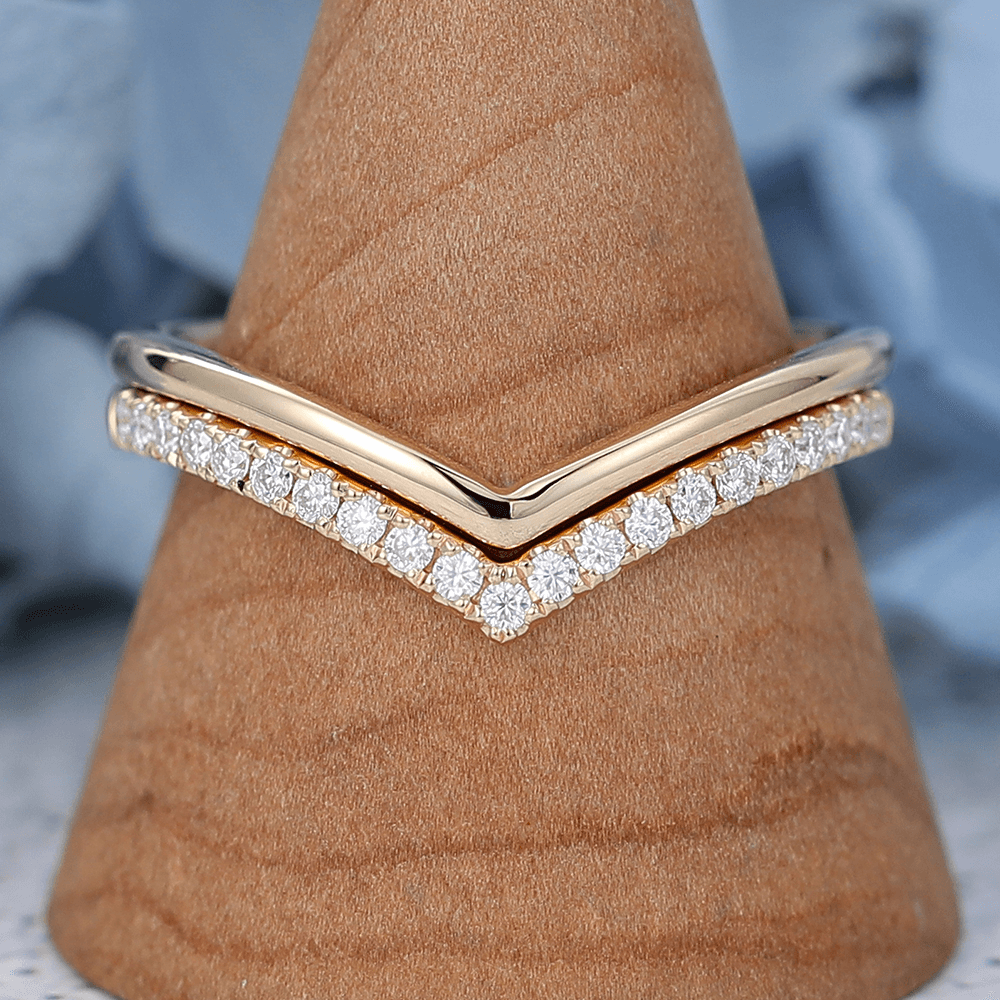
Balance is the North Star when styling ultra-thin rings. As WWD puts it, “The key to building the perfect ring stack lies in balance, styling different widths, silhouettes, and textures so each ring complements the next.” Below are seven actionable rules, grounded in sizing specifics, compositional mechanics and product-tested examples, that will help you stack confidently, comfortably and with personality.
1. Get properly sized (fit & comfort)
Start with fit: “If your ring feels too loose, it can spin or shift out of place, while rings that are too tight can cause discomfort or leave marks,” warns ValerieMadison. Brilliantearth gives a concrete sizing rule you can follow: “Increase ring size by approximately ¼ size for every 3-4 stacked rings on one finger.” Also note Brilliantearth’s nuance that you should “size wider bands slightly larger than thin bands for equivalent comfort,” and that rings “worn near the knuckle should be sized slightly smaller than those at the base of the finger.” Taken together, these guidelines prevent circulation-restricting stacks and rings that rotate and lose their intended appearance.
2. Build balance in width, height, silhouette and texture
“The key to building the perfect ring stack lies in balance” means more than mixing metals; it’s a three-dimensional exercise. Brilliantearth advises to “create dimensional variety by thoughtfully combining rings of different proportions” and to “position wide bands between clusters of thinner rings for breathing room and emphasis.” WWD recommends thinking of your stack as a curated mix, thin bands for layering, wide statement rings for impact, and curved or geometric shapes for dimension. Avoid pairing pieces with extreme depth differences: as Woodbury says, “You wouldn't want a super deep, tall ring stacked with a really skinny one, because they might just seem out of balance.” Consider the side profile as carefully as the top view when arranging pieces.
3. Choose a foundation/anchor and layer intentionally
Start with an anchor piece and build around it. WWD notes that your foundation could be “anything from a sculptural dome ring to a delicate pavé diamond band, something versatile enough to anchor your look.” Thin bands remain crucial: “The foundation of every flawless ring stack? Thin bands: the versatile essentials that make layering effortless.” A practical starter move from Fashionmagazine: “Place two thinner, daintier rings on your finger first, and layer [a puffy statement] one on top,” such as Mejuri’s puffy Charlotte ring. Product examples that illustrate these choices include the Jennifer Fisher Set of 7 Stackable Rings ($150 at Nordstrom) as a mixable base and the Mejuri Charlotte Slim Ring ($98 at Mejuri) as a sleek, thin foundation; for a gem-forward anchor consider the Blue Nile Round and Emerald Cut Diamond Bezel Ring ($1,390 at Blue Nile).
4. Use negative space and deliberate finger placement
Composition extends beyond a single finger. Brilliantearth recommends you “Leave at least one finger bare: Create balance through strategic negative space by leaving some fingers unadorned,” and suggests using thumbs or pinkies as natural breathing-room fingers. Romadesignerjewelry reinforces this: “For a purposeful and well-balanced appearance, leave at least one finger without rings. This creates visual breathing room, allowing each ring to shine.” Consider asymmetry, more negative space on your dominant hand for comfort, and alternate stacked fingers to create rhythm rather than covering every finger indiscriminately.

5. Mix metals, textures and stones, but keep cohesion
Stacking is an invitation to personalize: WWD encourages you to “mix metals for contrast, incorporate diamonds or gemstones for sparkle and color, or keep it monochrome in your favorite metal for a sleek, unified vibe.” Fashionmagazine’s Woodbury adds practical limits: avoid clashing colours (“Maybe steer clear of pairing red with green… unless you’re looking headed to a holiday party”) and, when combining stone rings, “go for stones with different shapes” to avoid a monotonous look. A suggestion: pair thin polished bands with a textured wishbone or a wavy Roma Wave ring, or anchor a stack with a pearl accent such as the Roma Freshwater Pearl Ring for a single-note focal point.
6. Care and maintenance: prevent wear before it happens
Stacking increases contact and friction, WWD calls out that rings can “trap dirt, dull down faster, or even scratch each other over time.” ValerieMadison’s practical prevention is simple: wear smoother bands at the base to “reduce friction and create a stable foundation.” Regular, gentle cleaning and periodic inspection for scratches will keep a stack looking fresh; WWD reminds us that “Keeping your stacked rings in top condition doesn’t require much, just a few smart habits and occasional TLC.” When possible, remove stacks for heavy handwork and store individual pieces separated to limit abrasion.
7. Know which rings not to stack and tailor choices to finger, occasion and practicality
Not every ring is a team player. Fashionmagazine warns that rings with “too much of a depth discrepancy” should be avoided in stacks, and that if a ring has “a large centre stone that’s been set low and incorporated into the band, it’s not going to sit well with other rings… It’s just going to take up all the real estate on your finger.” Consider finger proportions, too: WWD advises that “for shorter fingers, tall stacks can feel bulky; for longer fingers, thin bands may get lost.” Match width to finger shape, three slim bands suit a petite ring finger, while a statement ring can anchor a longer middle finger. Context matters: Romadesignerjewelry’s breakdown, Everyday Elegance (dainty bands), Workwear Chic (subtle, coordinated rings), Glamorous Evenings (curated, bolder stacks), will help you decide when to streamline and when to layer more generously. And remember ValerieMadison’s daily-wear tip: “For daily wear, avoid stacking too many rings on one finger… distribute rings across multiple fingers to lighten the load.”
Closing notes and quick shopping cues Thin bands are your best friend, whether you’re building a reserved weekday stack or a bolder evening composition. If you want to start small, consider a set like the Jennifer Fisher Set of 7 Stackable Rings ($150 at Nordstrom) or a single Mejuri Charlotte Slim Ring ($98 at Mejuri) and experiment with placement and negative space before adding heavier or more textured pieces. Above all, prioritize fit and comfort: with the Brilliantearth sizing rule and ValerieMadison’s foundation-band advice, you’ll avoid the most common stacking pitfalls and keep your hands feeling as elegant as they look.
This article was produced by Prism’s automated news system from verified source data, official records, and press releases, then run through automated quality and moderation checks before publishing. The system is built and supervised by the people who set the standards it runs under. Read our full AI policy.
Did this article answer your question?


