SheerLuxe editors reveal the gold staples they never take off
SheerLuxe’s fashion team proves repeat wear is the real luxury, with fine chains, small hoops, slim bands, and stackable rings forming a gold capsule that earns its keep.
The repeat-wear test
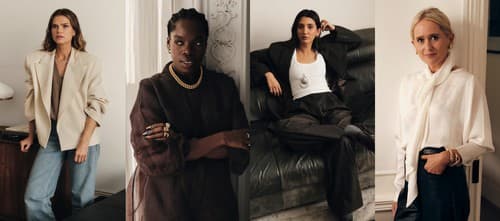
The strongest proof of value in jewelry is not a display case moment, it is the piece you forget to take off. SheerLuxe’s fashion team built its latest gold edit around that idea, sharing the staples they wear on repeat and framing them as timeless everyday essentials, modern heirlooms, and the quiet kind of polish that never looks forced.
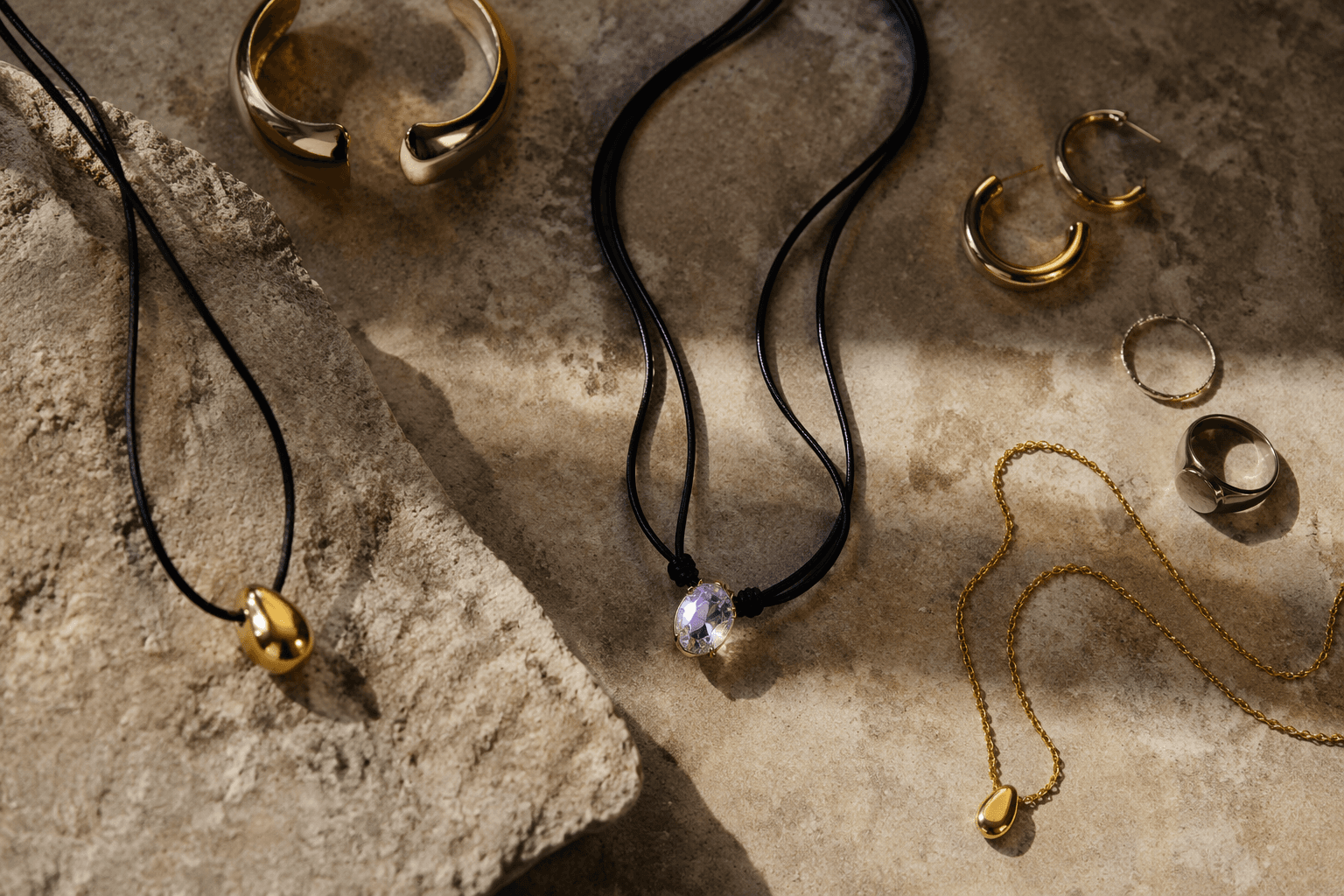
That focus changes the conversation from trend to uniform. The minimalist jewelry wardrobe here is not vague or aspirational, it is precise: a fine chain, small hoops, slim bands, stackable rings, and delicate personalized chains. Together, those five pieces do the work of a larger collection while keeping the line clean and the shine controlled.
1. The fine chain that anchors everything
The simplest necklace in the group does the most heavy lifting. A thin gold chain, especially one with a small pendant or a subtle personalized detail, sits close enough to the neck to read as part of the outfit rather than an add-on, which is exactly why it keeps coming back into rotation.
Catbird is one of the clearest reference points for this approach. Established in Brooklyn in 2004, the brand says it makes its jewelry in its Brooklyn studio with trusted partners, using ethically sourced gold and conflict-free stones. It also says more than 95 percent of its solid gold is recycled and its diamonds are recycled, which gives the minimal look a stronger material backbone than the usual vague sustainability language.
2. Small hoops as the everyday finish
Small hoops are the quiet workhorse of a polished jewelry rotation. They frame the face without shouting, and they move easily from tailored shirts to knitwear to evening dressing, which is why they sit so naturally inside a repeat-wear wardrobe.
Pandora adds useful legacy context here. The Danish jeweler began in Copenhagen in 1982, founded by Per Enevoldsen and Winnie Liljeborg, and the original business name was Populair Smykker, meaning Popular Jewellery. Before it became known globally for customizable jewelry, it was already building the idea that personal ornament could be approachable and wearable, a philosophy that still suits the minimalist gold hoop as much as the charm bracelet.
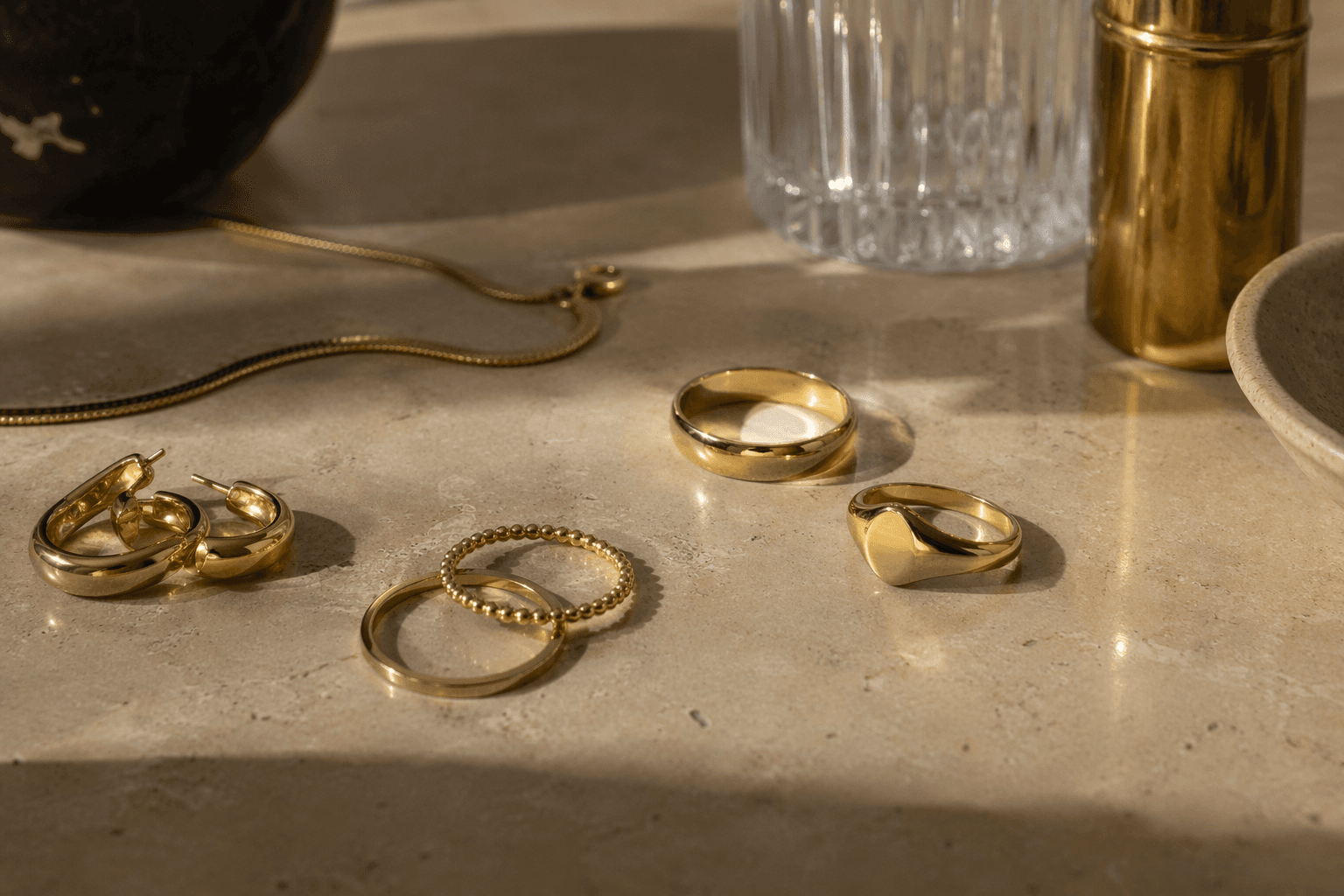
3. Slim bands that make the whole stack feel deliberate
If one piece defines minimalist jewelry right now, it is probably the slim band. A narrow ring in gold, worn alone or stacked in multiples, keeps the hand looking refined rather than crowded, and it is one of the easiest places to build a jewelry uniform without losing restraint.
Catbird’s position in this space matters because the brand says it pioneered fine jewelry designed to be worn every day and layered or stacked over time. That idea is less about accumulation than continuity: a band bought once and worn for years becomes part of a personal archive, especially when the materials are as specific as recycled solid gold and recycled diamonds.
4. Stackable rings with a modern provenance
The newer minimalist brands give this category a different kind of credibility. Otiumberg says it was founded in 2016 by sisters Christie and Rosanna Wollenberg, is London-based, and operates as a B Corp. Its identity is built around understated elegance and refined simplicity, which is exactly the sweet spot for rings that need to sit quietly beside a watch, a manicure, and a sleeve cuff.
Kimaï pushes the same aesthetic in a fresher direction. Founded by childhood friends in Antwerp, the brand says it uses recycled gold and lab-grown diamonds, a combination that speaks directly to the desire for sparkle without the usual excess. In practice, that makes it especially well suited to stackable rings, where small stones and slim profiles matter more than carat size.
5. Personalized chains that keep the look intimate
Personalization is what stops a minimalist jewelry wardrobe from feeling generic. A tiny initial, a discreet charm, or a necklace with a private meaning adds just enough narrative to make the piece feel lived-in, which is why delicate personalized chains have become one of the easiest staples to wear every day.
%2Fhttps%253A%252F%252Fsheerluxe.com%252Fsites%252Fsheerluxe%252Ffiles%252Farticles%252F2024%252F02%252Fna-full-bleed.png&w=1920&q=75)
This is where the SheerLuxe framing of “modern heirlooms” makes sense. The best pieces in the edit are not precious because they are fragile, but because they are repeatable. They earn value through use, not by sitting untouched, and a personalized chain is often the piece that gets worn hardest because it carries memory without adding visual noise.
How to build the five-piece capsule
The cleanest version of the minimalist jewelry uniform can be built from five slots:
- one fine gold chain, ideally short and close to the collarbone
- one pair of small hoops, smooth or lightly textured
- one slim band, worn alone or as the base of a stack
- two stackable rings, preferably in the same metal family
- one personalized chain or charm piece for the personal note
The trick is restraint. Keep the finish consistent, the scale small, and the spacing intentional. If the chain is delicate, let the hoops stay compact. If the rings are stacked, avoid overloading the neck and ears at the same time. Minimalism works best when one piece leads and the others support.
What the strongest claims actually mean
The most convincing brands in this conversation are the ones that name their materials clearly. Recycled gold, recycled diamonds, ethically sourced gold, conflict-free stones, lab-grown diamonds, and B Corp status are all concrete signals, even if they measure different things. B Corp points to broader standards around governance and responsibility, while recycled metals and conflict-free stones speak more directly to sourcing.
That distinction matters because minimalist jewelry often sells itself on taste alone. SheerLuxe’s edit shows the stronger version of the category: pieces that look effortless, but are backed by traceable materials, responsible sourcing, and a design language built for daily wear. In 2026, that is what separates a pretty accessory from a true staple.
This article was produced by Prism’s automated news system from verified source data, official records, and press releases, then run through automated quality and moderation checks before publishing. The system is built and supervised by the people who set the standards it runs under. Read our full AI policy.
Know something we missed? Have a correction or additional information?
Submit a Tip