Smart Shoppers Guide to Metals, Hallmarks, and Gemstones for Minimalist Wardrobes
Before you buy that delicate gold band or diamond solitaire, know what the hallmarks, treatments, and metal grades actually mean.
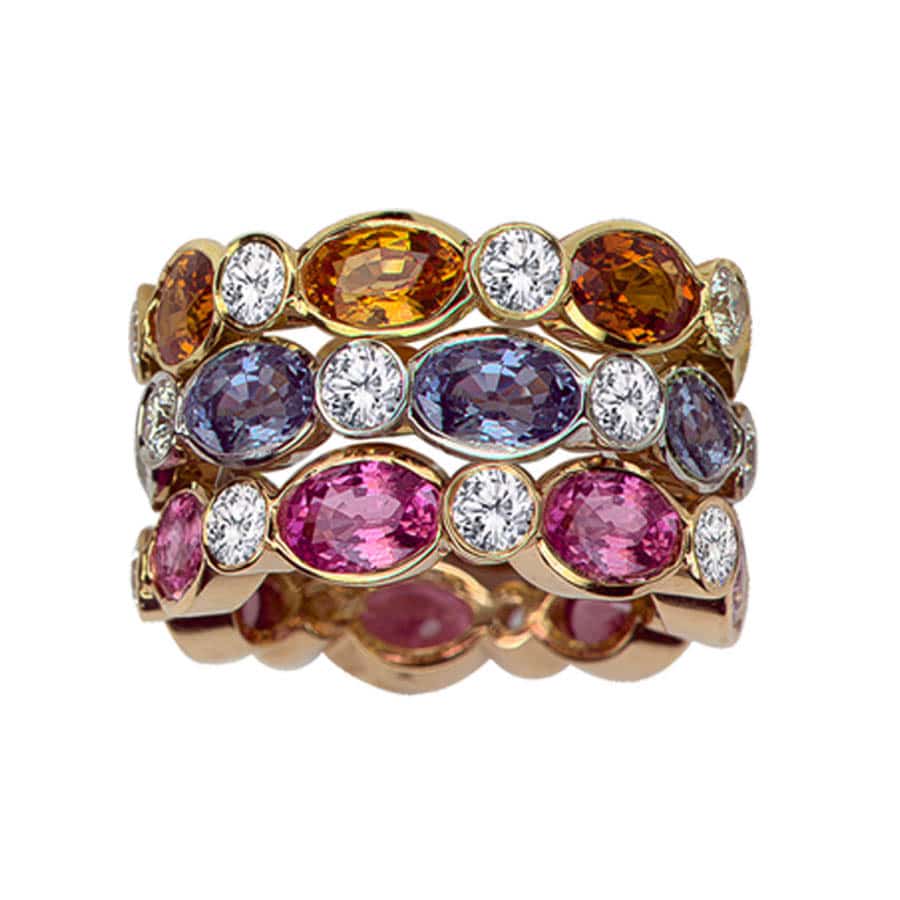
Minimalist jewelry asks a deceptively simple question: if you're only going to wear a few pieces, shouldn't each one be exactly right? A single ring, a fine chain, a pair of understated studs — these are the pieces that never leave your body, the ones that show up in every photograph and outlast every trend. That's precisely why the decisions behind them matter more, not less, than the choices behind a statement necklace you'll wear twice a year. Getting them right means understanding four fundamentals: the metal beneath the surface, the hallmarks that guarantee it, the quality of any stones, and how to keep everything looking the way it did on day one.
Understanding Your Metal Options
The metal is the architecture of any minimalist piece, and your first decision is which one suits your life. Yellow gold reads as warm and classic; white gold and platinum read as cooler and more contemporary. But the choice isn't just aesthetic — it's structural and financial.
Gold is sold by karatage, which describes the ratio of pure gold to alloy. 24-karat gold is pure but too soft for daily wear. 18-karat gold (75% pure gold) strikes a balance between richness of color and durability, making it the standard for fine jewelry. 14-karat gold (58.3% pure) is harder and more affordable, and it's the workhorse of the American market for good reason — it resists scratches better and costs less without looking cheap. 10-karat gold (41.7% pure) is the legal minimum for gold labeling in the United States.
White gold deserves a closer look because what you're often buying is yellow gold alloyed with palladium or nickel, then plated with rhodium to achieve that bright, silvery finish. The rhodium wears off over time and requires re-plating every one to three years depending on wear. If you find yourself allergic to white gold, nickel is usually the culprit — ask your jeweler specifically about palladium-alloyed white gold as an alternative.
Platinum is denser, naturally white, and hypoallergenic. It's also the most expensive option, both at purchase and at the bench — platinum work requires specialized tools and labor. Its durability is often misunderstood: platinum doesn't lose metal when it scratches, it displaces it, which means a patina develops over time that some wearers love and others prefer polished away.
Sterling silver (92.5% silver, 7.5% alloy) is the entry point for many minimalist wardrobes, and it's a legitimate one. It tarnishes with exposure to air and sulfur compounds, but regular wear and occasional polishing keeps it bright. For pieces worn directly against skin every day, silver's main adversary is chlorine — remove it before swimming.
Reading Hallmarks: The Language Stamped Into Metal
A hallmark is a quality guarantee stamped by an assay office or manufacturer, and learning to read them turns you from a trusting buyer into an informed one. In the United Kingdom, hallmarking has been legally required since the 14th century; the system involves four marks: the maker's mark, the fineness mark (e.g., 750 for 18-karat gold), the assay office mark, and the date letter. In the United States, hallmarking is voluntary but the Federal Trade Commission mandates that any karat stamp on a piece sold domestically must be accurate within a half-karat tolerance.
Common marks to recognize:
- 999 or 24K: Pure gold
- 750 or 18K: 18-karat gold
- 585 or 14K: 14-karat gold
- 925: Sterling silver
- 950 or PT950: Platinum at 95% purity
- 850 or PT850: Platinum at 85% purity
If a piece carries no hallmark at all, that's not automatically disqualifying — antique pieces and some artisan work predate or sit outside hallmarking conventions — but it does mean you're relying entirely on the seller's word and your own testing. A reputable jeweler will provide a receipt that states metal content in writing, which gives you legal recourse if the description proves inaccurate.
Diamond Basics: The Four Cs in a Minimalist Context
For a minimalist wardrobe, the diamond conversation usually centers on a single stone: a solitaire, a bezel-set round, a simple baguette. That focus makes the 4Cs — cut, color, clarity, and carat — even more critical, because there's no surrounding design to distract from the stone's own quality.
Cut is the most important of the four for brilliance and light performance. The American Gem Society (AGS) grades cut on a scale of 0 to 10, where AGS 0 is Ideal, the highest designation. An AGS Ideal-cut round brilliant will return light with maximum symmetry and sparkle; this is the grade to seek if you're buying a solitaire where the stone carries everything.
Color grades run from D (colorless) to Z (light yellow). For a minimalist piece set in white gold or platinum, staying in the D-to-G range ensures the stone reads as white and clean. In yellow gold settings, an H or I stone often looks just as bright because the warm metal reflects into the stone anyway.
Clarity measures internal inclusions and surface blemishes on a scale from Flawless to I3. For most wearers, VS2 (Very Slightly Included) or SI1 is the sweet spot: inclusions exist but are not visible to the naked eye, and the price difference from Flawless is significant. Always ask to see a stone loupe-clean before committing, and request the grading report — GIA and AGS reports are the industry benchmarks.

Carat is weight, not size. A well-cut 0.90-carat diamond will often face up larger than a poorly cut 1.00-carat stone. In minimalist settings, proportions matter more than chasing round numbers.
Gemstone Treatments: What Sellers Are Required to Disclose
Here is where the jewelry industry's transparency problem becomes most acute. Nearly every colored gemstone on the market today has been treated to improve its appearance, and those treatments vary wildly in their permanence and their impact on value.
Heat treatment is the industry standard for sapphires, rubies, and many tanzanites. It's stable, permanent, and widely accepted — a heat-treated sapphire isn't a lesser stone, but it should be priced accordingly relative to an unheated stone of comparable quality, which commands a significant premium. The GIA and AGS will note heat treatment on their reports.
Fracture-filling in diamonds and emeralds is a different matter. Glass or resin fills surface-reaching fractures, improving apparent clarity. These fillings are not permanent — they can be damaged by ultrasonic cleaners, jeweler's torches, and even acidic cleaning solutions. A fracture-filled stone must be disclosed at point of sale, and if it isn't, that is a red flag.
Beryllium diffusion in sapphires and corundum is among the more controversial treatments, as it alters color at a molecular level and was not always disclosed when the practice first emerged. Ask directly whether any colored stone has been diffusion-treated, and request a laboratory report from GIA or AGS to confirm.
Irradiation is used in blue topaz, some diamonds, and other stones to introduce or intensify color. It's stable in most cases, but the depth of color may differ dramatically from what appears in store lighting.
The disclosure rule is simple: if a seller can't tell you what treatments, if any, a stone has received, don't buy it.
Care and Maintenance: Protecting Your Investment
A minimalist jewelry wardrobe, by definition, gets worn constantly. That means maintenance isn't optional — it's the price of daily beauty.
For gold and platinum pieces, a weekly rinse in warm water with a drop of dish soap and a soft toothbrush is enough to remove the skin oils and lotion buildup that dull stones and metal alike. Ultrasonic cleaners work well for diamonds but should not be used on emeralds, opals, pearls, or any fracture-filled stone.
- Remove all jewelry before swimming in chlorinated pools or saltwater
- Store pieces individually to prevent scratching — small fabric pouches or compartmentalized boxes work well
- Take rings off before applying hand cream; most lotions build up behind stones and in settings
- Have prongs checked by a jeweler annually if you wear a stone-set ring daily
- Re-plate white gold rhodium as needed, typically every one to three years
Pearl care is its own discipline: pearls are organic, porous, and damaged by perfume, hairspray, and even the acids in perspiration. Wipe them with a damp cloth after wearing and store them flat, away from other pieces that could scratch their nacre.
The AGS recommends professional cleaning and inspection once a year for any piece worn regularly — a service most jewelers offer at no or low cost. That annual check is when a professional will catch a loose prong before it becomes a lost diamond, or identify the early signs of a cracked shank before it becomes a break.
Building a minimalist jewelry wardrobe is ultimately an act of precision: fewer choices, made better. Every piece you choose to wear every day should be chosen with the same rigor you'd apply to anything meant to last a lifetime.
This article was produced by Prism’s automated news system from verified source data, official records, and press releases, then run through automated quality and moderation checks before publishing. The system is built and supervised by the people who set the standards it runs under. Read our full AI policy.
Did this article answer your question?


