Tiffany and Elsa Peretti shaped minimalist jewelry in sterling silver
Elsa Peretti turned Tiffany’s sterling silver into a modern language of cuffs, chains, and open space, and those codes still define minimalist jewelry today.
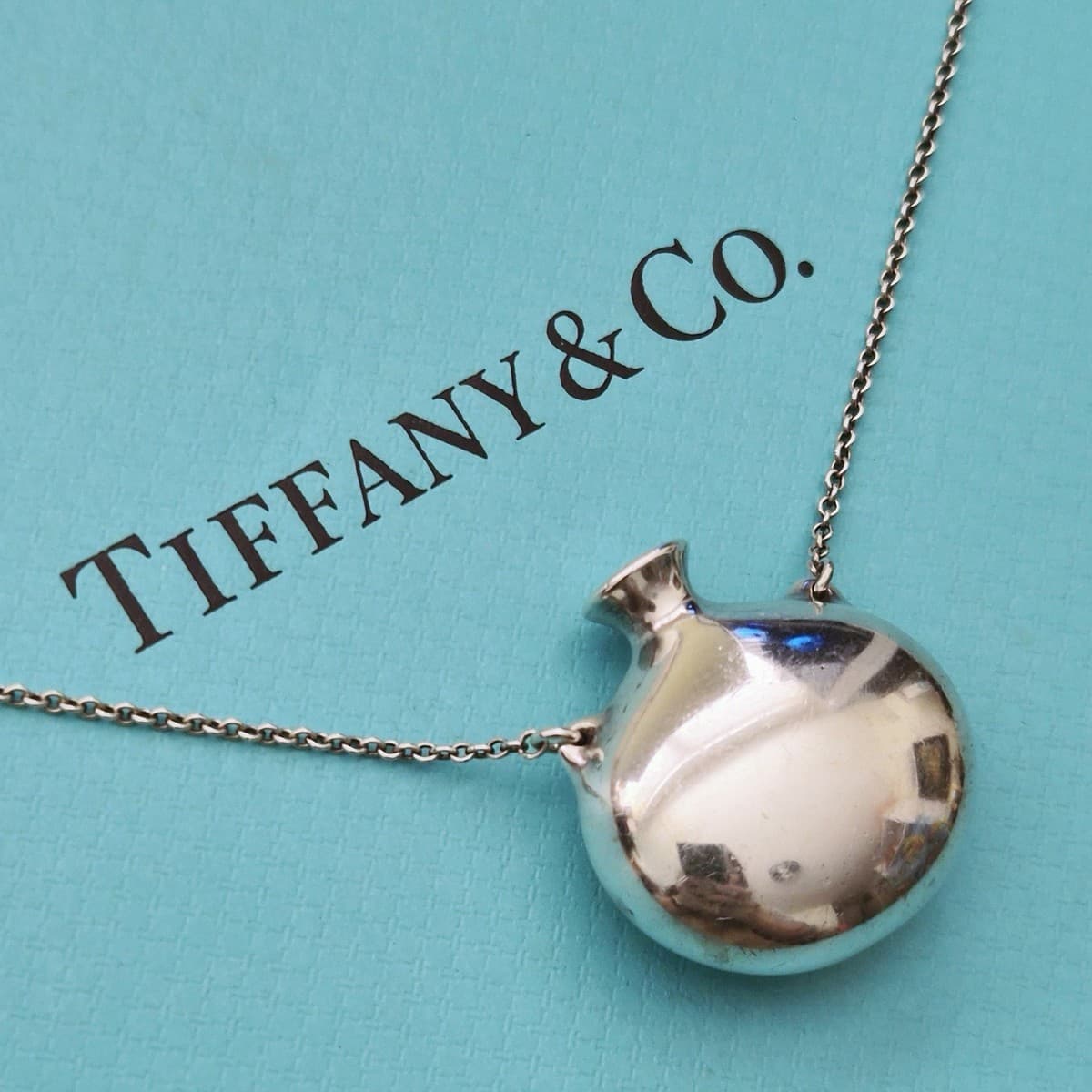
The cleanest minimalist jewelry story does not begin with a trend forecast. It begins with silver, a standard, and Elsa Peretti’s instinct for shape. Tiffany says it was the first American company to institute the .925 sterling silver standard in 1851, and Peretti’s arrival at Tiffany & Co. in 1974 turned that material into something sharper, more sensual, and unmistakably modern.
The silver foundation
Sterling silver is the material that made restraint look intentional. Tiffany’s .925 standard gave silver a technical pedigree long before minimalist jewelry became a retail category, and that fineness mark still matters because it separates true sterling from vague “silver-tone” language that can hide base metal underneath. In Peretti’s hands, the metal did not read as a cheaper stand-in for gold. It read as the right surface for line, curve, and volume.
That is why her work still feels so legible in today’s minimalist wardrobes. Silver reflects light without the heat of yellow gold, and it holds a sculptural profile without needing heavy ornament to justify itself. For readers building a jewelry capsule, that combination is still the point: a material that can carry a strong form, sit close to the body, and work with a white shirt, a knit dress, or a tailored jacket without overpowering any of them.
Peretti’s sculptural code
Peretti was not designing decoration. She was building a visual language around organic forms, tactile surfaces, and empty space. Tiffany’s heritage material says the Bone Cuff was designed in 1970, before her Tiffany partnership formally began, and that its inspiration came from childhood visits to a Capuchin crypt in Rome and from Antoni Gaudí’s organic architecture. That lineage matters because it explains why her jewelry feels bodily and architectural at once.
The first Tiffany collection she brought to the house reportedly included the Bone cuff and Bottle pendant, and the launch sold out on the day it debuted. One account says more than 2,000 people attended her first personal appearance at Tiffany, a useful reminder that minimalism can generate a crowd when the form is forceful enough. Tiffany later marked the 50th anniversary of her partnership with the house in September 2024, with special reissues and bold-scale interpretations of her icons.
Those icons remain the best shorthand for her influence. Open Heart, Bean, Bone Cuff, Mesh Snake, Diamonds by the Yard, and Pearls by the Yard all share the same discipline: strong outline, controlled surface, little or no excess. Tiffany describes the Bone Cuff as a “revolutionary vision of femininity,” and Peretti herself favored the word “craftswoman,” a small but telling clue to how seriously she treated construction.
The design details that still read as modern
What survives from Peretti’s work is not just a famous name. It is a set of design codes that continue to shape the pieces people buy now. Diamonds by the Yard uses fine fluid chains and bezel-set stones, which is exactly why it feels current alongside today’s slim chain necklaces and barely-there pendants. The setting keeps the stone secure while visually quieting the metal around it, so the eye lands on rhythm rather than grandeur.

That same logic runs through the best minimalist basics today: small hoops that trace the ear without crowding it, narrow chains that can be layered or worn alone, and sculptural silver pieces that suggest form without shouting for attention. Peretti’s work made room for negative space as a design element, not an absence. The open center of a cuff, the curve of a pendant, the spacing between stones on a chain, all of it tells the same story.
For anyone shopping this look, the most useful filter is not “Is it minimalist?” but “Does the shape carry the piece?” A strong silver cuff, a delicate bezel-set chain, and a small pendant with an organic outline will read as more enduring than anything overloaded with texture or embellishment. The best pieces feel resolved from across a room and quiet up close.
Why the market and museums both took notice
Peretti’s influence was not limited to taste-making circles. Tiffany says her designs are now in the permanent collections of the British Museum, the Metropolitan Museum of Art, the Museum of Fine Arts, Boston, and the Museum of Fine Arts, Houston. The Nando and Elsa Peretti Foundation adds that Tiffany donated approximately thirty Elsa Peretti pieces to the British Museum’s permanent 20th-century collection, which helps explain why her work sits comfortably between commerce and culture.
The business numbers also clarify her importance. The Fashion Law cited Tiffany disclosures showing that Peretti designs accounted for 10% of Tiffany’s business in the early 2010s, while The Jewellery Editor has said her designs generated almost 10% of Tiffany’s net global sales in some periods. That is not a side category. It is a core engine, and it shows that restraint can be a commercial language when the forms are strong enough.
Her career arc reinforces the point. Born in Florence in 1940, educated in Rome and Switzerland, and later active in New York City and Barcelona, Peretti received the Council of Fashion Designers of America Accessories Designer of the Year Award in 1996. She died on March 18, 2021, at age 80, leaving behind more than 30 collections for Tiffany over four decades, including Bean, Open Heart, Mesh, Bone, Scorpion, Thumbprint, Teardrop, and Zodiac. Minimalism, in her case, was never a single hit. It was a whole system.
What to look for now
The most wearable minimalist jewelry still follows Peretti’s rules. Look for .925 sterling silver when you want the cool, structural clarity that made her work so durable. Look for fluid chains, bezel-set stones, cuffs with negative space, and small forms that feel sculpted rather than merely reduced. And look for pieces that can live in daily rotation without losing their outline.
That is Peretti’s lasting contribution: she helped make sterling silver feel modern, intentional, and fashion-forward, not merely affordable. The pieces that matter most today still carry that same quiet authority.
This article was produced by Prism’s automated news system from verified source data, official records, and press releases, then run through automated quality and moderation checks before publishing. The system is built and supervised by the people who set the standards it runs under. Read our full AI policy.
Did this article answer your question?