Top Dainty Necklaces for UK Shoppers, Ranked and Reviewed in 2026
Dainty necklaces demand more than prettiness; the right chain material and pendant scale separate a lasting daily piece from one that flakes off by summer.
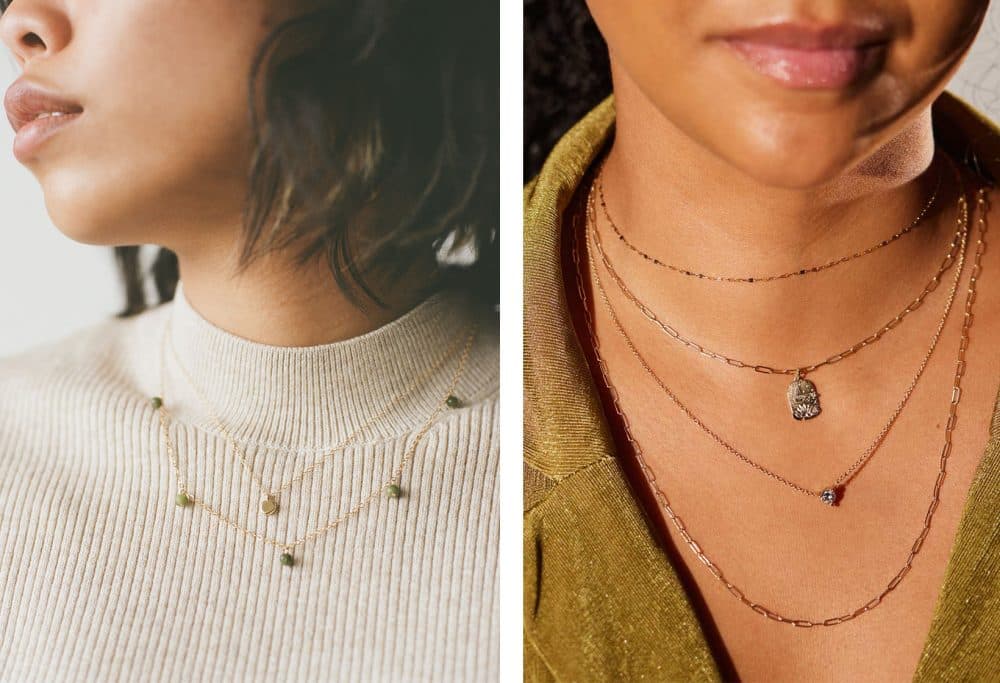
Not all delicate necklaces are created equal. A piece that photographs beautifully on a white background can turn your décolletage green by August if the wrong metal sits against your skin day after day. The UK market for dainty necklaces is dense with options, which makes understanding the underlying architecture of these pieces, the chain construction, the pendant scale, the metal grade, more important than any single product recommendation.
What follows is a ranked guide to the styles, chain types, and pendant formats that genuinely work for everyday wear, grounded in current market guidance for UK shoppers and the material science that determines whether a necklace lasts a season or a decade.
Before getting into specific styles, one measurement matters above all others: pendants should stay under 15mm for true everyday minimalism. At that scale, a pendant reads as refined rather than decorative, sits comfortably beneath a collar, and doesn't compete with other pieces when layering.
The ranked styles
1. Tiny birthstone necklaces
A small birthstone necklace is the most compelling entry point into dainty jewelry precisely because it does two things at once: it introduces a whisper of colour without disrupting a minimal aesthetic, and it carries personal meaning that makes the piece feel chosen rather than generic. A 4mm or 5mm stone set in a simple bezel or four-prong setting on a fine chain is genuinely invisible from across a room, which is the point. The bezel setting, where the metal wraps fully around the stone's girdle, is particularly well-suited here because it protects a small stone from the knocks of daily life while keeping the profile flush and understated. The chain underneath is your foundation: wear it alone for the cleanest possible look, or build outward with pendants at different lengths when you want more presence.
2. Personalized minimalist necklaces
Personalized pieces occupy a specific category because they tend to be worn continuously rather than rotated. A single initial pendant, a tiny engraved disc, a small symbol with private meaning, or coordinates of a place that matters: these are the pieces that earn the description "never take it off." That constant contact has a direct material consequence. Personalized necklaces are handled and touched far more than a simple chain, which means the metal substrate is under sustained stress. Gold-filled or solid gold is the only sensible choice here: the personalization stays crisp, the engraving retains its edges, and the piece doesn't reveal a base metal underneath after a year of wear. The four most useful personalization formats are a single initial or monogram, a tiny engraved disc, a small meaningful symbol or charm, and coordinates of a special place, each of which works at the scale required for genuine minimalism.
3. Small disc or circle pendants
The disc or circle is the most versatile pendant format in this category, described aptly as timeless and versatile, and for good reason: the circular form reads differently depending on its finish. A high-polish gold disc at 10mm catches light the way a coin does; a matte or brushed version recedes quietly against the skin. At under 15mm, a disc pendant layers without competing, works against every neckline, and transitions from morning to evening without requiring a change. It is also one of the more forgiving shapes from a craft standpoint: a clean circle is difficult to execute poorly, and at this scale, quality of finish becomes immediately apparent.
4. Delicate bar necklaces
The horizontal bar is the pendant style most associated with contemporary minimalism, and it earns that association through function as much as aesthetic. Its clean, linear geometry lies flat against the sternum, creates a visual horizontal line that elongates and draws the eye, and works particularly well in gold-filled yellow gold or white gold at lengths between 14 and 16 inches. Bar necklaces are also a reliable canvas for personalization, a name or date engraved along the bar's surface, which bridges the gap between this style and the personalized category above. The key to keeping a bar pendant genuinely minimal is restraint in width: a bar that extends beyond 20mm starts to read as a statement rather than an accent.
5. Tiny geometric shape pendants
Small geometric pendants, a triangle, hexagon, or fine crescent, introduce what might be called subtle interest: a shape that rewards a second glance without demanding a first. These work best when the geometry is precise and the finish is consistent, since any irregularity is visible at small scale. A hexagon pendant at 8mm in solid gold has an almost architectural quality; a crescent at the same scale suggests celestial references that have been a persistent thread in fine jewelry for decades. The styling principle here is the same as for all pendants in this guide: keep the form under 15mm, choose a chain weight that complements rather than overwhelms, and let the geometry do the work.

6. Small teardrop pendants
The teardrop or pear silhouette carries the unusual distinction of being simultaneously on trend and timeless, a combination that is rarer than it sounds in jewelry. The elongated drop shape works with the body's natural vertical axis and tends to move slightly as the wearer moves, which gives these pendants a liveliness that a static disc or bar doesn't share. In fine jewelry, a teardrop pendant often features a small faceted stone, a pear-cut amethyst, topaz, or diamond simulant, in a minimal bezel or three-prong setting. At under 15mm in length, the form stays firmly in dainty territory.
The chain underneath everything
No pendant functions without a chain, and the chain is the component most frequently compromised at lower price points. Three chain structures are worth understanding for durability.
7. Cable chains
The cable chain is the most structurally sound option for daily wear: round links connected at right angles create a construction that resists kinking and distributes tension evenly. This is the chain to choose if you wear a necklace continuously, sleep in it, or tend to be hard on jewelry. A cable chain in gold-filled or solid gold at 0.8mm to 1.2mm width will sit lightly on the skin while maintaining its form over years of wear.
8. Rope chains
The rope chain earns its place through its optical quality: the twisted construction catches light in a way that gives a simple chain real visual texture and presence. It remains a classic for good reason. The trade-off is that rope chains require slightly more care than cable chains; the twisted links can be vulnerable to sharp bends. At fine gauges, a rope chain in gold catches light beautifully and adds warmth to the skin in a way that a flat chain cannot.
9. Box chains
The box chain, constructed from square links that sit flush against one another, produces the flattest, smoothest drape of any chain type. It lays completely flat against the sternum, which makes it the best choice for pendants that need to sit still rather than shift. The uniform square links also give box chains a slightly more architectural, modern quality compared to the softness of cable or the texture of rope.
The material question that determines everything
The most consequential decision in buying a dainty necklace for daily wear is not the style or the pendant: it is the metal. Gold-plated jewelry, which dominates the accessible end of the market, has a finite lifespan even with careful handling. Constant wear degrades the plating layer within six months to two years; water exposure accelerates that process significantly; and when the plating wears through, the base metal beneath, typically brass or copper, is revealed against the skin. Fashion and costume jewelry presents additional concerns: tarnishing within weeks, a high likelihood of nickel content that causes contact dermatitis in a significant portion of wearers, and construction that fails under normal use. For UK shoppers buying a dainty necklace intended to be worn daily, the guidance is unambiguous: gold-filled or solid gold is the only material worth considering. Gold-filled pieces contain a mechanically bonded layer of gold that is substantially thicker than plating, meaning they behave more like solid gold in daily use while remaining accessible in price. Solid gold, at 9ct or 18ct as commonly found in the UK market, offers permanence that no plated piece can match.
The finest dainty necklace in any collection is not necessarily the most intricate or the most expensive. It is the one that has been chosen with enough understanding of construction and material to still look exactly right five years from now.
This article was produced by Prism’s automated news system from verified source data, official records, and press releases, then run through automated quality and moderation checks before publishing. The system is built and supervised by the people who set the standards it runs under. Read our full AI policy.
Did this article answer your question?


