Why Gentle Cleaning, Not Disinfecting, Protects Minimalist Jewelry
Your daily chain, studs, and stackers do not need disinfecting. Soap, lukewarm water, and a soft brush protect the finishes that harsh chemicals can dull.
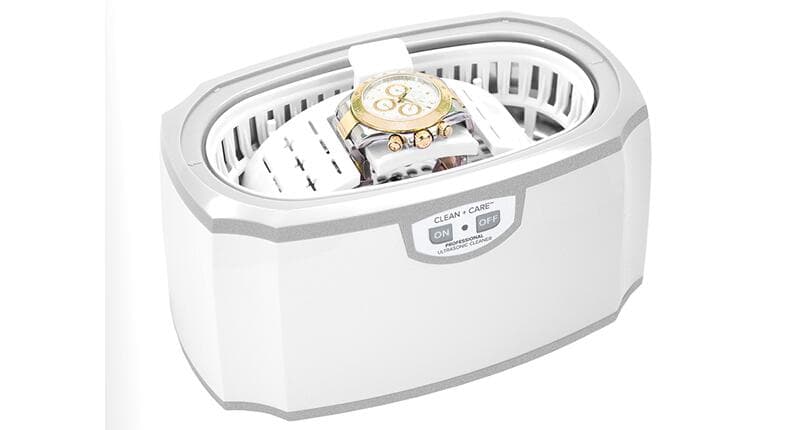
Cleaning is not disinfecting
The smallest pieces in your rotation are often the ones that collect the most life. A thin chain at the collarbone picks up skin oils, sunscreen, fragrance, dust, and the invisible film that comes from simply being worn. That is why the first rule of jewelry care is also the simplest: clean it, do not disinfect it.
The CDC draws a sharp line between the two. Cleaning removes foreign material, including soil and organic matter, and is normally done with water and detergents or enzymatic products. Disinfection is a separate process meant to kill germs, and the CDC says cleaning has to happen first because dirt can interfere with disinfectants. For jewelry, that distinction matters more than it sounds. Most fine pieces do not need a germ-killing treatment. They need residue lifted away gently, before it can cloud a metal surface, creep into a setting, or make a chain look tired.
Why alcohol is the wrong instinct
Alcohol feels efficient because it evaporates quickly, but jewelry is not a countertop. It is a small construction of metal, polish, solder, prongs, bezels, links, and stones, many of them vulnerable to repeated exposure. In daily wear, the goal is not to strip a piece down to bare material. The goal is to remove buildup without stressing the finish or drying out delicate components.
That is why jewelers steer clients toward soap and water instead of harsher household products. GIA warns that chlorine bleach can pit or damage gold alloys, and that ammonia may be too harsh for delicate gems or vintage jewelry. The same caution applies to the casual use of other strong cleaners. If a piece is already heirloom-level or finely made, the safest path is rarely the fastest one.
The safest home routine for everyday pieces
For minimalist jewelry, the best routine is almost always a soft one. GIA recommends a gentle soak in water with a few drops of mild dish soap, then a new soft toothbrush to lift residue. Tiffany & Co. advises lukewarm water, mild dish soap, and a soft brush, especially for delicate gemstones. Pandora’s guidance lands in the same place: mild soap, lukewarm water, and a practical rhythm that matches how often you actually wear the piece.
That rhythm matters. Pandora says daily-worn jewelry may need cleaning about every two weeks. GIA adds that jewelry should be checked every six months and cleaned frequently, with many stores offering free checkups or professional cleanings at scheduled intervals. For the person who wears the same few pieces every day, that means care should feel regular, not ceremonial.
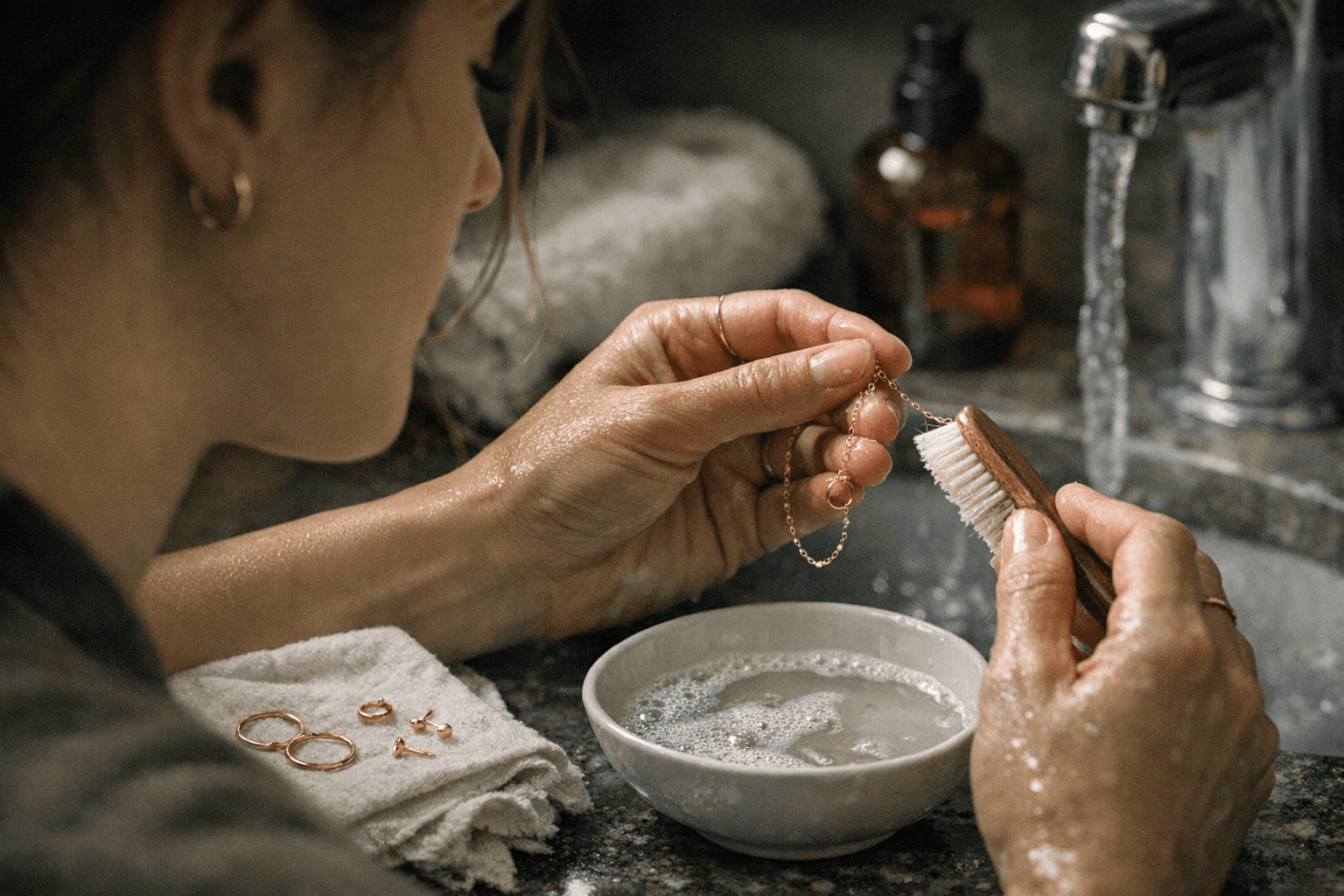
A simple routine works best for the pieces that live closest to skin:
- For fine chains, let the links loosen in a mild-soap soak, then use a soft brush around the clasp and any tight links. Rinse well and dry completely so moisture does not linger in the chain’s smallest spaces.
- For stud earrings, clean both the front and the post, then inspect the backs. A small buildup there can make them feel dull long before the stone itself looks dirty.
- For stackable rings, clean each band separately so grime trapped where rings meet does not scratch neighboring surfaces. Pay attention to the underside of the setting, where lotion and soap often collect.
Know which stones need extra caution
Not every stone welcomes the same treatment. Tiffany singles out amethyst, emerald, kunzite, opal, pearl, peridot, tanzanite, and tourmaline as especially delicate. Those gems deserve a gentler touch than a robust diamond band, because their surfaces and internal structures can react badly to heat, chemicals, or abrasion.
Pearls are the most obvious warning. They can dry out, crack, or discolor when treated harshly, which is one reason they should never be scrubbed like a hard stone. Even diamonds are not indestructible. Tiffany notes that a diamond can chip if struck hard enough or at the right angle, a reminder that brilliance does not equal invincibility. For the smallest pieces in your jewelry box, the safest cleaning method is often also the least dramatic one.
When vintage or heirloom pieces should stay out of the sink
Heirloom jewelry asks for restraint. GIA notes that vintage pieces can be cleaned with just water and a soft, lint-free cloth, which is a useful standard when a ring or bracelet has fragile construction, older solder points, or stones set in ways that no longer appear in modern mass production. The older the piece, the more important it becomes to avoid abrasive household cleansers.
That is especially true for pieces that combine polished metal with fragile stones or old-style settings. A minimalist ring with a crisp bezel may seem sturdy, but a vintage piece with worn prongs or a century-old mount is a different object entirely. The safest routine is often a soft cloth, a careful rinse, and a professional eye when something looks loose, cloudy, or out of alignment.
Why the advice became impossible to ignore
Jewelry care gained new urgency during the early COVID-19 era, when hand-sanitizing became part of daily life and rings, bracelets, and chains were exposed to far more chemicals than before. The International Gem Society reminded wearers not to overdo harsh treatments, especially for pieces that lived on the hand and therefore absorbed everything from soap to sanitizer. The lesson lasted well beyond that moment: the more often jewelry is worn, the more it benefits from gentle, routine upkeep rather than aggressive cleaning.
That is also why this advice matters to the trade, not just the customer. National Jeweler, founded in 1906 and published by Jewelers of America, speaks to retailers, designers, buyers, manufacturers, and suppliers, which reflects how central care guidance is to the life of a piece. Fine jewelry can last for years and be passed down through generations, but only if it is maintained with the same respect given to its design.
The daily habit that protects the look of a piece
Minimalist jewelry can be deceptively hardworking. A slender chain, a pair of studs, or a ring stack may look almost effortless, but each piece has to survive constant skin contact, repeated motion, and the small abuses of real life. Gentle cleaning keeps those details visible: the curve of a bezel, the sparkle of a stone, the polish along a band, the clean line of a link.
That is the point of the better routine. Not to sterilize a jewel into invisibility, but to preserve the quiet beauty that makes it worth wearing every day.
This article was produced by Prism’s automated news system from verified source data, official records, and press releases, then run through automated quality and moderation checks before publishing. The system is built and supervised by the people who set the standards it runs under. Read our full AI policy.
Did this article answer your question?


