Baroque Pearls Lead 2026 Shift Toward Sculptural Wearable Art
Baroque pearls are pushing pearls beyond the classic strand, turning 2026 into a year of sculptural shapes, freer settings, and better sourcing questions.
Baroque pearls are changing what pearls are supposed to look like
Pearls are no longer being sold only as polished perfection. The center of gravity has shifted toward shape, surface, and attitude, and baroque pearls are leading that move with a force that feels bigger than a seasonal styling trick. Rapaport’s 2026 outlook places organic, sculptural design at the heart of the jewelry market, naming baroque pearls, abstract silhouettes, and freeform metalwork as part of the wearable-art direction. That matters because it moves pearls out of the safe category of the round strand and into the realm of design-led jewelry with personality.
The broader luxury backdrop helps explain why this is happening now. The Business of Fashion says jewelry continues to outshine fashion, while McKinsey’s consumer coverage points to authenticity, trust, wellness, value, and proof-led sustainability as the qualities shoppers are rewarding. In other words, this is not just about a pretty irregular pearl. It is about a buyer who wants the object to feel distinctive, emotionally resonant, and more honest about what it is made from.
What makes a baroque pearl feel current
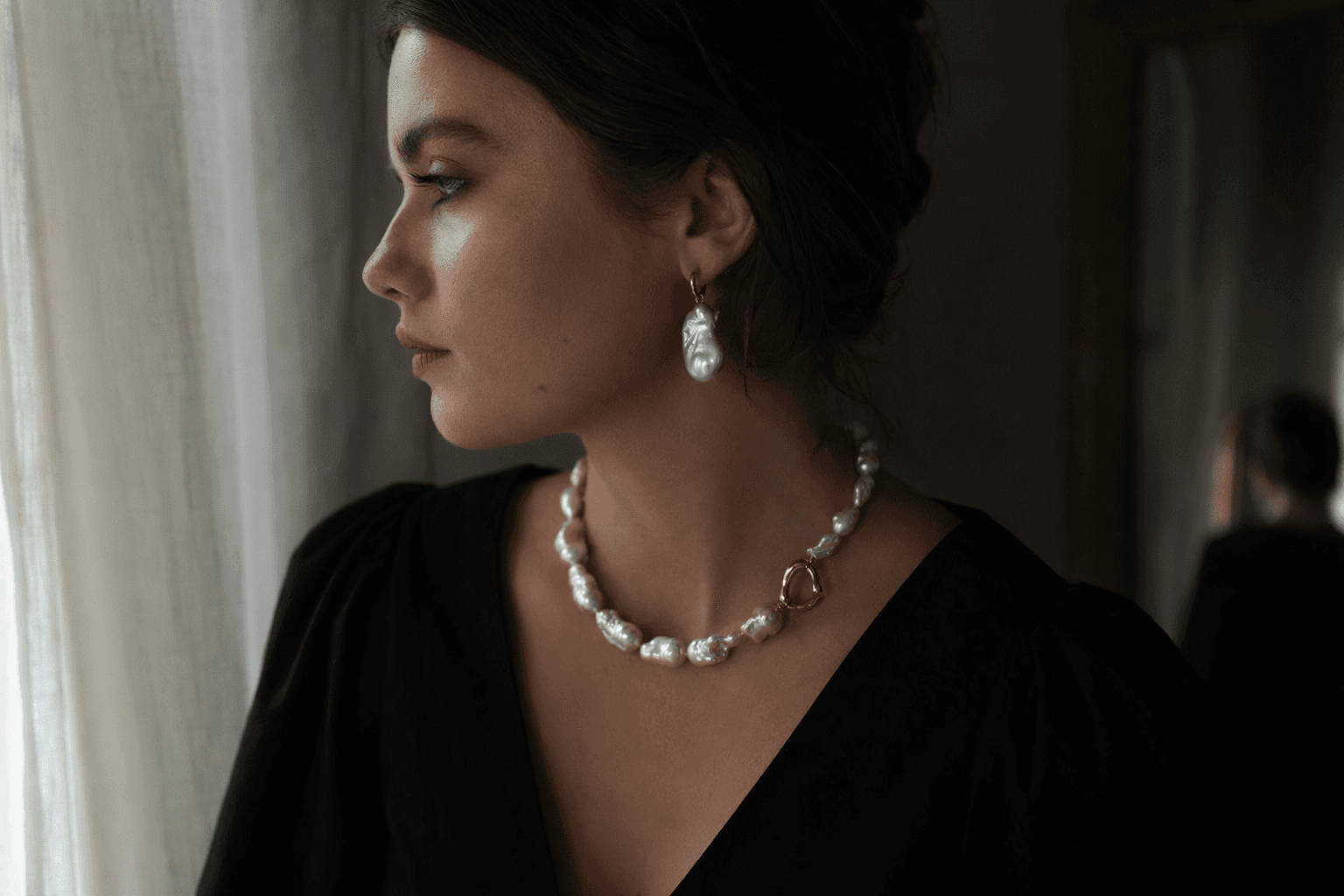
Baroque pearls are irregular, off-shaped pearls, and many cultured freshwater pearls naturally fall into that family. Their appeal lies in the fact that no two are identical: one may be curved and elongated, another slightly flattened, another all fluid asymmetry and glow. That uniqueness is exactly why they read as modern now. In a market tired of sameness, a pearl that keeps its natural contour feels more alive than one forced into perfect symmetry.
The styling shift is easy to see. Instead of matching a pearl to a rigid formula, designers are letting the shape lead. Abstract silhouettes and freeform metalwork are doing the work of framing rather than disciplining the pearl, which gives the material a more sculptural presence. The best pieces do not hide the irregularity. They emphasize it, treating the pearl like a small piece of wearable architecture.
Why the round strand no longer has a monopoly
The classic round strand still has its place, but it no longer defines the category. Pearls are now being used to signal design confidence, not only tradition, and that shift is one reason baroque forms are gaining ground. The trend also aligns with a larger move toward jewelry that feels less fixed and more expressive, a change visible across luxury buying as consumers gravitate toward pieces with visible craft and a stronger point of view.
For readers, that means the most current pearl jewelry often has a little tension in it. A single baroque drop on a sculpted gold hook looks fresher than a matched pair of standard studs. A pearl suspended from a bold, curved setting reads more contemporary than a strict line of identical beads. Even when the pearl itself is small, the surrounding metalwork can make the whole piece feel like a miniature object of art rather than a conventional jewel.
The Chanel lineage shows this is not a novelty
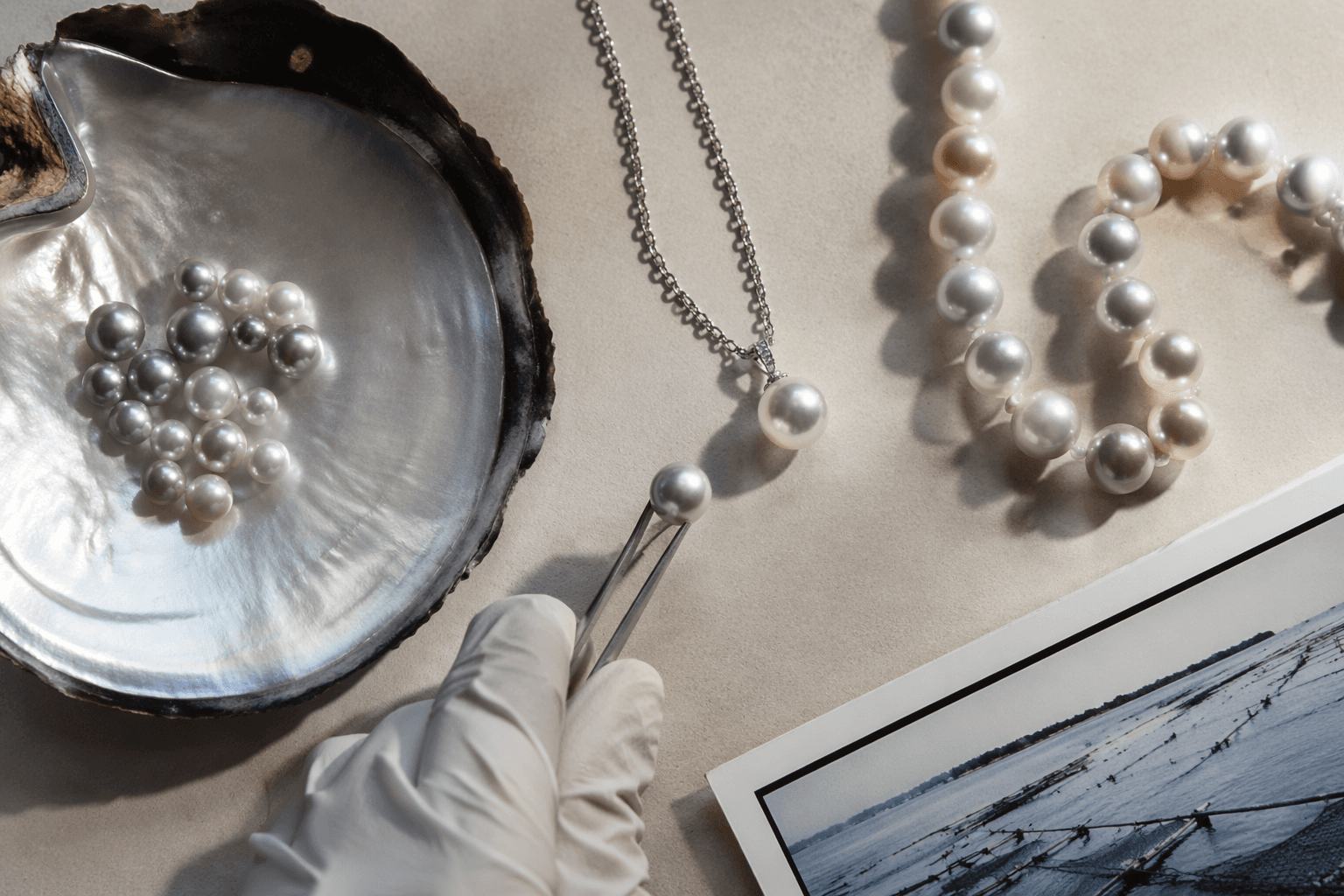
Baroque pearls may feel newly ascendant, but luxury houses have been using them to signal fashion identity for years. The Jewellery Editor notes that Chanel’s Les Perles de Chanel included 87 pieces and 24 pearl jewel sets, and featured both Australian baroque cultured pearls and Japanese cultured pearls. That history matters because it shows the form has pedigree, not just trend heat.
Coco Chanel helped make pearls a fashion language rather than a ceremonial one, and the house has continued to treat them as a symbol of style authority. The result is that modern pearl design can feel both elegant and unconventional at once. A baroque pearl does not cancel out heritage. It refreshes it.
Where the market is heading
The numbers help explain why this shift has commercial weight. Grand View Research estimates the global jewelry market at USD 381.54 billion in 2025, with growth to USD 578.45 billion forecast by 2033. It also places the U.S. jewelry market at USD 73.32 billion in 2023. Statista says Signet Jewelers generated more than USD 7.1 billion in revenue in 2024, a reminder that jewelry remains a major retail force, not a niche indulgence.
That scale makes pearl trends more consequential than they may appear. When a category this large tilts toward sculptural, organic design, the effect ripples through merchandising, sourcing, and the kinds of pieces retailers choose to front-load. Forbes has also identified modern pearls as one of the jewelry trends shaping Collect London 2026, which reinforces that this is an international design conversation, not a one-house experiment.
What to look for when buying into the trend
- Irregular pearls whose shape is clearly visible, not overly hidden in heavy mounts
- Freeform metalwork that frames the pearl rather than forcing symmetry
- Pieces that balance softness and structure, such as a curved gold setting or an open silhouette
- Clear disclosure of pearl type and origin, especially whether the piece uses cultured freshwater pearls, Japanese cultured pearls, or Australian baroque cultured pearls
The most compelling baroque pearl pieces for 2026 are the ones that let the material lead. Look for:
Sustainability claims deserve the same scrutiny as style claims. McKinsey’s work on Gen Z suggests younger buyers are especially quick to notice inauthentic marketing, which makes vague language about ethics a liability. If a brand is leaning on provenance or responsible sourcing, the details should be specific: where the pearls came from, what kind they are, and how the piece was made. Beauty still matters, but in 2026 the story behind the stone matters too.
Why baroque pearls signal the next phase of pearl design
The real change is not that pearls are fashionable again. It is that pearls are being redesigned as expressive objects with form, texture, and movement at the center. Baroque pearls fit a market that wants jewelry to feel wearable but not bland, luxurious but not overfamiliar, precious but not rigid. They capture the mood of 2026 better than the old idea of the perfect strand ever could.
That is why baroque pearls are leading the category forward: they offer a more honest kind of glamour, one that values shape as much as shine and treats imperfection as the source of its authority.
This article was produced by Prism’s automated news system from verified source data, official records, and press releases, then run through automated quality and moderation checks before publishing. The system is built and supervised by the people who set the standards it runs under. Read our full AI policy.
Did this article answer your question?