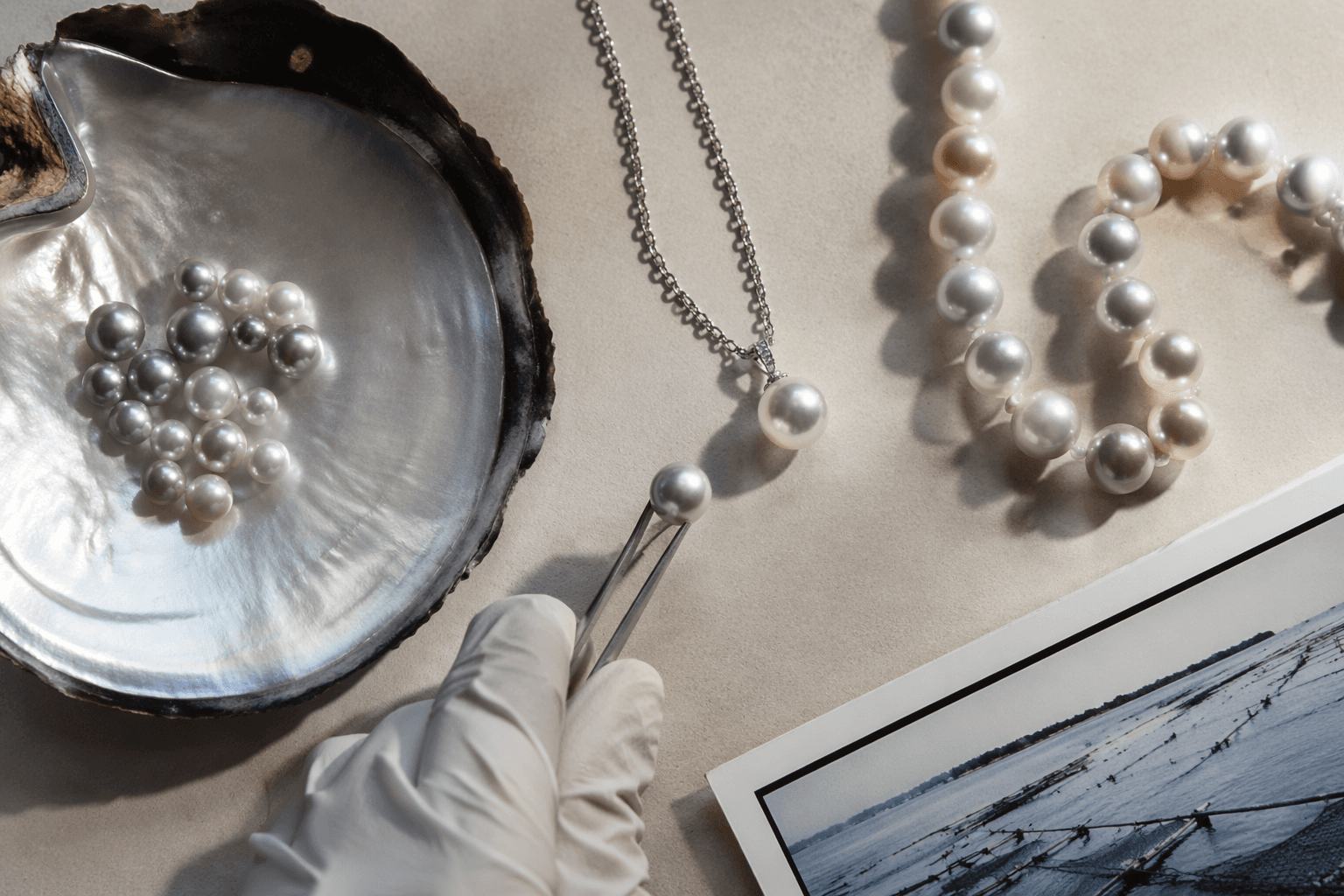
GIA Clarifies Freshwater Akoya Is Misleading, Distinguishes Pearl Origins
A misleading pearl label can change what you think you are buying. Here is how to tell freshwater pearls from true akoyas before the price tag misleads you.
Why the label matters
GIA’s warning is blunt: “freshwater akoya” is a misleading trade term. It sounds precise, even familiar, but it blurs a boundary that matters to anyone buying pearl jewelry for beauty, value, or long-term wear. A pearl’s identity comes from its origin, its mollusk, and its growth environment, not just from the way it looks under showroom lights.
That distinction is not academic. Freshwater pearls and true akoya pearls can share a near-round silhouette and a bright white face, yet they do not come from the same living creature, the same water, or the same farming tradition. When a label leans on akoya-style language for a freshwater pearl, it can distort expectations about price, luster, and disclosure before a buyer has even asked the right questions.
Freshwater pearls and akoyas are not the same pearl
Freshwater pearls are typically produced in lakes or ponds by the freshwater mollusk Hyriopsis cumingii and its hybrids. True akoya cultured pearls come from the saltwater mollusk Pinctada fucata, traditionally farmed in Japan and also in China and Vietnam. That origin story is the first and most important divider, because it tells you what kind of pearl you are actually holding.
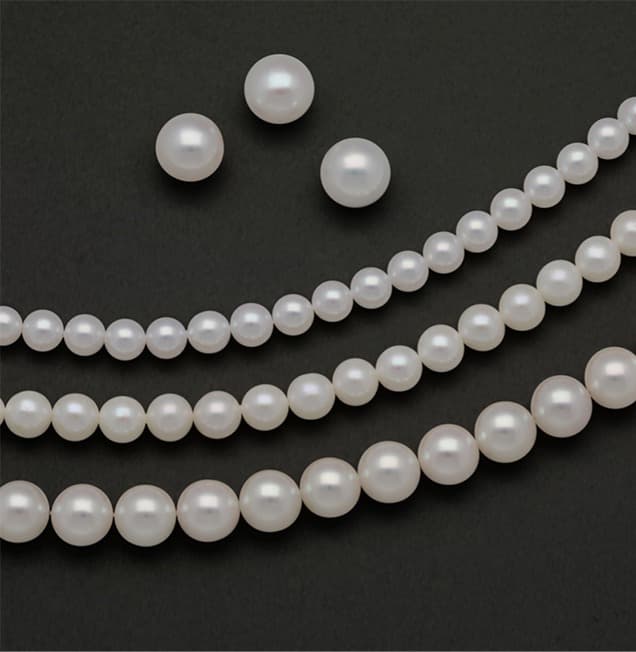
The resemblance that causes so much confusion is real. Newer Chinese freshwater pearls are often bead-nucleated, a cultivation method that mirrors akoya production closely enough to create near-round shapes, bright white bodycolor, and excellent luster. In a jewelry case, that can look persuasive. In a buying decision, it means the eye can be fooled by form while the market value still depends on origin.
What the misleading labels are really telling you
GIA flags labels such as “Chinese akoya,” “baby akoya,” and “freshwater akoya (AK)” because they describe freshwater pearls, not true akoyas. The terminology borrows the prestige of akoya while quietly relocating the pearl into a different category. That matters because akoya has a defined place in the pearl hierarchy, while freshwater pearls are judged in a different commercial and gemological context.
The visual overlap is strongest where cultivation methods overlap. Larger freshwater pearls are often bead-cultured, while smaller ones are usually non-bead cultured. That range helps explain why some freshwater pearls can imitate the look of akoya so well, but it does not erase the difference between a saltwater akoya and a freshwater pearl grown in a lake or pond system.
How origin changes expectations for luster, size, and color
Akoya pearls are usually small, generally less than 9.00 mm, and prized for a white to cream palette with high luster. Their appeal is in refinement: a clean surface, a tight roundness, and a polished, mirrorlike glow that has made akoya the classic strand pearl for generations. Freshwater pearls, by contrast, typically appear in a wider range of pastel colors and shapes, with a broader, more varied personality.
That difference affects how a buyer should read quality. A freshwater pearl may offer attractive luster and a bright bodycolor, but its wider size and color range place it in a different category from the small, highly uniform akoya strand. When the label makes one category sound like the other, the comparison on the sales tag becomes less trustworthy.
Price, value, and the danger of borrowed prestige
Freshwater pearls are generally more affordable, and they are produced in larger quantities per mollusk. That abundance influences price, but it should never be mistaken for inferiority. It simply means the value equation is different, with freshwater pearls often offering more size and color variation at a lower cost than their saltwater akoya counterparts.
The danger comes when a seller uses akoya-like branding to imply saltwater prestige without the saltwater origin. A buyer may pay for an image of rarity that the pearl does not possess. In a market where a few words can shift perceived value, truthful naming is not a technicality. It is the basis of fair pricing.
What the rules require
The Federal Trade Commission’s Jewelry Guides say pearl descriptions must be truthful and non-deceptive. The seller cannot simply name the type of cultured pearl without making clear that it is cultured, which is why terms such as “cultured freshwater pearls” and “Akoya cultured pearls” matter so much. The point is clarity, not cleverness.
The FTC also says pearl treatments must be disclosed when they are not permanent, create special-care requirements, or significantly affect value. That disclosure standard reflects how easily a treatment can change the ownership experience. A pearl that needs different handling, or one whose value shifts because of treatment, should never be sold as if nothing happened to it.
Those rules were sharpened in 2018, after the FTC proposed changes, held a national roundtable, and reviewed public comments before finalizing revisions to the Jewelry Guides. The addition of a dedicated pearl-treatments section signaled something simple and important: pearls deserve the same disclosure discipline as diamonds and colored stones.
A checklist for the counter, not the classroom
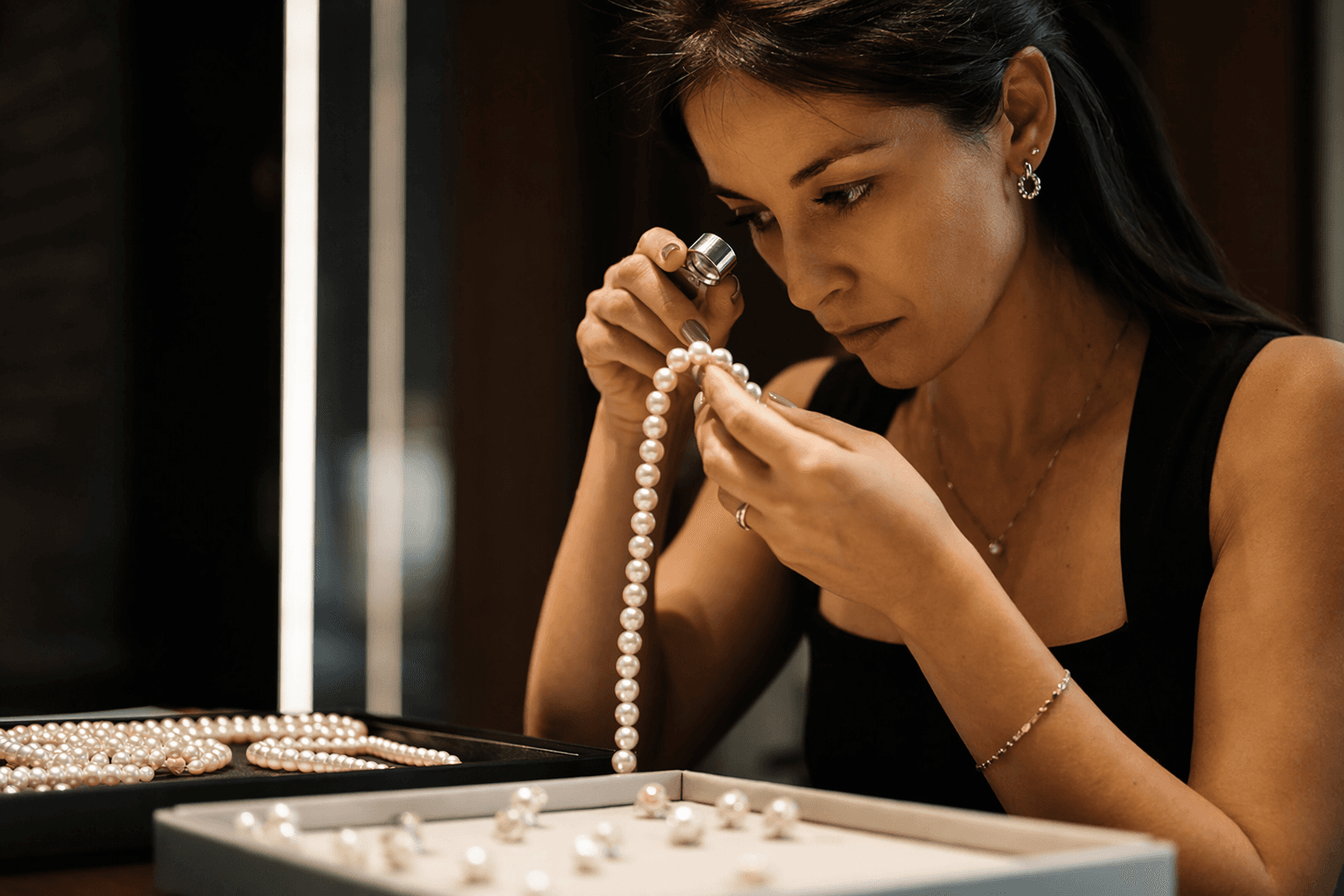
Before you buy, ask the seller to state the pearl’s origin plainly. If it is freshwater, ask where it was farmed and what mollusk produced it. If it is akoya, ask for confirmation that it is a saltwater akoya cultured pearl, not a freshwater pearl borrowing the name.

- Is this a freshwater pearl or an akoya cultured pearl?
- What mollusk produced it, and where was it farmed?
- Is the pearl bead-cultured or non-bead cultured?
- Has it been treated in any way, and is that treatment permanent?
- Does the treatment affect care, durability, or value?
- Why is this pearl priced the way it is compared with similar-looking strands?
Those questions force the label to meet the jewel. They also push a seller to explain why one strand costs more than another, which is often where the real story sits.
Why the distinction is bigger than one bracelet or strand
GIA’s pearl research reminds readers that pearls were once so rare and expensive that they were reserved largely for the wealthy, royal families, and gods. It also traces pearl testing back to the 1930s, when Japanese akoya cultured pearls were commercialized and laboratories needed to distinguish natural from cultured pearls. More than a century after akoya farming took root in Japan and later expanded to China, Vietnam, and Australia, origin still shapes the market.
That is why “freshwater akoya” is more than a sloppy phrase. It collapses history, biology, and value into a label that sounds convenient but tells the wrong story. For anyone buying pearls today, the most protective word is still the oldest one: exactness.
This article was produced by Prism’s automated news system from verified source data, official records, and press releases, then run through automated quality and moderation checks before publishing. The system is built and supervised by the people who set the standards it runs under. Read our full AI policy.
Did this article answer your question?