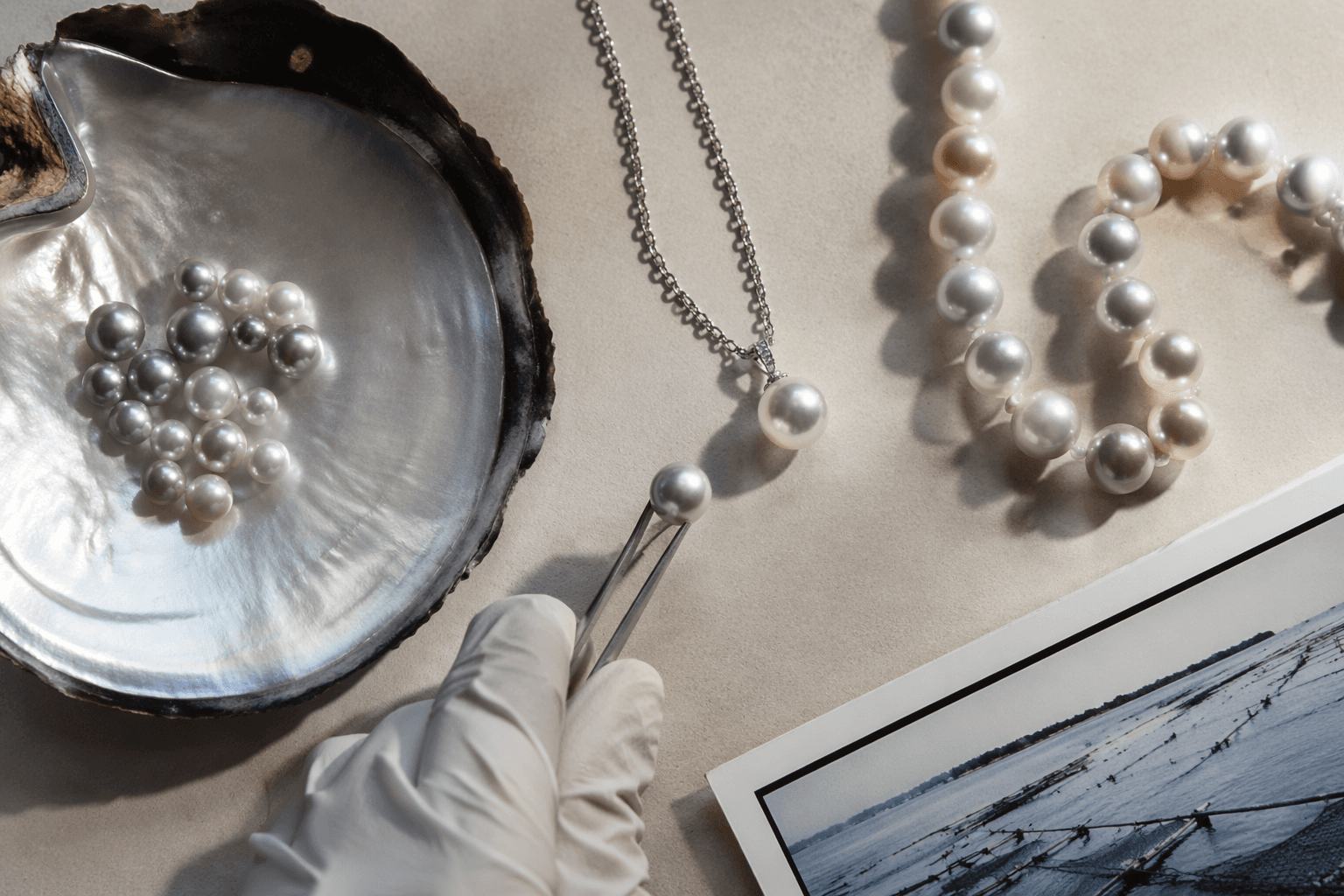
GIA clarifies pearl reports, origin, treatments, and value factors
Pearl reports can reveal species, origin, treatments, and value clues that change how you judge a strand long before the clasp is opened.
What the report is really telling you
A pearl report is not decorative paperwork. It is the fastest way to tell whether a strand is natural, cultured, or treated, and whether the label is leaning on species or locality in a way that actually helps you judge value.
The shorthand matters because pearls are not one category. GIA describes them as one of the most important organic gemstones in human history, prized by many cultures as “The Queen of Gems,” and formed by many mollusk species in the Bivalvia and Gastropoda classes through biomineralization. That is why the same word, pearl, can sit on wildly different objects with different rarity, appearance, and price expectations.
How to read the paper trail
Pearl Identification Report
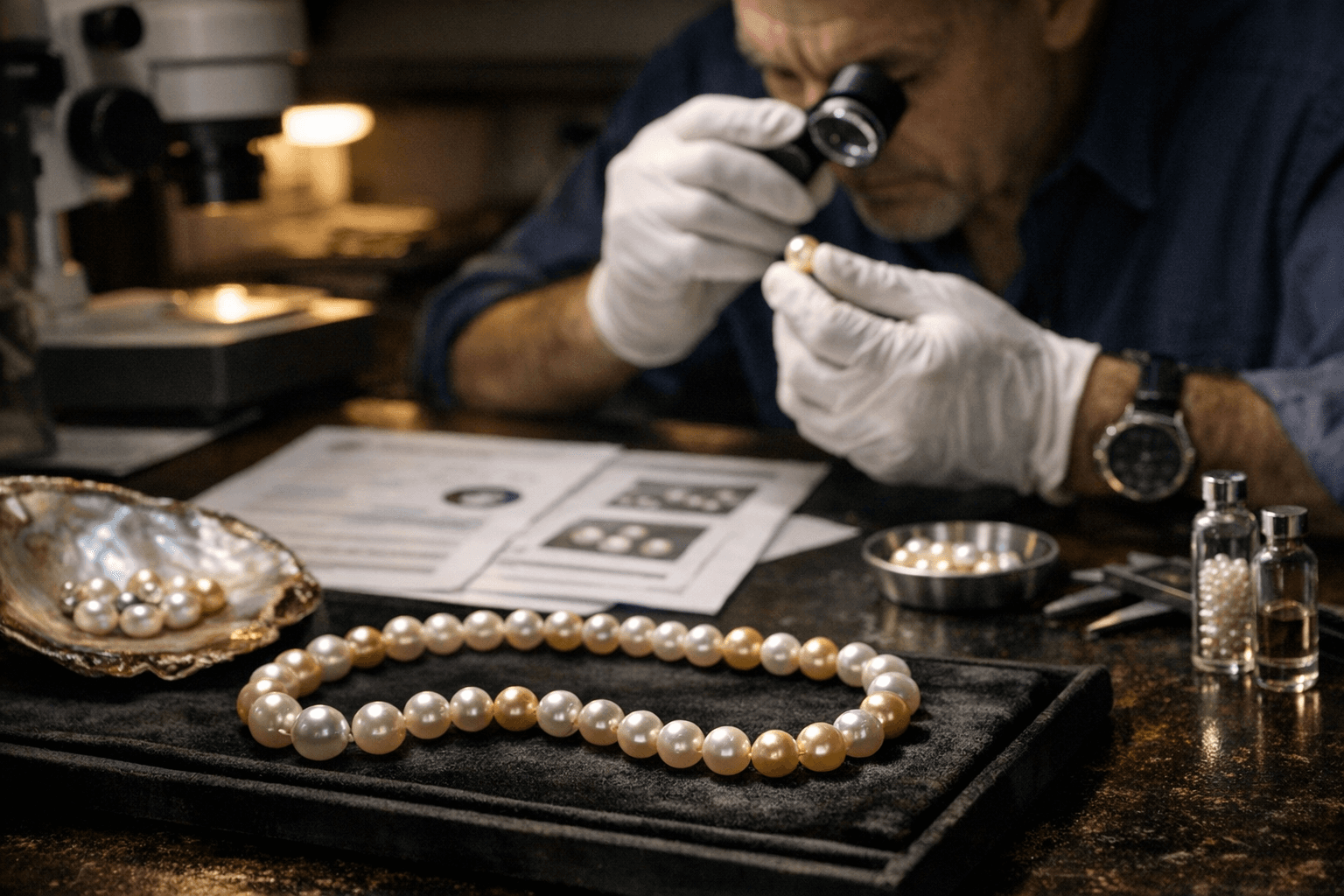
This is the most literal document in the stack. GIA says it lists quantity, weight, size, shape, color, overtone, identity, mollusk, environment, and any detectable treatments, with mollusk details included when they can be determined. For a buyer, that means the report is not just saying “pearl,” it is telling you what the pearl is made from, where it grew, and what changed its appearance after harvest.
Pearl Identification & Classification Report
This version goes a step further. In addition to identification details, GIA says it includes luster, surface, and matching, which are the qualities that separate an ordinary strand from one that reads balanced and refined. Matching is especially important in earrings and strands, where one mismatched pearl can interrupt the whole visual rhythm.
Cultured Pearl Classification Report
This is the value report, and it is built around the GIA 7 Pearl Value Factors: size, shape, color, luster, surface, nacre, and matching. If you want a practical shortcut, this is the framework that explains why two pearls of the same type can sit in very different price brackets. A report that omits these factors is giving you less to compare, not more.
GIA also says its pearl reports include security features and a digital image of the pearl or pearls. That matters in a market where tiny differences in shade, surface, and matching can move value, and where buyers should be able to connect the paper in their hands to the jewelry in front of them.
Species names are not just poetry
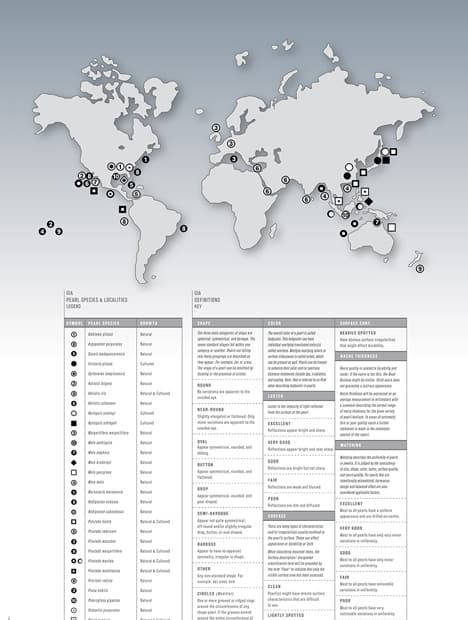
The species line is where pearl buying gets more precise. GIA’s species-and-localities chart is based on its own definitions for pearl species, growth categories, and terminology, and the downloadable PDF includes a legend for species and growth types. In practice, that means the label is trying to separate the mollusk, the growth environment, and the market language that often gets bundled together in sales copy.
Akoya, South Sea, Tahitian, and freshwater are not interchangeable styling words. Akoya usually signals the classic, highly polished look associated with Japanese cultured pearls; South Sea generally points to larger pearls and bigger price expectations; Tahitian usually signals dark body color and overtone; freshwater usually signals a broader range of shapes, sizes, and colors. Those terms help you set expectations before you ever get to the grading details.
The report’s species line can also name specific mollusks such as Pinctada fucata, Pinctada maxima, Pinctada margaritifera, Pteria penguin, Pteria sterna, Haliotis species, and several freshwater mussels. Some of those species can produce both natural and cultured pearls, while others produce only natural pearls, which is exactly why species and origin language can never be treated as decorative fluff. A locality term by itself is useful context; paired with species and growth category, it becomes a real buying clue.
What the seven value factors mean in the real world
The GIA 7 Pearl Value Factors are not abstract gemology jargon. They are the lens through which a buyer can separate a well-matched, high-luster strand from a pearl lot that is technically acceptable but visually ordinary. Size and shape are the easiest to spot, but color, luster, surface, nacre, and matching often do the most work in determining whether a piece feels luxurious or merely present.
Nacre deserves special attention because it is the pearl’s skin and its durability story. GIA says cultured pearls are generally valued by size and nacre quality, which is a reminder that a big pearl is not automatically a better pearl if its nacre is thin or the surface is compromised. Luster and surface are equally unforgiving: even large pearls lose appeal if the light looks flat or the skin shows too many marks.
The modern system did not appear out of nowhere. GIA says it was shaped by ideas published in 1942 and by Richard T. Liddicoat Jr.’s 1967 proposal, then became the familiar 7-factor framework used across the trade. That history matters because it shows the industry moving from romance and guesswork toward a language buyers can actually use.
Treatments are part of the story, not a footnote
Pearls can be altered after harvest, and the report should say so when the treatment is detectable. GIA identifies dye, irradiation, and coating as common treatments, each of which can change how a pearl reads in color, depth, or surface appearance. If a listing leans on beauty but stays vague about treatment, it is asking for more trust than it has earned.
This is where the Federal Trade Commission’s guidance becomes essential. The FTC’s Jewelry Guides are meant to help consumers get accurate information about natural and cultured pearls and their imitations, and the agency says it is deceptive to use the term “cultured pearl” for an imitation pearl. Its consumer advice also makes the market reality plain: natural pearls are very rare, and most pearl jewelry contains cultured or imitation pearls.
That distinction changes how you shop. A natural pearl, a cultured pearl, and an imitation pearl are not just different price points; they are different material stories. When a seller names the species but skips the growth environment, or uses “cultured” as a loose synonym for pearl-like, the label is not clarifying the purchase, it is softening it.
Why the standards exist at all
GIA traces its pearl testing history to the 1930s, when Japanese akoya cultured pearls were successfully commercialized and laboratories needed reliable ways to separate natural pearls from cultured counterparts. GIA says it has been identifying and classifying pearls since 1949, and its work helped shape FTC pearl guidance and industry standards through collaboration with major pearl companies around the world.
That history is the reason modern pearl reports read the way they do. GIA says its identification process can involve advanced testing, including real-time X-radiography and μCT, because a pearl’s structure often tells a different story than its surface. The report is therefore doing more than grading beauty; it is protecting the buyer from the old problem that made pearls famous in the first place, when natural pearls were so rare and expensive that they were reserved largely for the very rich, royal families, and the gods.
For anyone reading pearl listings now, the lesson is simple: species tells you what made the pearl, origin and growth environment tell you how it formed, and the value factors tell you how to judge what you are seeing. Once those three layers are clear, the label stops being mystique and starts being useful.
This article was produced by Prism’s automated news system from verified source data, official records, and press releases, then run through automated quality and moderation checks before publishing. The system is built and supervised by the people who set the standards it runs under. Read our full AI policy.
Did this article answer your question?