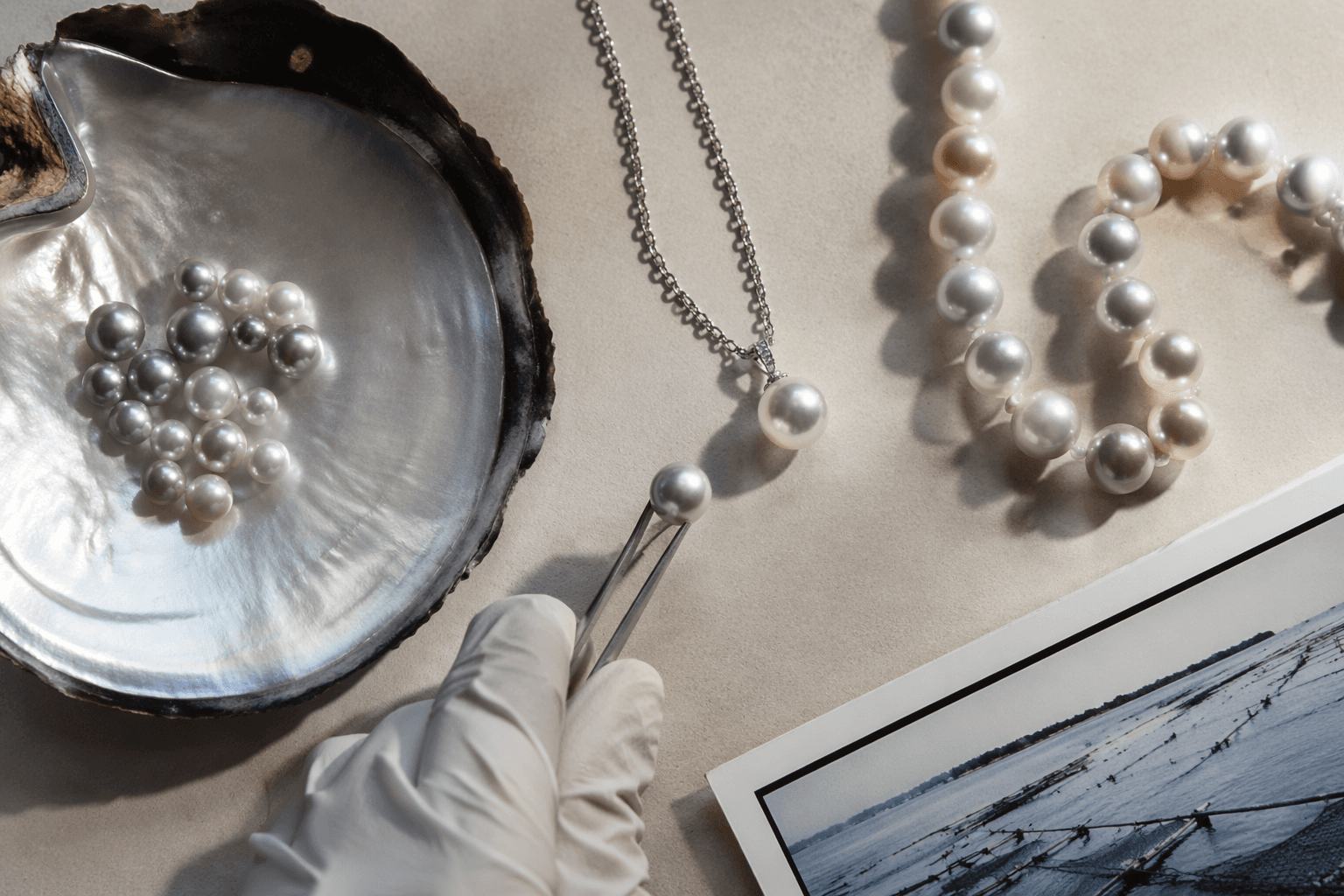
GIA Says Gentle Cleaning Keeps Pearl Jewelry Luminous Longer
Pearls demand a softer routine than diamonds or sapphires: skip ultrasonic baths, wipe after wear, and let strings dry completely before they go back on.
The first rule: pearls are not harder gemstones
The fastest way to dull pearls is to treat them like diamonds, sapphires, or gold chains. Pearls are organic gems, and that makes their surface and nacre far more vulnerable than many owners realize: too much heat can dry them out, crack them, and even discolor them. The right care is gentler, simpler, and much more protective of both beauty and value.
That matters because pearl value is not just about size. GIA ties worth to a seven-part framework: size, shape, color, luster, surface quality, nacre quality, and matching. In other words, the very qualities that make a strand glow can be lost through careless cleaning or sloppy storage.
Can you use jewelry cleaner on pearls?
The short answer is no if the cleaner is ultrasonic or steam-based. GIA says pearls should never go into an ultrasonic or steam cleaner, and that warning should be treated as non-negotiable. Those methods are built for harder materials, not for the delicate skin of a pearl.
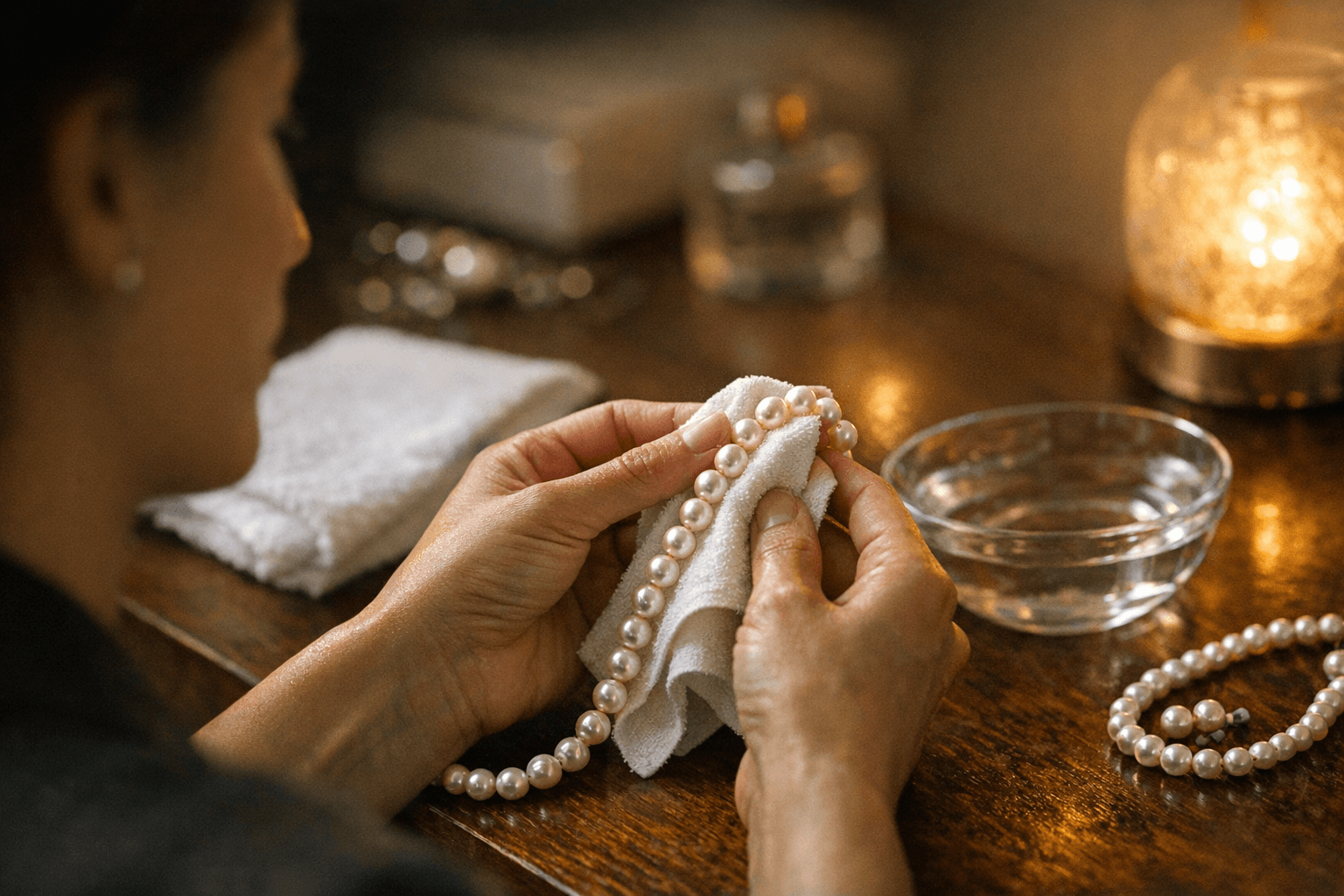
For occasional deep cleaning, warm soapy water is the safe route. Use it sparingly, and keep the process gentle rather than aggressive. For everyday upkeep, GIA’s simplest instruction is the one most owners skip: wipe cultured pearls with a very soft, clean cloth after each wearing. That small habit removes skin oils, residue, and traces of daily life before they have time to cloud the luster.
The wearing order that protects the surface
Pearls should be the last things you put on and the first things you take off. GIA says that plainly, and Mikimoto gives the same advice for a reason: cosmetics, perfume, hair spray, and styling products can harm a pearl’s radiance. Acidic or alkaline substances are also a problem, along with humidity extremes, which can stress the material over time.
The practical routine is easy to remember: 1. Finish makeup and hair first. 2. Put on pearls last. 3. Remove pearls first when you get home. 4. Wipe them with a soft cloth before storing them.
That order keeps fragrance, hairspray, and foundation from settling onto the surface, where they can leave pearls looking flat long before they are truly old.
What should pearls be stored in?
Pearls should be stored separately from other jewelry so they do not get scratched. GIA specifically recommends keeping them apart from other pieces, which is especially important for strands, studs, and drop earrings that may rub against harder metals or gemstones in a mixed tray.
Storage is also about environment. Mikimoto warns that pearls are vulnerable to extremes of humidity, while GIA says excessive heat can dry them out and damage them. Jewelers of America adds another important boundary: keep fine jewelry away from chlorine and salt water, and remove it before entering hot tubs or swimming pools. For long-term preservation, that means pearls belong in a calm, dry, protected place, not tossed into a travel pouch with sharp-edged pieces or left where heat and moisture swing wildly.
How should strung pearls be handled?
Strands need special attention because the string is part of the jewel. GIA says that if pearls are strung, the string must be completely dry before the jewelry is worn again. That detail is easy to overlook, but it matters for both comfort and preservation.
If a strand has been cleaned, exposed to moisture, or worn in a humid environment, resist the urge to clasp it back on immediately. Dry stringing helps prevent weakened thread from stretching, staining, or failing when the necklace is worn again. It also protects the pearls themselves, since damp material can invite deterioration at the clasp and along the line of the necklace.
When should pearls be restrung?
Restring them before the strand shows strain, not after it snaps. While the notes do not give a fixed schedule, they do make the case for annual attention: Jewelers of America recommends professional cleaning and inspection of fine jewelry at least once a year. For pearls, that yearly check is the moment to inspect the thread, examine knots, and make sure the clasp and spacing still look secure.
A strand that has started to sag, stretch, or feel uneven should not wait for an accident. A professional jeweler can assess whether the thread is still sound and whether the pearls need fresh stringing to protect the set as a whole. For collectors, that inspection also helps preserve matching, one of the GIA factors that influences value.
What to avoid when you wear pearls near water or chemicals
Pearls and harsh environments do not mix. Jewelers of America warns to keep jewelry away from chlorine, salt water, hot tubs, and swimming pools. Those conditions are rough on fine jewelry generally, but pearls are especially sensitive because their organic makeup can be altered by exposure that hard stones would shrug off.
That makes pearls poor companions for swimming, spa days, and beach wear. Salt, chlorine, and heat all add stress, and even a brief exposure can leave a pearl looking less luminous. If a pearl piece has been worn near water, dry it carefully and inspect it before putting it away.
Why this advice matters beyond maintenance
The story of cultured pearls begins with Kokichi Mikimoto, who successfully cultured the first pearl in 1893. That milestone helped shape the modern pearl market, where cultured pearls have remained central for more than a century. The result is a category whose beauty depends as much on care as on origin.
That is why gentle cleaning, careful dressing, and sensible storage are not fussy rules. They are the difference between a strand that keeps its depth and glow and one that gradually loses the soft sheen people buy pearls for in the first place. Treat pearls as the organic gems they are, and their luster lasts far longer than the average owner expects.
This article was produced by Prism’s automated news system from verified source data, official records, and press releases, then run through automated quality and moderation checks before publishing. The system is built and supervised by the people who set the standards it runs under. Read our full AI policy.
Did this article answer your question?