How Brides Are Styling Pearls for Every Zone and Moment in 2026
Forget heirloom obligation: brides in 2026 are engineering pearl looks by body zone, light condition, and ceremony moment, with a modular logic that changes everything.
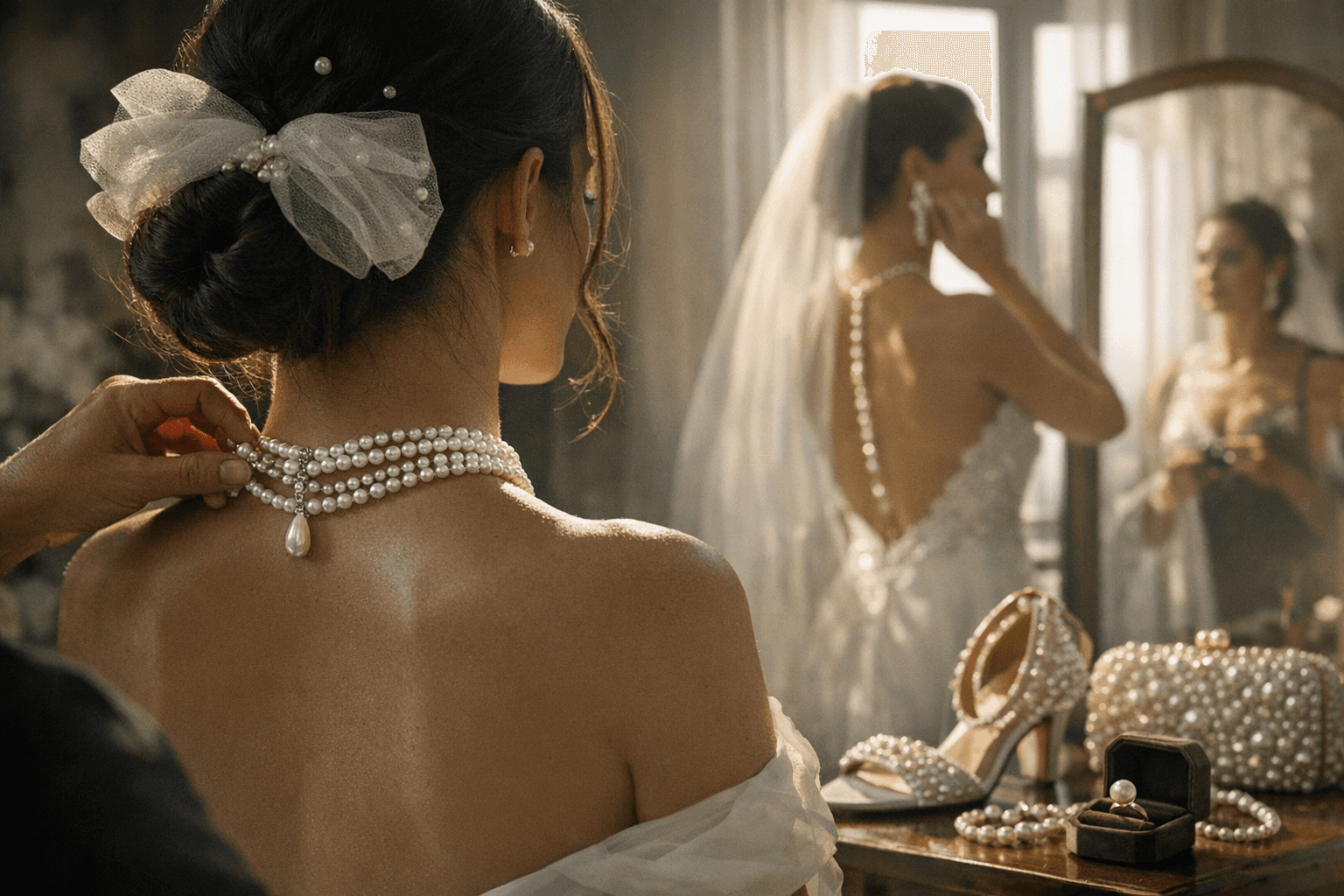
The pearl has always belonged at a wedding. What has changed is the reasoning behind it. Where previous generations reached for a strand as a finishing reflex, brides in 2026 are approaching pearls with the deliberateness of an art director: choosing shapes for what they communicate, placing pieces by body zone, and planning swaps between ceremony and reception the way a stylist plans quick-changes. The result is bridal jewelry that is personal, photogenic, and practically smart.
What the Zone Strategy Actually Means
The most significant shift in how brides are assembling their pearl looks is the adoption of a zone-based logic. Instead of asking "what jewelry should I wear," the question has become "which zone needs to carry the story?" The three zones at play are the face, the hand, and the hair, and they operate with entirely different priorities.
The face zone is the most photographically consequential. Earrings and short necklaces sit closest to the skin and to the lens; in portrait shots and ceremony frames, they pull focus in a way that a bracelet simply cannot. This is why bridal pearl earrings, from single baroque drops to fitted pearl studs in polished bezels, have become the centerpiece of most 2026 bridal builds. Face-zone jewelry dominates portraits and vows, making earrings and short necklaces more narratively powerful than anything worn below the collarbone.
The hand zone, rings and bracelets, earns its place in detail shots and candid table moments, but experienced brides treat it as a supporting player rather than the lead. A single freshwater pearl ring or a slim bracelet with one pearl element can complement without competing.
The hair zone has emerged as the most creatively fertile of the three. Pearl hairpins and combs have grown sharply in popularity, and not without reason: they add dimension to updo and half-up styles, catch light at an angle that earrings and necklaces cannot, and allow placement flexibility that is almost infinitely customizable. A scatter of pearl pins through a chignon reads entirely differently from a single pearl comb anchoring a low bun, and both silhouettes photograph beautifully from behind, capturing angles that bridal portraits often miss.
The Design Language Has Shifted
Gone is the assumption that bridal pearls must be uniform, round, and quietly traditional. The shapes brides are choosing in 2026 read more like sculptural design objects than inherited accessories. Brides choose baroque shapes, single-pearl drops, and mixed-material settings because those pieces read like design objects instead of inherited etiquette. A clean round pearl still works, but brides use it as polish rather than a statement.
Mixed-material settings are equally prominent. Pearl set alongside brushed gold, oxidized silver, or even raw-edged metalwork gives a piece a contemporary tension that sits well against modern gown silhouettes, including structured crepe, bias-cut satin, and architectural draped styles. The baroque pearl's asymmetry is the point: it signals that the pearl was chosen, not simply defaulted to.
Why Luster and Nacre Depth Are Non-Negotiable
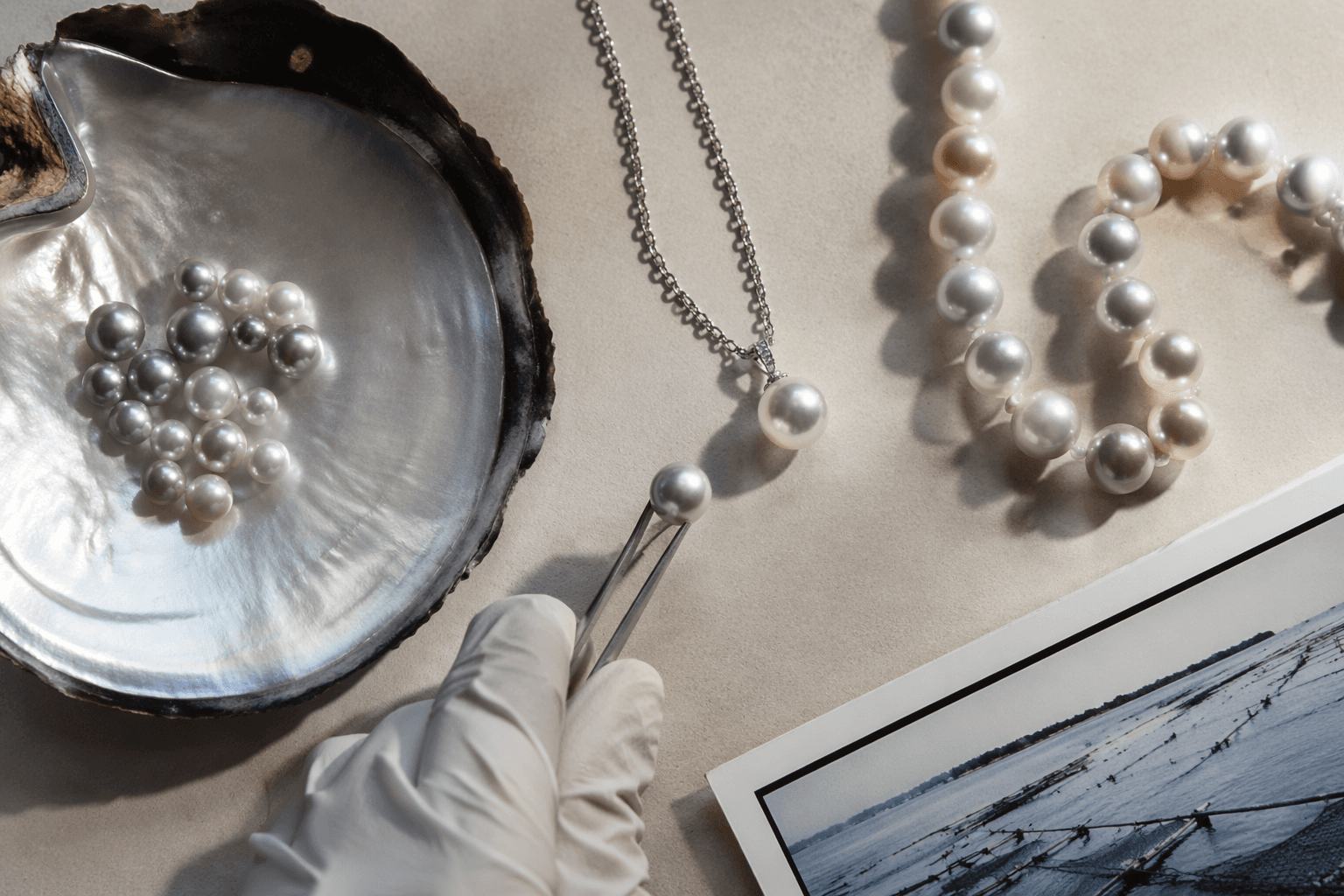
Before any decision about shape or setting, there is a more fundamental question every bride should answer: how does this pearl perform in light? Luster drives how alive pearls look in natural light and indoor lighting, so dull pearls can look flat even in a modern setting. Nacre depth influences luster and wear performance, so chalky-looking pearls tend to disappoint after a few wears.
Nacre depth is the structural factor behind luster. A quality pearl reflects light from within, with a brilliance that seems to come from inside the pearl, not merely from its surface. Pearls grown with thin nacre layers tend to lose their surface quality quickly, showing dullness or even peeling with regular wear. For bridal purposes, where the pearl will be worn for ten or more hours under hot lights and heavy photographic scrutiny, nacre thickness is not an abstract quality metric; it is a durability and performance specification.
The practical rule: the closer a pearl sits to your face, the more its luster matters. A pearl hairpin worked into a low bun needs less optical firepower than the drops hanging near your jaw in every ceremony portrait. Buy accordingly, and when in doubt, hold the pearl under a single light source and look for inner depth. Surface shine without internal glow is a warning sign.
Hairspray, perfume, and cosmetics can dull pearls over time, so brides put pearls on after styling and wipe them after wear. It is a small discipline with a meaningful payoff across both the ceremony and reception, and beyond.
Modular Styling: Designing for Two Distinct Moments
The ceremony and the reception are not the same event, and the most considered bridal pearl strategies in 2026 treat them differently. Modular styling has become the default, so brides wear pearl studs for the ceremony and swap to longer drops or layered strands once the formality of the vows gives way to the movement and noise of the reception.
The logic is intuitive once articulated. Vows are intimate, often photographed at close range, and emotionally weighted. A quiet pair of pearl studs, or a single delicate pearl drop in a fine bezel, suits that register. The reception calls for presence: longer baroque drops, layered strands at graduated lengths, or a statement pearl cuff worn alongside a more relaxed silhouette after a gown change. The jewelry shifts because the tone of the event shifts.
This approach requires a small amount of advance planning. Look for pieces designed to transition: ear jackets that move from simple stud to extended drop, detachable pearl pendants that can be worn alone or layered, strands with extenders that convert a choker into a princess-length piece. Some brides carry a small pouch with the reception pieces, ready to swap in a quiet moment after the ceremony procession.
One Hero Zone and Why It Matters
The most useful practical principle for any bride building a pearl look is this: choose one zone to carry the statement, and let the others support it. Trying to make the face, hand, and hair zones all equally powerful rarely produces an image worth the investment; it produces visual noise.
If pearl earrings are the hero, they should have genuine presence, significant baroque drops, graduated cluster forms, or architectural single pearls in a structural setting. The hair zone then takes something quieter: a few scattered pins, a simple comb positioned to one side. The hand zone stays minimal, perhaps a single pearl ring or nothing pearl at all.
If the hair is the hero, the face zone steps back. Let the combs or pins be elaborate and intentional; pair them with simple pearl studs or forgo pearl earrings entirely. This logic applies equally to the modular swap. If the ceremony hero is the face zone, the reception hero might shift to the hair and hands, adding pins and a pearl cuff while removing the necklace. The individual pieces change; the underlying architecture of one strong zone stays constant.
Buying With Intention
Pearl bridal jewelry rewards specificity over instinct. A few principles worth carrying into any purchase:
- Test luster under both natural light and warm indoor light, because the two environments reveal different things about the same stone
- Ask about nacre thickness, particularly for freshwater and akoya pearls in accessible price ranges
- Prioritize convertible or modular designs before buying two entirely separate pieces for ceremony and reception
- Plan the hair zone last, after earring and necklace decisions are settled, because pins and combs are the most adjustable zone and the easiest to add or subtract without disrupting the rest of the look
Jewelry trends in 2026 reward intention more than "bridal correctness." Baroque shapes, irregular surfaces, and organic finishes are not compromises or budget alternatives in this context. They are the deliberate aesthetic preference of the season precisely because they carry something a perfectly matched round strand cannot: the evidence that a genuine choice was made.
This article was produced by Prism’s automated news system from verified source data, official records, and press releases, then run through automated quality and moderation checks before publishing. The system is built and supervised by the people who set the standards it runs under. Read our full AI policy.
Did this article answer your question?