How Fine Jewelry, Including Pearls, Shapes Film Storytelling and Brand Legacy
Fine jewelry in film is never just decoration: from Tiffany's 27-piece archival loan to Frankenstein to Bulgari's star turn in Casino, the right piece on screen can rewrite a brand's story for decades.
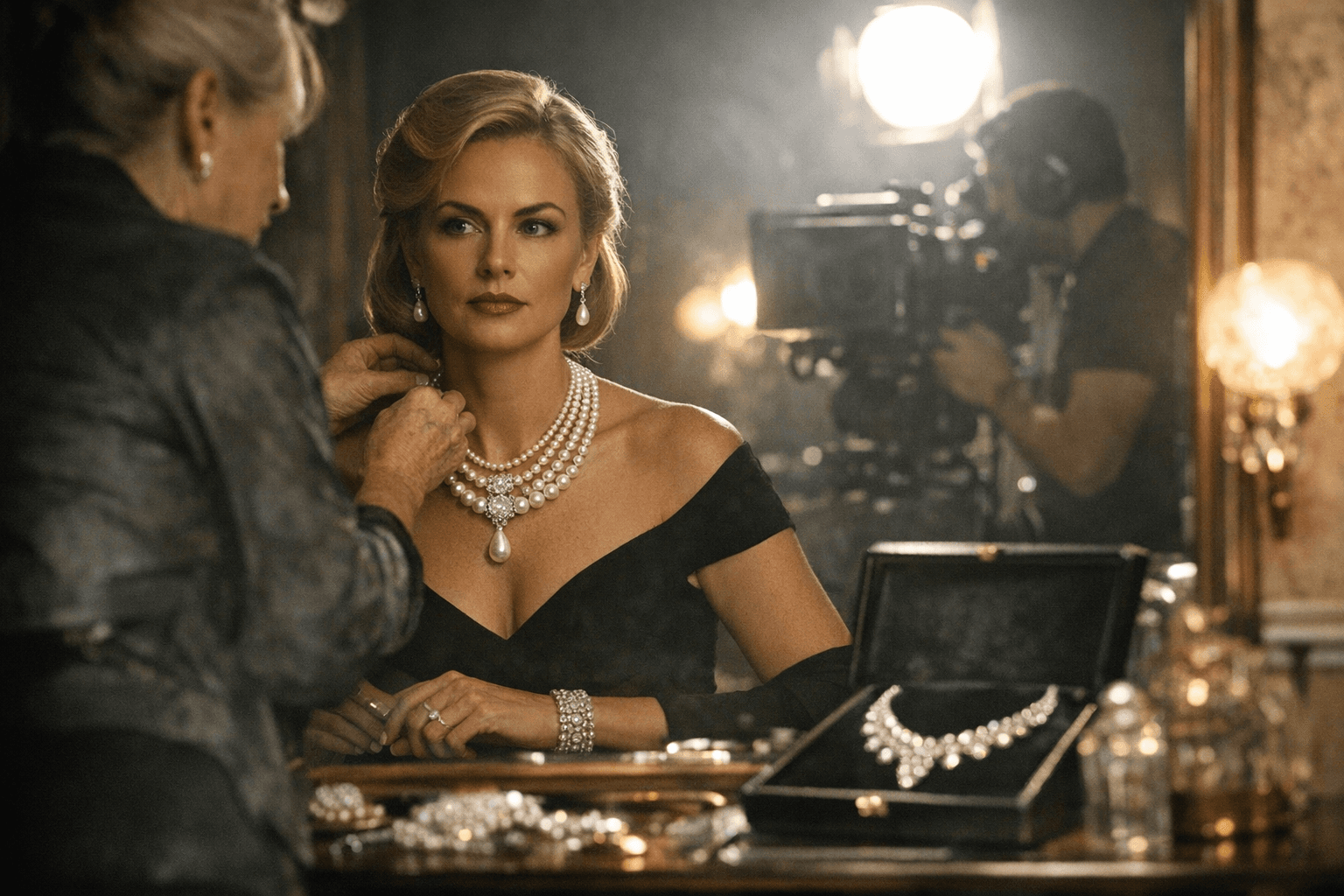
When Guillermo del Toro began shaping his gothic reimagining of Frankenstein for Netflix, the conversation about what jewelry Mia Goth's character would wear was not a marketing meeting. It was a creative one. That distinction matters enormously in the world of fine jewelry and film, and nobody understands it more precisely than Kathryn Vanderveen, founder of Createology, the Los Angeles-based agency that connects luxury brands with studios. The jewelry that ends up on screen in a major film is not selected at random, and increasingly, it is not simply purchased. It is negotiated, curated, and, in the most successful cases, woven into the emotional logic of the story itself.
The Collaboration Behind the Camera
Vanderveen sits at the intersection of three distinct creative worlds: the costume department, the directorial vision, and the brand's archive. Her role is not to sell space on an actor's wrist. It is to identify where a brand's aesthetic DNA genuinely serves a film's narrative. For Frankenstein, that alignment proved unusually elegant. Tiffany & Co. contributed 27 pieces spanning archival and contemporary high jewelry, including the spectacular Wade Necklace, handcrafted from platinum, 18-karat gold, and more than 40 carats of diamonds. Not a single dollar changed hands between Tiffany and Netflix for that placement, a detail that speaks volumes about how the most prestigious integrations actually function.
Costume designer Kate Hawley worked directly with the brand to ensure that each piece expressed a character's inner world rather than simply adorning it. Christopher Young, Tiffany & Co.'s Vice President and Creative Director of Tiffany Patrimony, described the intent: "We have this incredible 200-year legacy. We wanted to pull pieces that were from the age of Mary Shelley, so that you could study the construction and the choices our designers were making at that time." The result was not product placement in any conventional sense. It was jewelry as historical argument.
Creative Partnership vs. Paid Placement
The business architecture of luxury jewelry integration in film is more varied than most people assume. Vanderveen draws a clear line: "Luxury integration in film is an artistic activation, not always a commercial one, though the value still benefits the bottom line for both the film and the brand. It is simply a more nuanced approach." Films with mass commercial appeal, such as Wicked, Barbie, and F1, tend to attract transactional placements with defined fees. F1 reportedly generated around $40 million from brand integrations with Mercedes-Benz, Expensify, and IWC Schaffhausen, among others. Luxury jewelry, especially at the archival level, tends to operate differently. The brand invests creative energy and irreplaceable objects; the film offers reach that no advertising budget can replicate.
Vanderveen describes this reach as equivalent to "a Super Bowl ad on repeat," a phrase that captures something true about how films circulate through culture for years after release. A jewel that appears in a single scene can generate decades of association. That is not hyperbole. It is history.
Bulgari, Casino, and the Power of Cultural Memory
The canonical example is Bulgari in Martin Scorsese's Casino, released in 1995. Sharon Stone's character Ginger McKenna receives a trunk full of Bulgari bracelets, rings, necklaces, and earrings from Robert De Niro's character, spreading them across the bed in a scene of staggering, almost operatic excess. Stone's line, "Do you think it's too much if I wear all these on the same day?" became one of cinema's great jewelry moments, and it arrived without the language of a marketing brief. Marion Fasel, founder and editorial director of The Adventurine, has noted that "in terms of jewelry, there is no better example than Sharon Stone in Casino" when discussing the relationship between screen glamour and lasting consumer desire.
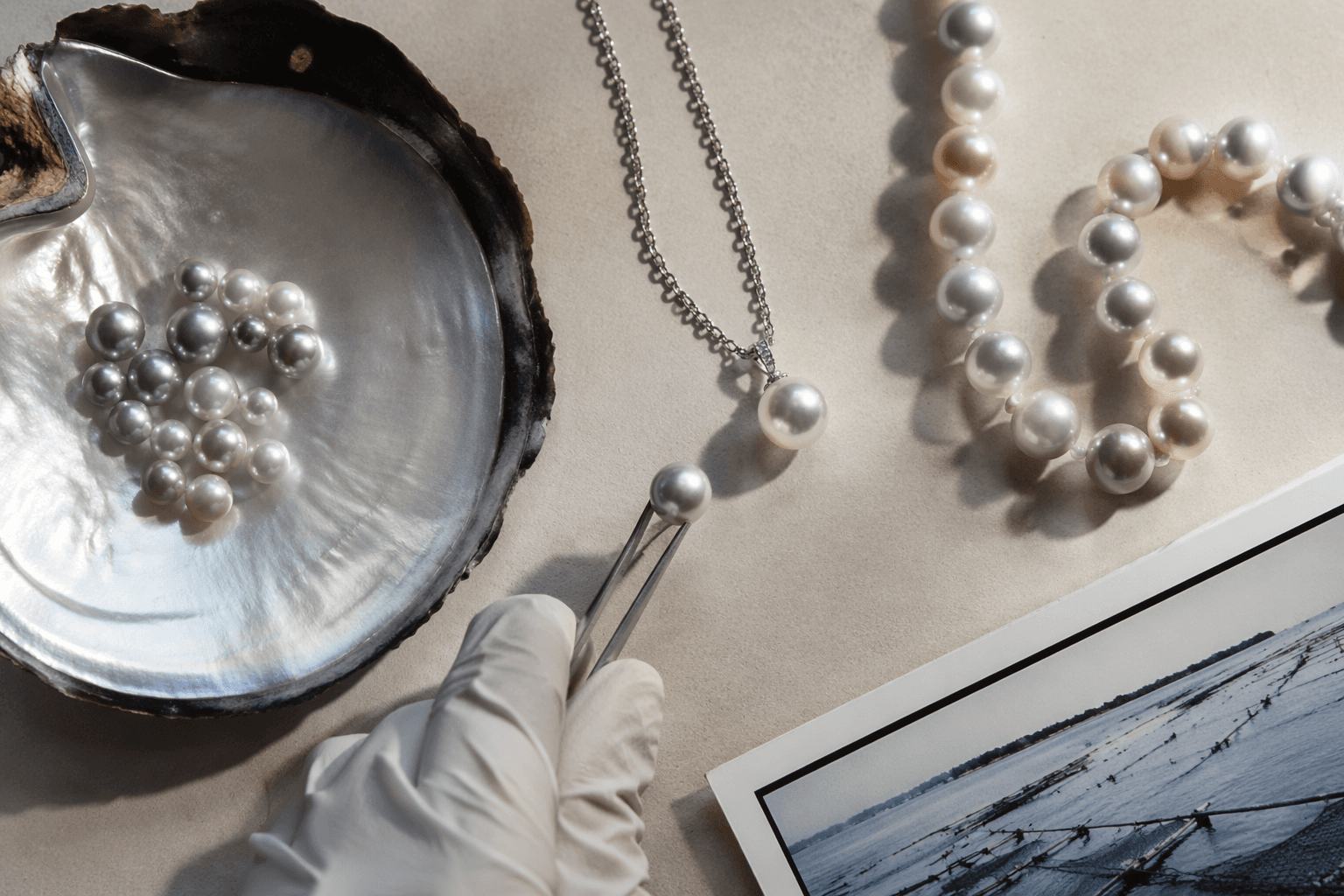
Nearly three decades later, that scene still circulates as a reference point for what jewelry on film can do to a brand. Bulgari did not need to run a campaign. Scorsese ran one for them, and it has never stopped running. Pearls, too, carry this cinematic weight. Pearl necklaces and pearl-adorned jewels have appeared throughout film history as markers of character, class, and transformation, and when they are placed with the same intentionality that Vanderveen brings to Tiffany and Createology brings to its roster of clients, those associations compound over time.
The Logistics: Security, Insurance, and the Archival Loan
Placing irreplaceable objects on a film set is not a casual undertaking. When Tiffany brought archival pieces onto the Frankenstein production, each item required meticulous documentation, dedicated on-set security, and bespoke insurance coverage calibrated to the piece's value and the risk environment of a working film set. The selection of 27 archive and custom-made pieces from Tiffany for Frankenstein was story-driven, but the logistics surrounding that decision were necessarily commercial: any damage to an archival jewel is irreversible, and studios and brands must agree in advance on every contingency.
The sensitivities extend beyond physical risk. Archival loans require careful negotiation over how pieces will be filmed, lit, and credited. A pearl necklace with genuine historical provenance must be handled with the same curatorial care on a film set as it would receive in a museum, which is precisely why brands like Tiffany employ dedicated archivists and require close collaboration with a costume department's most senior staff. Tiffany noted that the Frankenstein partnership marked the brand's first Netflix collaboration, integrating archival jewelry, timepieces, and objects into the film to highlight the house's rich heritage and unparalleled craft.
The Devil Wears Prada 2 and What Comes Next
The film world's most anticipated jewelry moment of 2026 is arguably still ahead. The Devil Wears Prada 2, scheduled for release in early May, represents exactly the kind of production that sends both costume departments and brand liaisons into overdrive. Vanderveen's Createology is representing Dior for the film, a detail that signals how seriously the production is being treated by the luxury sector. The choices of fashion and jewelry brands worn by the cast will be subject to thorough scrutiny, a level of public attention that transforms every visible necklace, earring, and bracelet into a statement about the film's relationship with contemporary luxury.
On set, Meryl Streep has already been photographed in pieces from Jacob & Co. and Briony Raymond, while Anne Hathaway has been seen wearing a Jemma Wynne necklace. These are not background accessories. They are character decisions made in collaboration between costume designers, directors, and the brand intermediaries who ensure that the right jewel reaches the right hand. For fine jewelry houses with pearl collections in their current portfolios, a single scene in a film with this visibility can shift consumer interest for seasons to come.
Why Cinema Remains the Most Powerful Showcase in Fine Jewelry
Christopher Young articulated the principle precisely: "Frankenstein continues Tiffany & Co.'s legacy of contributing to the world of cinema, not simply as adornment, but as a storytelling layer, helping bring unforgettable characters and screen moments to life through the enduring language of Tiffany jewelry."
That phrase, "the enduring language of jewelry," captures what separates a cinematic integration from a billboard. Film freezes a jewel in a moment of human feeling: desire, grief, power, love. Pearl necklaces have appeared in that frame for as long as cinema has existed, and when they appear in the right film, worn by the right character, at the right narrative beat, they carry that moment forward indefinitely. No advertising format has yet been invented that achieves the same thing. Vanderveen's work, and the broader craft of jewelry integration, is built on that truth, and the most sophisticated brands have already learned to treat it not as a marketing expense, but as a form of cultural authorship.
This article was produced by Prism’s automated news system from verified source data, official records, and press releases, then run through automated quality and moderation checks before publishing. The system is built and supervised by the people who set the standards it runs under. Read our full AI policy.
Did this article answer your question?