How to buy pearl jewelry using GIA reports and FTC rules
A pearl’s price only makes sense once you know whether it is natural, cultured, treated, or imitation. GIA and FTC paperwork makes that test fast.
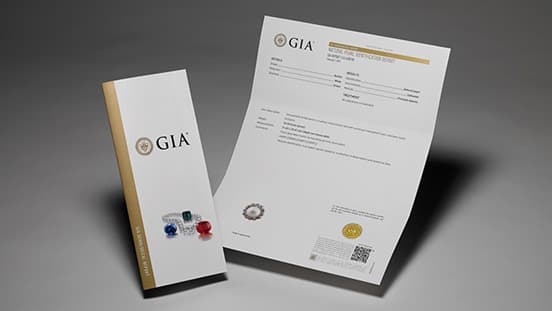
A pearl listing should tell you whether the pearl is natural, cultured, or imitation, whether a report exists, and whether any treatment has been disclosed before it tells you the price. If that language is vague, the piece is already harder to trust. GIA reports and the FTC’s jewelry rules give you a clean way to test the description line by line.
Start with the label, not the luster
Before you compare strands, studs, or pendants, read the words that identify the pearl itself. A useful listing should tell you whether the pearls are natural, cultured, or imitation, name any report attached to the piece, and disclose treatments that might affect appearance or value. If the listing says only “freshwater,” “South Sea,” or “Akoya,” the FTC says that is not enough by itself; the seller still needs to say the pearls are cultured.
A practical checklist for the first pass looks like this:
- Ask whether the pearls are natural, cultured, or imitation.
- Look for a GIA report number and the report type.
- Check whether the seller gives size in millimeters, not just a romantic name.
- Look for treatment language such as bleaching, dyeing, or irradiation.
- If the listing describes only the pearl variety, insist on the word cultured if that is what it is.
Read the GIA report before you compare price
GIA’s Pearl Identification Report is the most straightforward document for a buyer who wants facts rather than atmosphere. It can detail quantity, weight, size, shape, color, origin, mollusk, environment, and detectable treatments, and the sample report includes a digital image. The report can be used for loose, mounted, or strung pearls, which matters because a lot of pearl jewelry is sold already set or already strung, where vague descriptions are especially common.
If the pearl is nacreous, the Pearl Identification & Classification Report adds luster, surface, and matching. For cultured pearls, the Cultured Pearl Classification Report uses GIA’s 7 Pearl Value Factors: size, shape, color, luster, surface, nacre, and matching. That framework grew out of 70 years of pearl research, and GIA has been identifying and classifying natural and cultured pearls since 1949 while working with major pearl companies around the world to create common standards for describing them.
A simple pearl pendant may only need identification, while a high-value strand benefits from classification, because matching and luster can change the impression, and the price, as much as size does. GIA’s comparison chart separates the reports by what they reveal, which is the cleanest way to keep a buyer from paying classification money for an unclassified piece.
Use the FTC language as your consumer backstop
The FTC’s starting point is blunt: natural pearls are very rare, and most pearl jewelry sold contains cultured or imitation pearls. The agency also says jewelers should tell consumers whether pearls are cultured or imitation, because the difference is not semantic. Natural pearls form without human intervention, cultured pearls are formed with human intervention, and imitation pearls are completely man-made.
A cultured pearl’s value generally depends on its size, usually stated in millimeters, and on the quality of its nacre coating, which produces luster. Pearl pricing often leans on mood words like “glow” or “radiance,” while the actual consumer language should be measurable and descriptive. If a listing gives you a pearl size in millimeters and clear disclosure of nacre quality, you are already closer to a credible comparison than you would be with a glowing adjective alone.
Bleaching, dyeing, and irradiation are common pearl treatments, and such treatments can alter appearance, value, and sometimes care requirements. The guides also require sellers to disclose pearl treatments in certain circumstances, and the agency revised and approved the Jewelry Guides in 2018 to help prevent deception in jewelry marketing. Those guides are not stand-alone statutes; they are the FTC’s interpretation of how Section 5 of the FTC Act applies to the industry.
The 2018 revisions also addressed composite gemstone products.
Turn paperwork into a price check
A natural pearl necklace can run into the tens or hundreds of thousands of dollars, while a necklace made of cultured pearls can start in the hundreds, the FTC says. That spread is exactly why a seller’s failure to say natural, cultured, or imitation is a pricing problem, not a small omission.
For cultured pearls, size and nacre are the most immediate value signals, but GIA’s 7 Pearl Value Factors give you the fuller picture: shape, color, luster, surface, nacre, and matching all shape what the eye sees and what the market pays for. A strand with strong matching and a clean surface can justify a higher price than a piece of similar diameter with dull luster or visibly weaker surfaces.
This article was produced by Prism’s automated news system from verified source data, official records, and press releases, then run through automated quality and moderation checks before publishing. The system is built and supervised by the people who set the standards it runs under. Read our full AI policy.
Know something we missed? Have a correction or additional information?
Submit a Tip