Pearls regain fashion appeal with baroque shapes and modern styling
Baroque pearls and sculptural settings are making pearls look modern again, while luster, shape, and matching still decide what is worth buying.
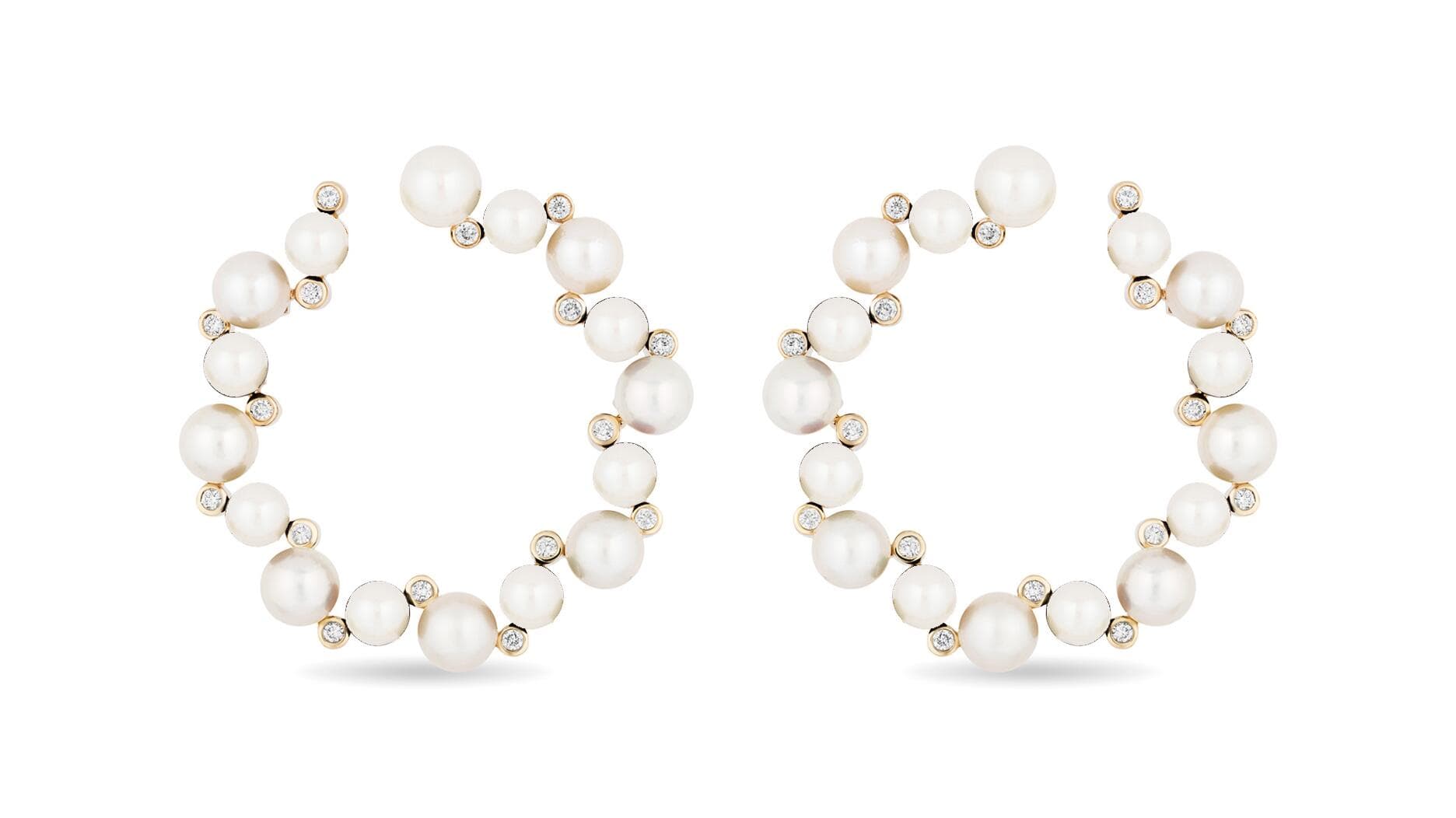
In 1893, Kokichi Mikimoto successfully created the world’s first cultured pearls, helping turn pearls from an extremely rare natural commodity into something luxury buyers could actually find and wear. Now pearls are escaping the old special-occasion box as baroque shapes, layered styling, and mixed-metal pairings make them read as fun, fashion-forward, versatile, and exquisite.
From heirloom code to fashion code
Cultured pearls changed who could buy and wear them.
Pearls also have a long record of disappearing into the background and then reappearing as the center of style. Pearls sat firmly in contemporary jewelry culture from the 1950s through the 1970s, when designers such as David Webb and Verdura, along with style icon Jackie Kennedy, helped make them part of the modern wardrobe. Today’s version is less formal strand, more design object: a pearl chosen for shape, luster, and personality rather than perfect roundness.
Why baroque shapes feel current
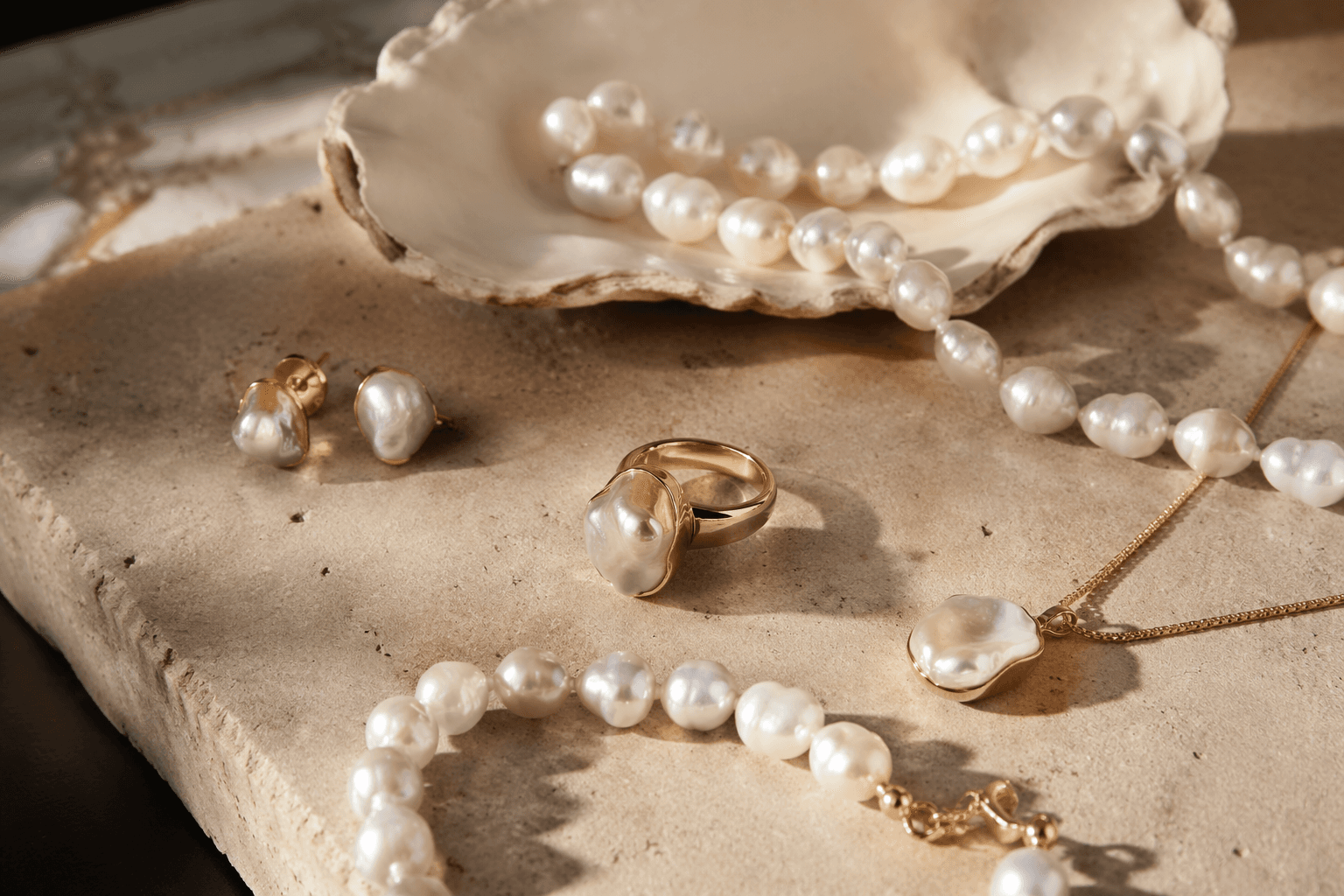
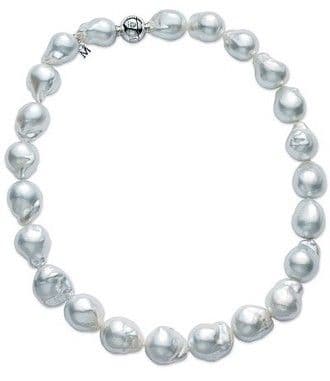
Baroque pearls are having a moment because they look individual before they look traditional. Their appeal lies in the natural, slightly irregular contours that make each piece feel distinct, which is why they fit so neatly into a broader jewelry mood that emphasizes playfulness, sculptural shapes, and eccentricity.
That shift changes how pearls work in a wardrobe. Instead of reading as ceremonial, a baroque pearl pendant or a single dramatic drop earring can feel deliberate and contemporary, especially when the metalwork is kept clean and the silhouette is allowed to stay a little off-center. Clean metalwork and a slightly off-center silhouette let the irregularity read as intentional.
What makes a pearl worth the money
A good pearl is never just about size, and a round pearl is not automatically better than an off-round one. Pearl value turns on seven factors: size, shape, color, luster, surface, nacre, and matching.
Luster deserves special attention because it is the first thing the eye reads. South Sea and Tahitian pearls continue to be coveted for their size and luster, which gives them a strong presence in both classic and more fashion-driven designs. Surface quality and nacre matter just as much, because a pearl with strong shine but weak nacre will not hold the same depth, and matching becomes crucial when two or more pearls are paired in earrings, bracelets, or strands.
The best-looking pearl is not always the most symmetrical one. A pearly sheen, a clean surface, and thoughtful matching can matter more than textbook roundness, especially when the design is meant to feel modern rather than formal.
How to wear pearls now
The easiest way to make pearls feel current is to let the design do less and the styling do more. Pieces that sit close to the collarbone, single pearls on fine chains, and sculptural settings all help keep the look light rather than ceremonial. When the pearl is baroque, the setting should usually stay restrained so the shape remains the focal point.
- Choose off-round or baroque pearls when you want the piece to feel more distinctive than polished-to-perfection.
- Look for settings that leave the pearl visible, especially in pendants and earrings.
- Mix pearl jewelry with other metals so the look does not settle into a single vintage register.
- Layer pearls with chains or simpler gold pieces so they read as part of a jewelry stack, not a standalone formal set.
A few styling cues make the difference:
A pearl necklace worn with a crisp shirt, a tailored blazer, or a knit top does not need to signal inheritance or occasion wear. The same is true for earrings: a sculptural pearl drop can move easily from work to evening because the form itself carries enough visual interest.
Why the market still rewards pearl know-how
Pearls remain a major trade category, not a niche collector’s material. OEC’s 2024 trade data places Hong Kong, Japan, and the United States among the largest pearl importers.
Demand can also move prices quickly. Tahitian pearls tripled in price over six months as Chinese demand surged. For buyers, that volatility makes quality literacy essential: when a pearl’s value is shaped by size, luster, nacre, surface, matching, and shape, buyers need to know exactly which of those traits they are paying for.
This article was produced by Prism’s automated news system from verified source data, official records, and press releases, then run through automated quality and moderation checks before publishing. The system is built and supervised by the people who set the standards it runs under. Read our full AI policy.
Know something we missed? Have a correction or additional information?
Submit a Tip