How to read pearl color, bodycolor, overtone and orient
Two pearls can both read white and still look worlds apart. Bodycolor, overtone and orient explain why, and they matter as much as size or luster at the counter.

At a bridal salon, two strands tagged simply as white pearls can separate on bodycolor, overtone and orient — and on price. In a gift case or on a screen lit by warm photography, the difference between one strand and another often comes down to those three terms. They explain why pearls that seem similar in a listing can look and cost very differently in person.
What pearl color really means
Pearl color breaks into three parts, and that framework is the best defense against vague selling language. Bodycolor is the pearl’s dominant overall color. Overtone is one or more translucent colors that sit over that base color, and orient is the iridescent rainbow shimmer that appears on or just below the surface.
Every pearl has bodycolor, but only some show overtone, orient, or both. In practice, a pearl can read as white, cream, gray or black at first glance, then reveal a second color when it turns in the hand. Pearl color tends to be muted, with a soft, subtle quality, which is why the same strand can look different under daylight, store lighting and product photography.
Why two white pearls can look nothing alike
White is not a single pearl color. The most familiar colors are white and cream, but black, gray and silver are also fairly common, and the palette can extend across nearly every hue. A buyer comparing two “white” necklaces should look for the nuance inside the color, not just the category on the tag.
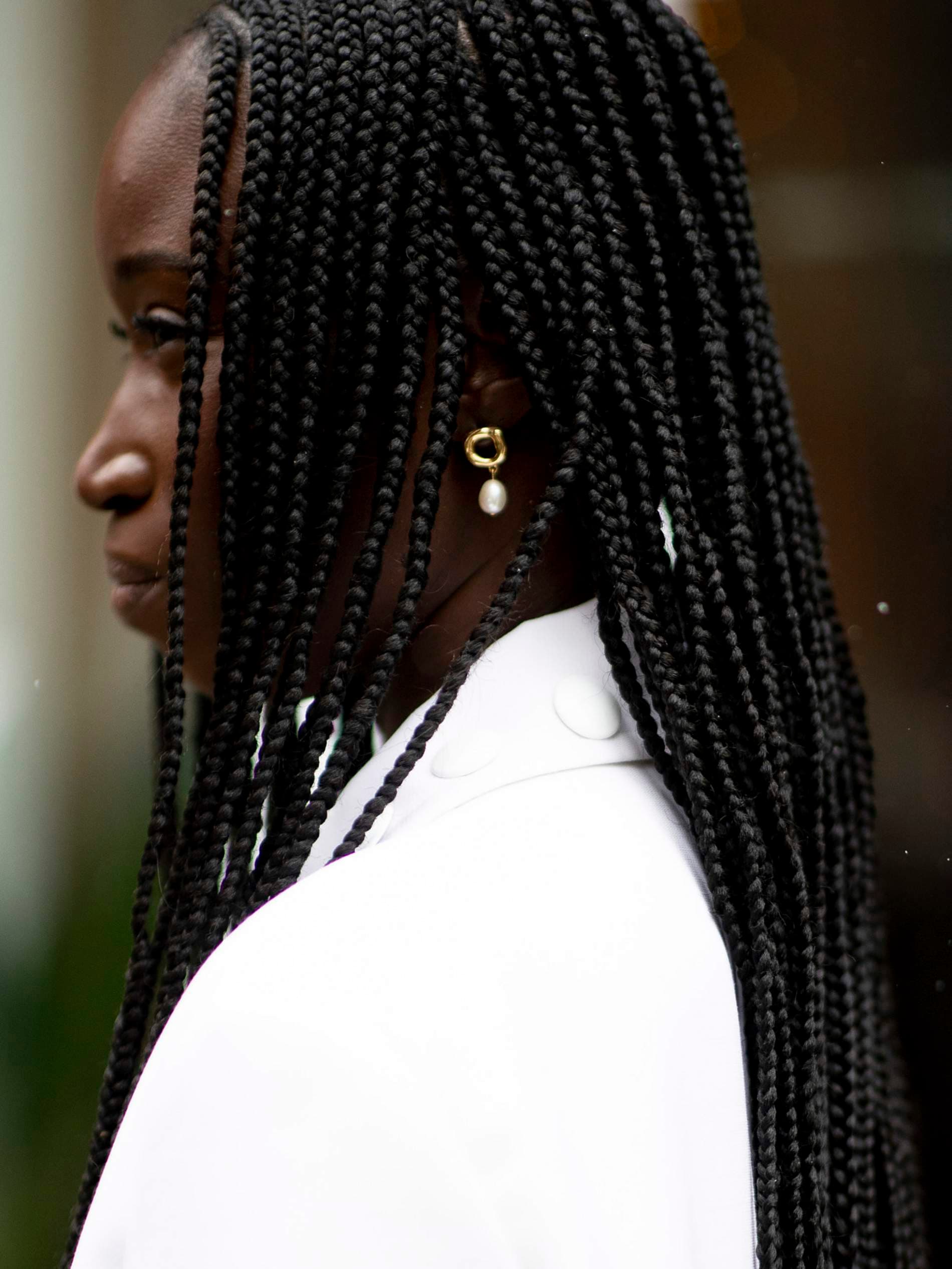
A cool white strand with a rosé overtone will read differently from a warmer cream strand, even if both are described simply as white pearls. The first may flatter bright bridal fabrics and platinum settings; the second can feel richer against gold and silk. Side-by-side comparison in neutral light is the only reliable way to see the difference clearly, because orient and overtone can disappear under yellow bulbs or in a rushed online image.
How bodycolor, overtone and orient show up in real jewelry
The terms are easiest to understand when you see them in finished pieces. A strand with strong bodycolor and little to no overtone looks cleaner and more uniform. A strand with a visible overtone can seem livelier, even if the base color is the same, because the translucent top color changes the way light moves across the surface.
Orient is the most elusive of the three, and often the most enchanting. It is not just shine. It is the rainbow effect that flashes on the surface itself or just beneath it, and it can make a pearl look almost electric when it turns. A pearl with modest bodycolor but vivid orient can feel more arresting than a larger pearl with flatter color.
Tahitian pearls, and why “peacock” is not just marketing fluff
Some of the most useful color language in pearl shopping comes from gray to black cultured pearls from Pinctada margaritifera, commonly known as Tahitian pearls. They are in great demand globally, and the majority of commercially produced Tahitian pearls come from French Polynesia. Their bodycolor can run dark gray to black, but the real personality often comes from the overtone and orient.
Examples include green or pink orient, and overtones can include green, pink, purple, blue, or combinations of those colors. In 2023, GIA added a report comment using the trade term “Peacock” for designated colors from this pearl type. It usually signals a green-and-purple iridescent look, not just a plain dark pearl. If a seller uses “peacock” loosely without any explanation of the actual bodycolor and overtone, the claim is too vague to trust on its own.
The shopper’s checklist: what to look for under the lights
Pearl color should never be judged in isolation. In GIA’s pearl-quality framework, overall value depends on size, shape, color, luster, surface quality, nacre quality and, when there are two or more pearls, matching. Color is only one factor in a much larger equation, and a pearl with excellent luster and clean surfaces can outshine a larger stone with duller color.
When you are comparing pieces, start with these checks:
- Look at the bodycolor first, then tilt the pearl to see whether an overtone appears.
- Watch for orient, especially on darker pearls, where the rainbow flash can be subtle until the pearl moves.
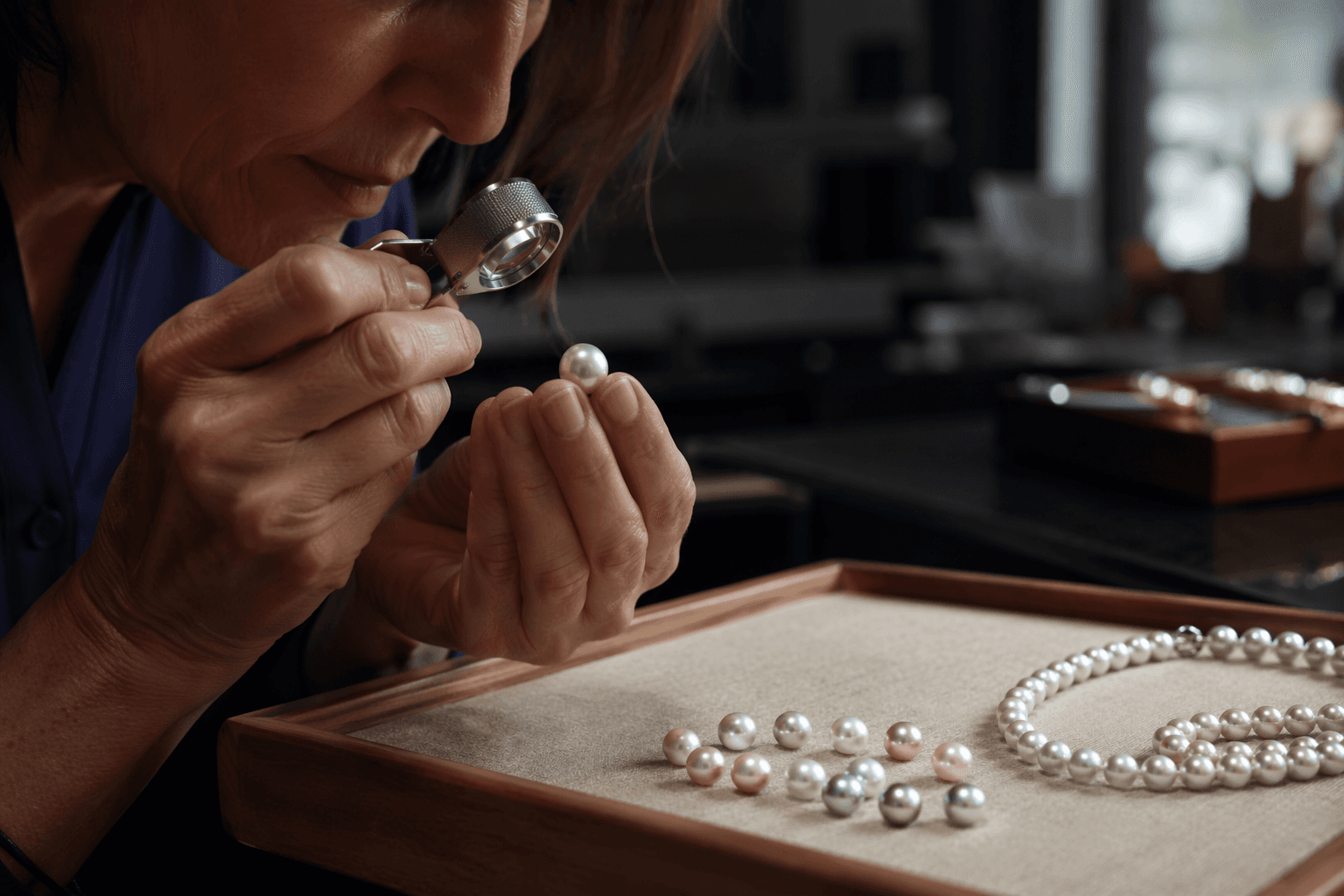
- Compare several pearls side by side in neutral light, not under warm display lamps.
- Judge the surface and luster with the same attention you give color, because a rich tone can be undermined by weak shine or obvious blemishes.
- If the piece has multiple pearls, inspect matching carefully, since it is a quality factor in its own right.
For online buying, the photos should ideally show the pearls from more than one angle. A single front-facing image can flatten overtone and hide orient, which makes the listing look more precise than the piece really is.
Why color is also a provenance clue
Pearls are not painted objects. They come from living mollusks, and cultured pearls are made by implanting mantle tissue into a host mollusk. Species matters, nacre chemistry matters, and one pearl type can have a different color personality from another even when the retailer uses the same broad adjective.
The first steps toward pearl culturing were taken in China, and Japanese pioneers successfully produced whole cultured pearls around the beginning of the twentieth century. Those pearls became commercially important in the 1920s, just as natural pearl production began to decline.
This article was produced by Prism’s automated news system from verified source data, official records, and press releases, then run through automated quality and moderation checks before publishing. The system is built and supervised by the people who set the standards it runs under. Read our full AI policy.
Did this article answer your question?