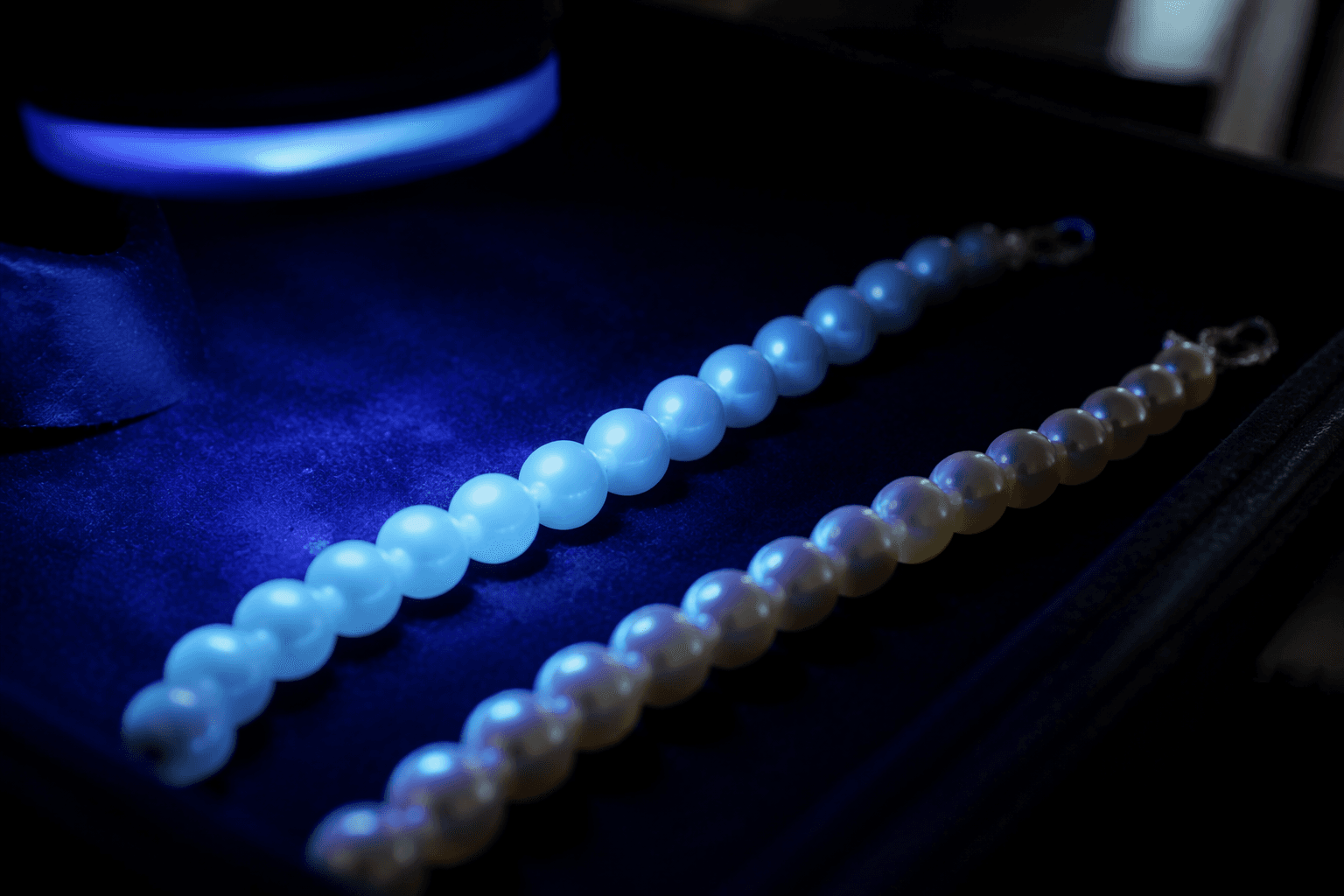
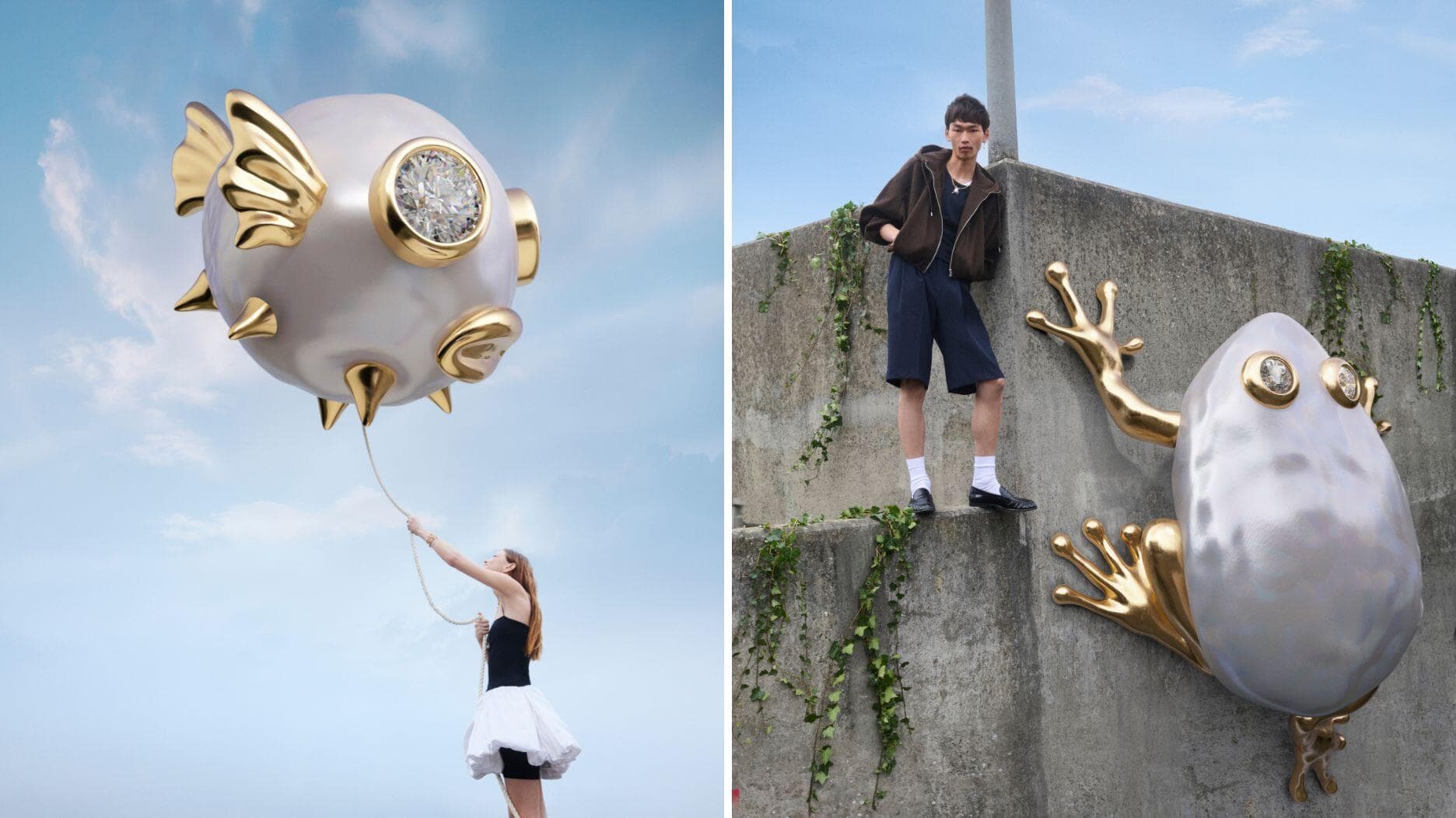
Pearl earrings bring fresh bridal style beyond classic studs
Pearl earrings now do more than sit quietly at the lobe. The smartest bridal pairs use studs, drops, or irregular shapes to answer neckline, hair, and ceremony formality.

Pearl earrings have moved beyond the neat row of bridal studs that once defined wedding-day jewelry. The most interesting pairs now use shape, length, and surface irregularity to answer the dress, the hair, and the formality of the ceremony. JCK made the case plainly in its Feb. 19, 2025 bridal roundup: "We’ve said it before and we’ll say it again: Pearl earrings are an essential bridal accessory, second in importance only to the rings."
The pearl's bridal pedigree
Pearls carry a ceremonial history that reaches far beyond one wedding season. Encyclopaedia Britannica defines the pearl as a highly valued gemstone formed by mollusks, and The Metropolitan Museum of Art shows that the connection to bridal dress was already vivid in Renaissance Europe, where a Florentine bride is depicted wearing a pearl necklace with a pendant and a brooch at the center of her dress. The Met also notes that women in Renaissance Florence were allowed to wear their bridal clothing and jewelry only for a short period after marriage, which helps explain why pearl pieces so often read as special-occasion objects rather than everyday ornament.
That symbolism stretches well outside Italy. Britannica Kids describes a Hindu tradition in which Krishna finds a pearl in the ocean to adorn his daughter Pandia on her wedding day, placing the gem inside a bridal story that is at once devotional and intimate. The Met adds another layer by naming pearls as the traditional gift for a 30th wedding anniversary, proof that the stone still marks milestones long after the ceremony itself is over.
Start with the neckline
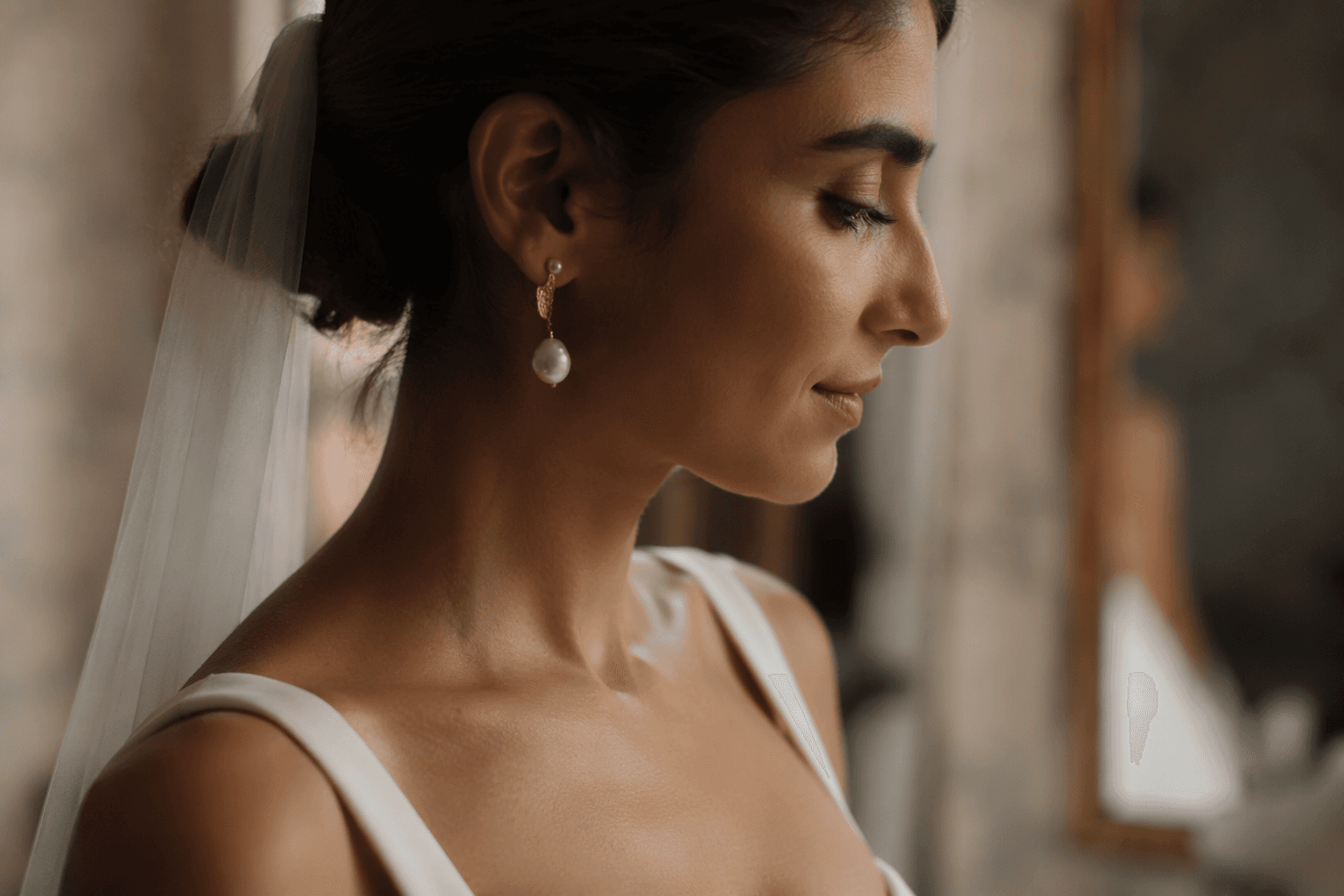
The neckline should decide how much pearl a face can carry. A high neckline or heavily worked bodice already creates visual drama, so a clean stud keeps the look controlled and lets embroidery, lace, or silk do the talking. A strapless or open neckline, by contrast, can handle a longer drop or a single suspended pearl, because the bare space below the collarbone gives the earring room to move.
Irregular pearl silhouettes work best when the gown is pared back. A smooth satin column or a minimal crepe dress can take the tension of a pearl that is less than perfectly round, because the earring becomes the one element that feels alive rather than ornamental for ornament’s sake. That is where the bride gets the fresh effect without losing the softness that makes pearls feel right for a wedding.
Let the hair decide the scale
Hair changes the reading of every pearl. A low chignon, polished bun, or sleek French twist exposes the ear and jawline, so a longer drop or a more sculptural pearl can feel especially elegant, almost like punctuation at the side of the face. Loose waves or a soft veil quiet that effect, which is why a closer stud or compact drop often photographs better and feels less fussy in motion.
This is also where mismatched or slightly irregular pairs feel modern rather than precious. When the hairstyle is already doing atmospheric work, the earrings do not need to shout; they need to catch light when the bride turns her head. In that setting, a pearl that is a little asymmetrical or organically shaped reads as intentional, not unfinished.
Match the formality to the finish
Ceremony formality should set the tone for the pearl itself. A black-tie ballroom wedding can support a more dramatic drop or a more distinctive silhouette, especially when the gown is restrained and the jewelry is expected to carry some of the visual weight. A courthouse ceremony, a garden wedding, or a daytime celebration usually asks for something lighter, where a small stud or short drop feels polished without becoming ceremonial theater.
That preference for versatility shows up in recent bridal styling commentary as well. The Pearl Source’s 2025 bridal jewelry guide calls pearl earrings a must-have wedding accessory and emphasizes that they can be worn long after the vows; 2026 bridal pearl coverage makes the same point by treating pearls as part of an evolving wardrobe rather than a one-day costume. The message is less about trend chasing than about buying once and wearing well, which is exactly the standard a wedding jewel should meet.
Bride, bridesmaid, and everyone in between
The bride can afford to be the most distinctive pearl in the room. That may mean a longer drop, a mismatched pair, or a more irregular silhouette that feels contemporary against a plain veil or a clean-lined dress. The point is not novelty for its own sake, but a balance between the pearl’s softness and a shape that feels current enough to survive beyond the wedding album.
The bridal party needs a different calculation. Bridesmaids usually look best in smaller studs or restrained drops, especially when their dresses already bring color or texture into the frame. Mothers of the couple often sit somewhere in between, where a classic pearl stud or a modest drop feels composed, respectful, and entirely appropriate to a formal family portrait.
JCK’s reminder that pearl earrings rank just behind the rings is useful here because it captures their place in the hierarchy of wedding day details. The right pair does not compete with the dress, the veil, or the bouquet; it sharpens the whole portrait by giving the face a quiet, luminous frame.
Why the best bridal pearls feel current
Pearls remain powerful because they can move between tradition and reinvention without losing their meaning. The Met’s Renaissance brides, the Hindu wedding story of Krishna and Pandia, and the 30th-anniversary gift all point to the same truth: pearls are rarely just decoration. In bridal earrings, that history now meets a much more modern instinct for wearability, which is why the most compelling pairs are no longer only classic studs, but drops, asymmetrical shapes, and other silhouettes that look right in the ceremony and still feel worth wearing after it.
This article was produced by Prism’s automated news system from verified source data, official records, and press releases, then run through automated quality and moderation checks before publishing. The system is built and supervised by the people who set the standards it runs under. Read our full AI policy.
Did this article answer your question?