Pearl necklace lengths explained, from choker to rope styles
Pearl lengths do the styling work. Chokers sharpen open necklines, princess strands hit the collarbone, and rope styles can be doubled or knotted for drama.
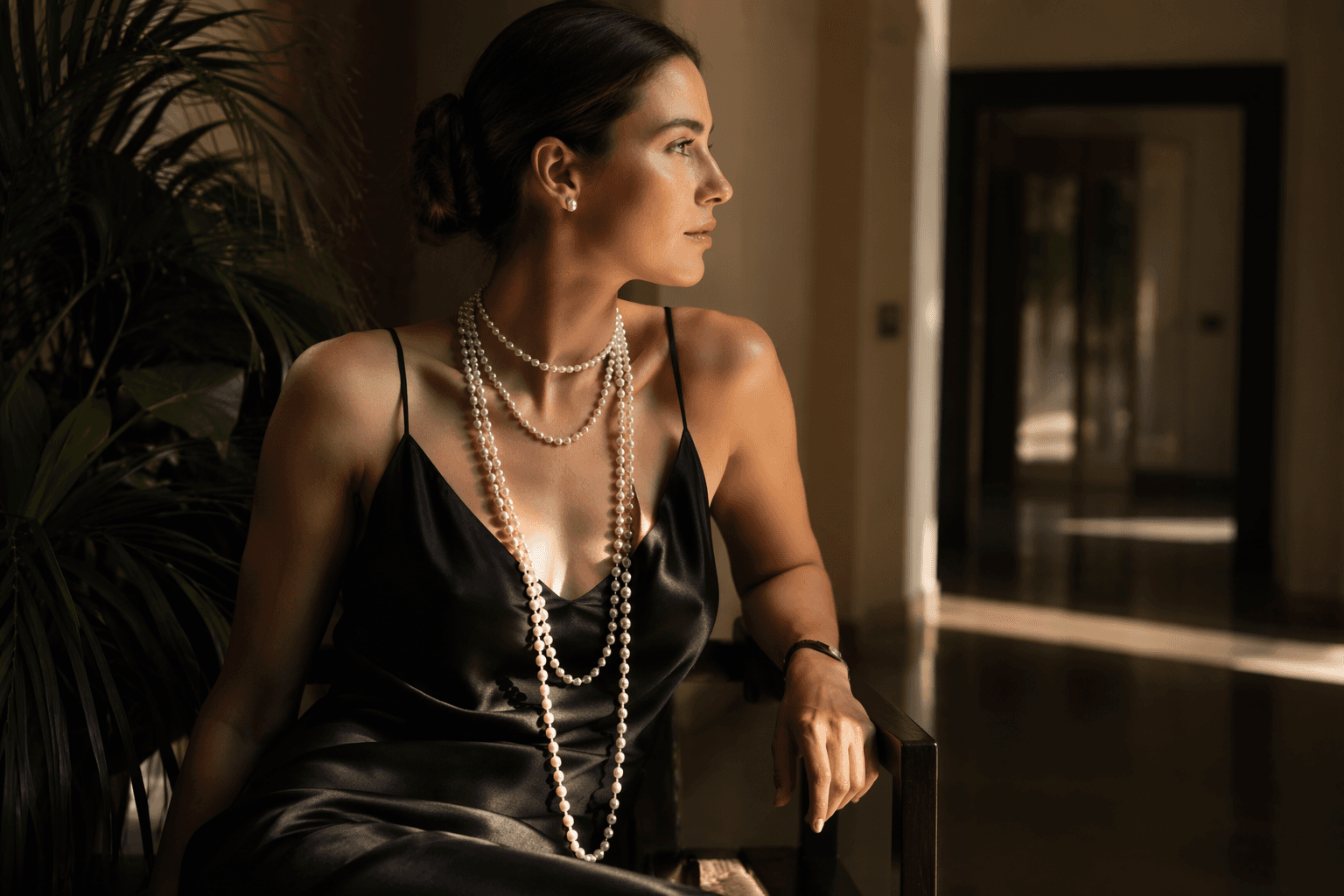
A 14- to 16-inch choker sits close to the throat and feels instantly more formal, while a 17- to 18-inch princess strand lands at the collarbone and slips easily into the way people dress now, with crew necks, open collars, and layered chains.
Chokers and princess lengths: the close-to-the-skin zone
The shortest traditional pearl lengths are the most precise in how they frame the face. This close-to-the-skin range covers the high, neat pearl looks people still reach for with button-downs, strapless dresses, and tailored jackets. A choker reads a little more vintage and a little more ceremonial; princess length is usually the safest everyday buy because it sits where most necklines naturally open.
The Jewellery Editor uses 14 and 18 inches as benchmark lengths at the center of that conversation. If you want pearls for layered everyday styling, this is the zone that keeps the strand visible without overwhelming a T-shirt, silk shirt, or blazer lapel. It is also the easiest length to wear when you want the pearls to act as a clean line rather than a full statement.
Matinee length: the workhorse between polish and ease
Once a strand moves into matinee territory, it starts to behave differently on the body. The Jewellery Editor uses 24 and 28 inches as matinee benchmarks, and they suit the neckline many women wear most often: crew necks, shallow V-necks, and the opening of a blazer. That extra drop lets pearls sit over knitwear or tailored separates without disappearing into them.
This is where the rough drape rule becomes useful. The Jewellery Editor suggests allowing about half an inch of drape for every inch of necklace length, a practical shopping shortcut when you are comparing strands online. A 24-inch necklace and a 28-inch necklace will not hang the same way, even before pearl size enters the picture, and the longer version will usually feel looser and more relaxed on the body.
Opera and rope lengths: statement dressing with built-in versatility
Opera and rope lengths carry the most visual drama. The Jewellery Editor uses 34, 42, and 48 inches as benchmarks for lengths that move from necklace into styling tool. These lengths are the ones that can frame a gown, stretch over a coat, or turn a simple dress into eveningwear without any other jewelry competing for attention.
They are also the lengths with the most wardrobe mileage. A long strand can be worn single, double, or shortened when it has an adjustable clasp, and a pearl enhancer can turn it into a shorter necklace or pendant-style design. That means a 42- or 48-inch rope is not just a statement piece for bridal dressing or formal events; it can also become several different necklaces over time.
Why length changes the value conversation
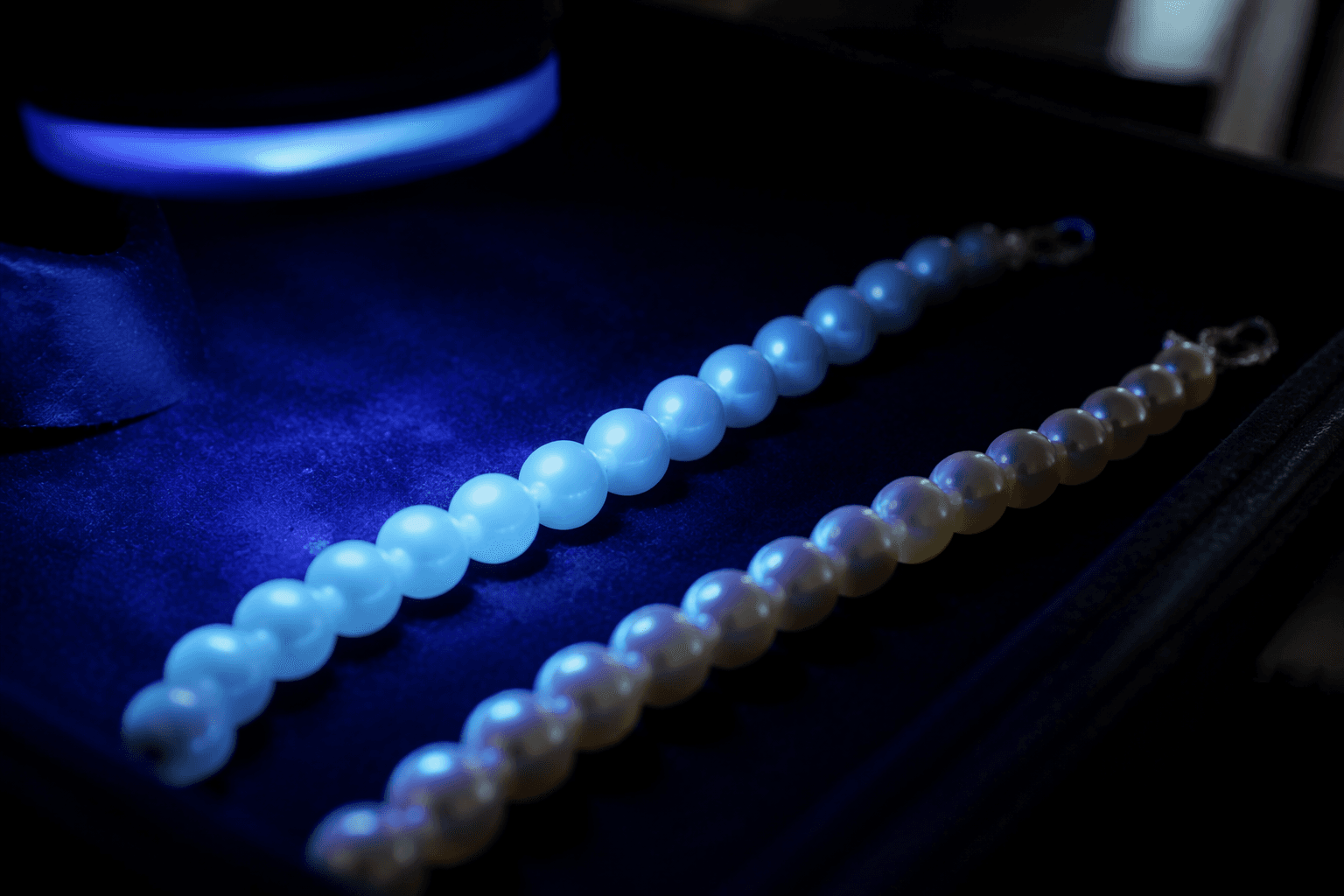
Pearl length is not only a style choice, it is a construction choice. GIA’s 7 Pearl Value Factors are size, shape, color, luster, surface, nacre, and matching, and matching matters especially in strands and other multi-pearl jewelry. The longer the necklace, the more pearls have to agree with one another in color and luster, and the more disciplined the stringing has to be.
That is one reason a long strand can cost more than a short one even when the pearls look similar at a glance. Longer necklaces need more pearls, more matching, and more silk or metal construction, and they are often the pieces most likely to be redesigned later with a new clasp or enhancer. A strand of larger pearls can also appear shorter and fuller than the same measured length in tiny seed pearls, so two 18-inch necklaces can wear very differently.
Pearls are organic, and in strands surface quality, nacre, and luster feel especially important. In a short necklace, a slight mismatch may disappear; in a long rope, it can break the visual flow.
How to test fit before you buy
Tiffany advises cutting a piece of string to the necklace length you are considering and placing it around your neck to see where it falls. That matters because neck circumference, collar height, and pendant size all change the way a strand behaves on the body. It is the simplest way to check whether a 16-inch choker will feel snug or whether an 18-inch princess strand will sit exactly at the collarbone.
- A 14- to 16-inch strand works best when you want a close, formal line.
- A 17- to 18-inch strand is the most adaptable everyday length.
- A 24- to 28-inch strand brings pearls into blazer-and-knitwear territory.
- A 34- to 48-inch strand gives you the most options for doubling, knotting, or layering.
The Metropolitan Museum of Art holds a 52-inch seed-pearl sautoir dated circa 1910, and the Victoria and Albert Museum has a circa 1920 sautoir of seed pearls, diamonds, and platinum. The V&A also documents an earlier long necklace from the 1790s and early 1800s worn over one shoulder and under the other, a shape inspired by military dress.
Pearls as style, status, and identity
Britannica describes jewelry as a sign of social rank and a talisman. Pearls remain unusually good at carrying that double meaning. Smithsonian Magazine tied Kamala Harris wearing pearls on August 19, 2020, to Alpha Kappa Alpha.
This article was produced by Prism’s automated news system from verified source data, official records, and press releases, then run through automated quality and moderation checks before publishing. The system is built and supervised by the people who set the standards it runs under. Read our full AI policy.
Did this article answer your question?