Sotheby’s explains why rare pearls, provenance still drive collector value
Rare pearls are prized less for fashion than for proof: scarcity, provenance, luster, shape, and surface quality are what turn them into collector assets.
Why pearls have moved from adornment to asset
The pearl market is being rewritten by scarcity. Sotheby’s says 90 percent of the genuine natural saltwater pearls on the market today were harvested more than 90 years ago, which is why the most interesting pieces are now antique or vintage rather than newly sourced. That simple fact changes the conversation from styling to stewardship: if you are looking at pearls as a collector, you are really looking at a finite supply of material history.
The shift matters because cultured pearls transformed the jewelry landscape in the 20th century. After Kōkichi Mikimoto’s work in the 1890s led to commercial cultured pearls, natural pearls became even more exceptional in the market. Farming made pearls scalable, which is exactly why natural examples hold their edge now. A modern strand may be beautiful, but a natural pearl with strong documentation carries a different kind of weight.
Rarity is only the beginning
The number that should change how you read pearl prices is not a carat weight or a fashion season, but a rough ratio from pearling history: one pearl for every 10,000 oyster shells, as cited in a Smithsonian report on pearling archaeology. That kind of yield explains why genuine natural pearls can feel almost mythic in the market. They are not simply harder to find than diamonds in one category or another; they are difficult to find at all.
Sotheby’s puts the market focus squarely on antique and vintage natural-pearl jewelry because virtually none can be found fresh from the source. That is the heart of the collector story. Demand is being driven by buyers who understand that supply is not replenishing in any meaningful way, and that the finest surviving examples are already dispersed into private collections, museums, and historic estates.
What actually determines pearl value
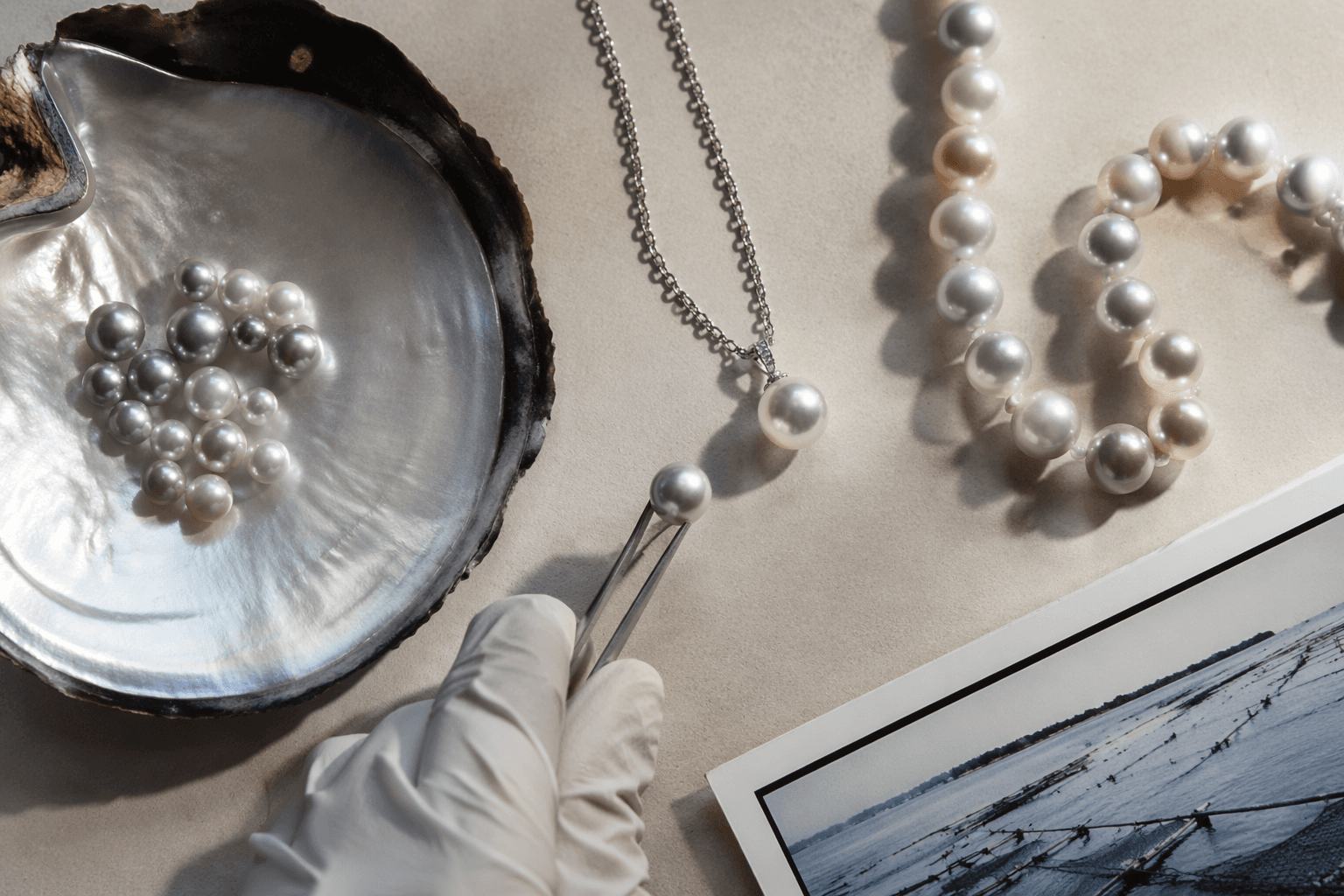
Pearls are not graded by romance alone. CIBJO’s pearl guide classifies natural and cultured pearls using physical dimensions and quality parameters, which is a reminder that valuation depends on measurable characteristics, not just the glow of a piece under good lighting. Britannica adds the gemological vocabulary that matters most: translucence, lustre, and orient. Deeper lustre and more perfect spherical or droplike shape increase value, and those are exactly the details collectors inspect first.
When you examine a pearl with a jeweler’s eye, four qualities rise to the top:
- Luster, the sharpness and depth of the reflection on the surface
- Nacre thickness, which affects durability and the richness of the glow
- Shape, with round and well-formed droplike pearls commanding more attention
- Surface quality, meaning how clean the skin appears to the naked eye
Size matters too, but size without luster is only bulk. A large pearl with dull skin will never outshine a smaller pearl with mirror-like depth and clean surface quality. In the collector market, that distinction separates decorative pieces from assets.
Provenance can lift a pearl into another price tier
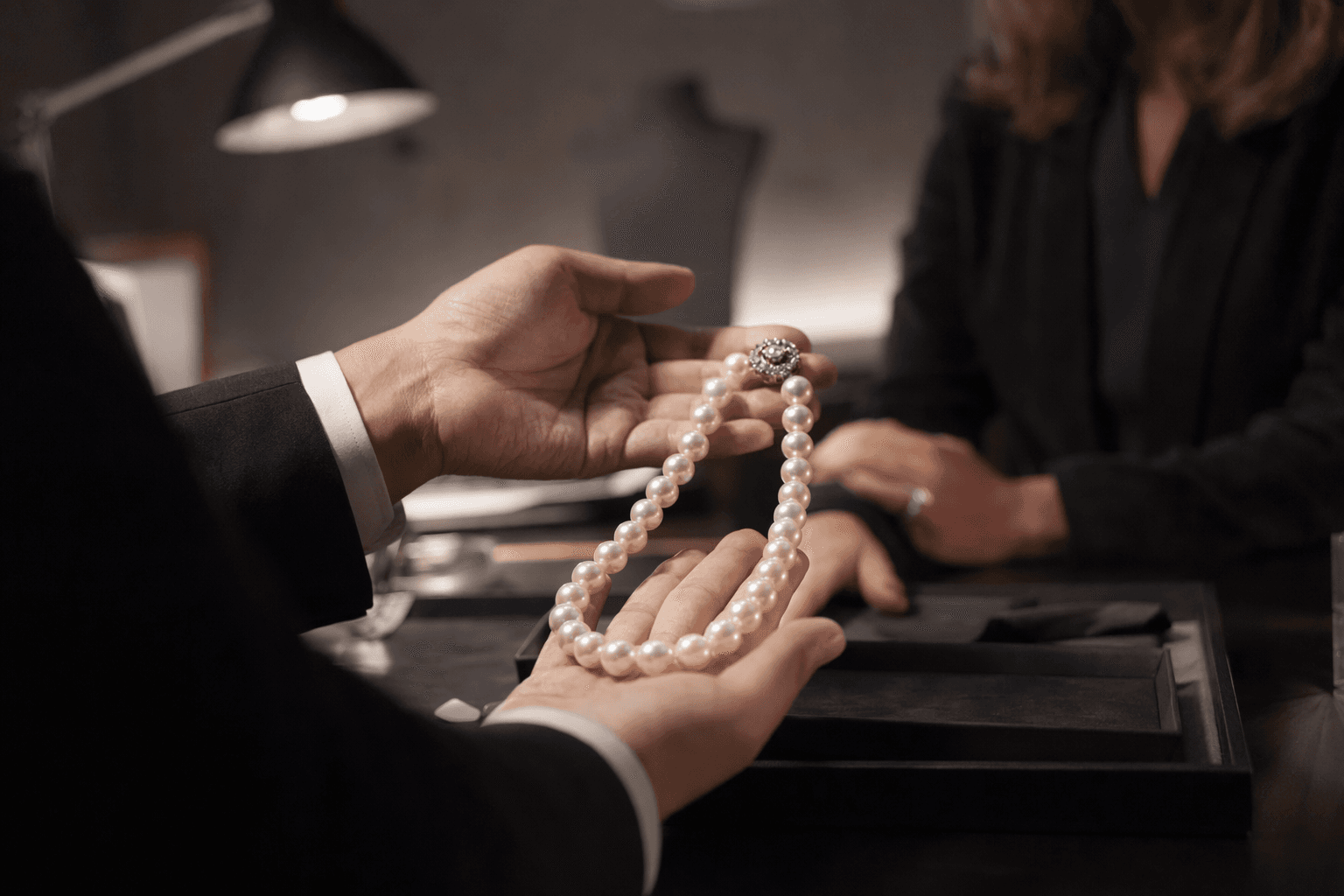
If rarity creates interest, provenance creates appetite. Christie’s has long noted that pearls have been coveted by Eastern and Western collectors for centuries and worn by monarchs and style icons including Henry VIII, Princess Diana, and Coco Chanel. That lineage is part of the market’s emotional pull, but it is also part of the pricing structure. A pearl with an old and well-documented history does not simply come with a story; it comes with verification that can materially change its value.
La Peregrina is the clearest example. The 16th-century pearl necklace, identified by Guinness World Records as the most expensive pearl necklace sold at auction, sold at Christie’s New York on December 14, 2011 for $11,842,500. Its pre-sale estimate was $2 million to $3 million, so the final price landed at more than four times the low estimate. That jump was not driven by size alone. It was driven by rarity, age, royal associations, and a chain of ownership that made the jewel feel singular.
Christie’s also notes that a report from SSEF confirmed the authenticity of La Peregrina as a saltwater natural pearl. That kind of testing is not a footnote in high-end pearl collecting. It is the infrastructure that turns family lore or auction theater into market confidence. SSEF says it has tested many of the world’s most iconic natural pearls in recent years, and that laboratory scrutiny now sits alongside historical documentation as part of serious due diligence.
How to buy for lasting value
Collector demand is reshaping the pearl market, but the smartest purchases are still grounded in the same essentials. Start with whether the pearl is natural or cultured, then look for evidence that the classification is backed by proper documentation. From there, judge the pearl as a jewel, not a slogan.
A strong collector piece usually offers several of the following at once:
- Clear provenance, especially if the piece has passed through a known house or family collection
- Strong, even luster that reads instantly in natural light
- Thick nacre that suggests longevity and depth of glow
- An elegant shape, whether round or a well-proportioned droplet
- Minimal surface blemishes
- Size that feels earned by quality, not compensated for it
- A signed heritage mount or maker’s mark that adds another layer of historical context
Signed heritage pieces matter because they locate the pearl within the world of design as well as gemology. A historic setting can preserve a pearl’s narrative and help separate a collectible jewel from an anonymous strand. In the best examples, the mounting is not a distraction from the pearl. It is part of the object’s documentary value.
Why the pearl market still has room to surprise
Pearls have always carried status, but the current market is rewarding knowledge as much as glamour. The buyers who are winning today are the ones who understand that a pearl’s value is built from scarcity, proof, and condition. Natural pearls remain compelling because they are nearly impossible to source anew, and the best examples have already traveled through history with their reputations intact.
That is why pearl collecting now feels less like a trend and more like connoisseurship. The market is not chasing shine alone; it is paying for the rare combination of luster, form, surface, and provenance that lets a pearl outlast fashion and keep appreciating as a piece of wearable history.
This article was produced by Prism’s automated news system from verified source data, official records, and press releases, then run through automated quality and moderation checks before publishing. The system is built and supervised by the people who set the standards it runs under. Read our full AI policy.
Did this article answer your question?