Sotheby's Geneva spotlights Alphonse Fouquet pearl pendant from 1880
A circa-1880 Fouquet pendant with two SSEF-certified natural saltwater pearls combines signed provenance, antique rarity and auction-ready scarcity.
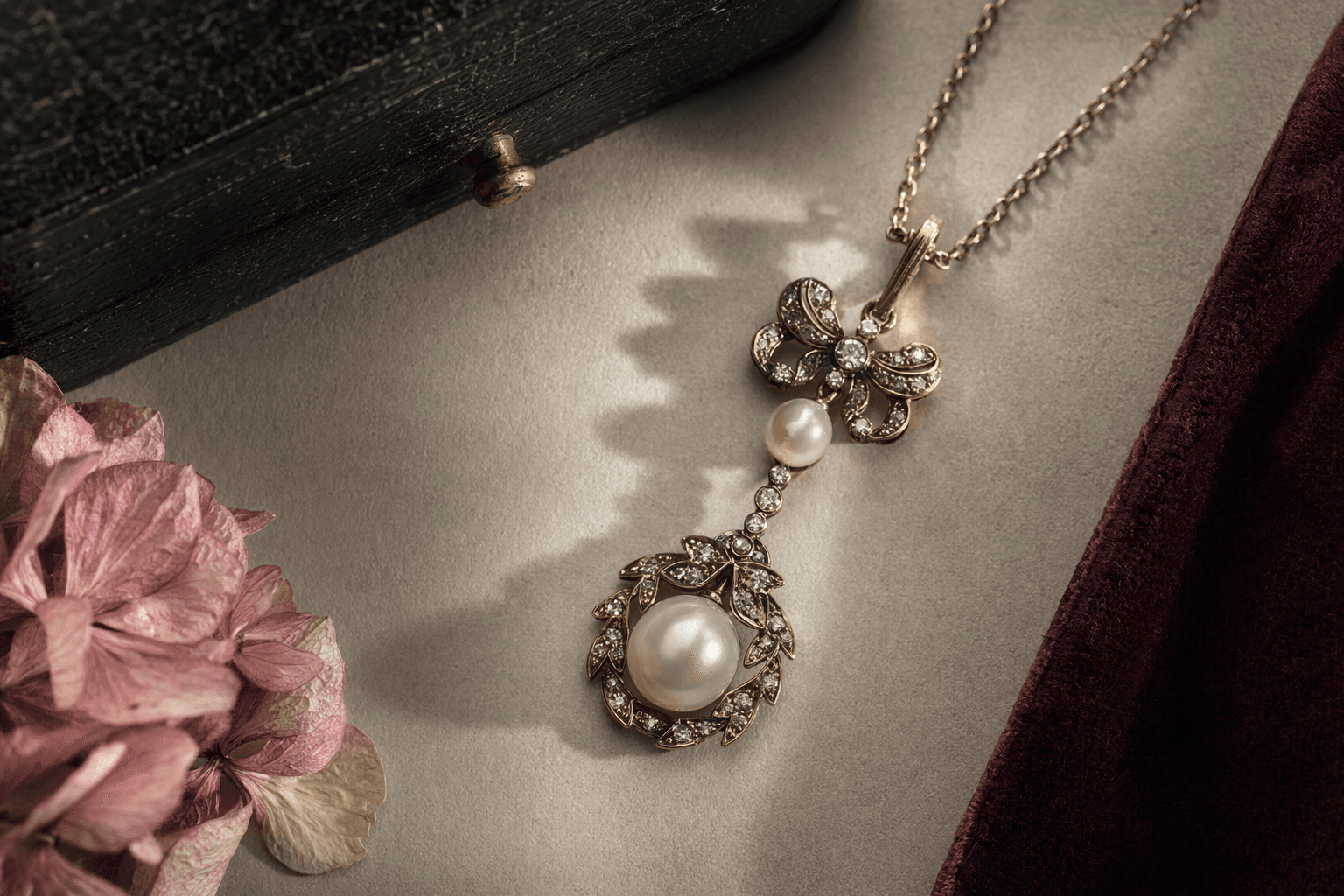
A button-shaped natural pearl, a second pearl in the detachable bail, and Alphonse Fouquet’s maker’s mark turned Lot 766 into one of the sharpest pearl stories in Geneva. Sotheby’s placed the circa-1880 pendant at CHF 10,000 to 15,000, with a CHF 9,000 starting bid, but the real draw was not just the number on the estimate sheet. It was the combination of period French craftsmanship, documented natural pearls and a scale that feels intimate at roughly 45 by 25 mm and about 11 grams in 18-carat rose gold.
For pearl buyers and collectors, the commercial logic is clear. The pendant carried an SSEF report dated 9 October 2024 identifying both pearls as natural, saltwater pearls, which is the sort of gemological paperwork that separates a decorative antique from a serious market piece. The larger pearl measured 11.09 to 11.21 by 9.77 mm, while the roundish pearl in the detachable bail measured about 4.40 to 4.65 by 3.80 mm. Those measurements matter because natural pearls of documented size, symmetry and condition are increasingly rare, and the signed setting adds another layer of value that later reproductions cannot match.
The setting matters too. Sotheby’s described the jewel as French assay-marked 18-carat rose gold, and the maker’s mark for Alphonse Fouquet gives it a clear place in Parisian decorative arts history. Fouquet began his career in the 1840s, founded his own house in 1860 and later worked with his son Georges. The Musée d’Orsay has described him as a creator of forms and a technician who brought technical innovations to the trade, which helps explain why a jewel like this resonates now: it is not just about pearl size, but about authorship, design intelligence and survival.
That appeal sat inside a sale that was already showing muscle. Sotheby’s Geneva sold its High Jewelry auction on 12 May for CHF 23,361,472, with 93 percent of lots sold and the highest participation in a Sotheby’s Geneva jewelry sale in more than five years. More than five paddles were registered for each lot sold, a sign that well-documented jewels still pull deep bidding when the materials are right. Sotheby’s Geneva also framed the Fine Jewelry sale around signed jewels spanning more than a century of craftsmanship, with a highlighted single-owner group from the Collection of Nina Genillard, underscoring how provenance has become part of the price, not just the story. In that market, a signed Fouquet pearl pendant is not a curiosity. It is a compact lesson in why rarity, maker, and paperwork now drive the strongest antique pearl results.
This article was produced by Prism’s automated news system from verified source data, official records, and press releases, then run through automated quality and moderation checks before publishing. The system is built and supervised by the people who set the standards it runs under. Read our full AI policy.
Did this article answer your question?