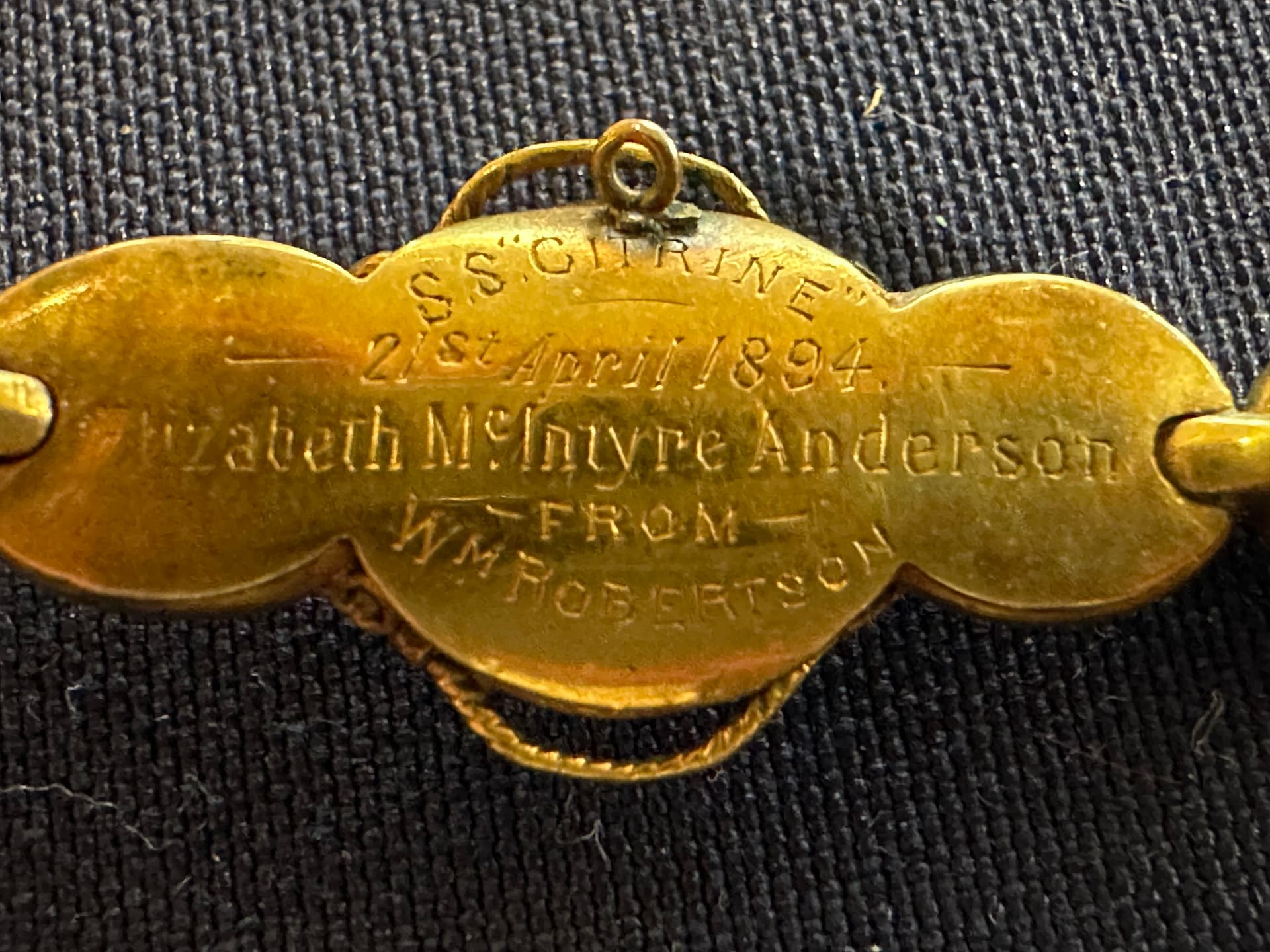
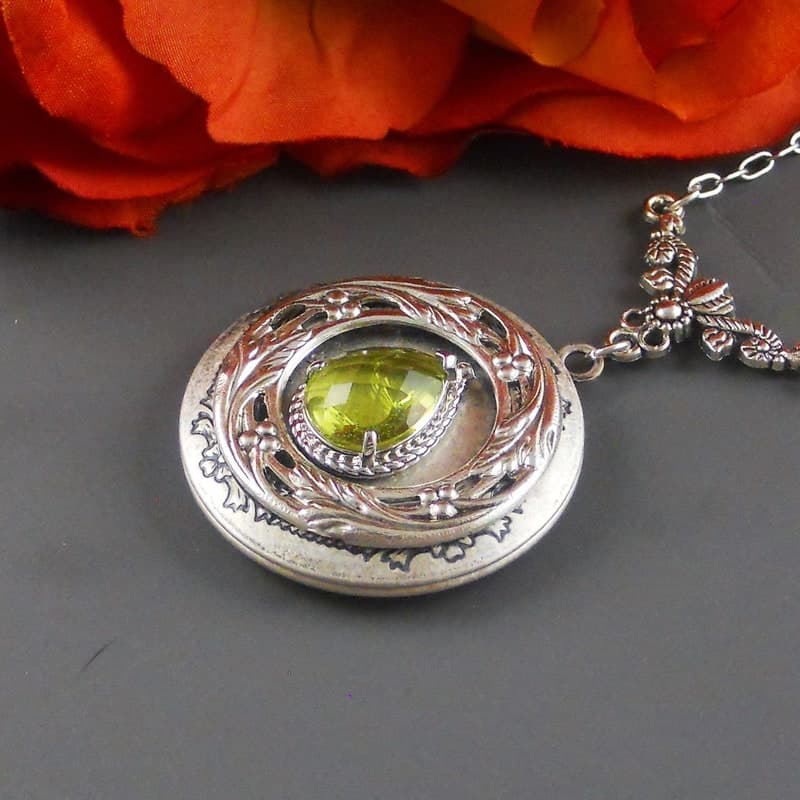
AI may speed design, but bespoke jewellery stays human-led
AI can sketch a custom jewel faster, but the pieces that carry memory, marriage, and family history still need a human hand.
A memorial pendant that has to hold a name, a date, and a life’s worth of feeling is not the kind of piece you hand over to software and walk away from. AI can help a jeweller move faster from brief to picture, but the meaning, the proportion, and the final judgment still belong to a person.
AI opens the first draft
Harriet Kelsall’s argument lands at the right moment for shoppers who want custom work without losing the intimacy that makes it worth buying. Retail Jeweller’s April 24, 2026 opinion piece places bespoke jewellery squarely in the age of AI-generated design, and the tension is the point: custom jewellery is becoming easier to visualize, but not easier to define. That distinction matters whether you are commissioning an engagement ring, a family-story pendant, or a ring built around a stone with sentimental weight.
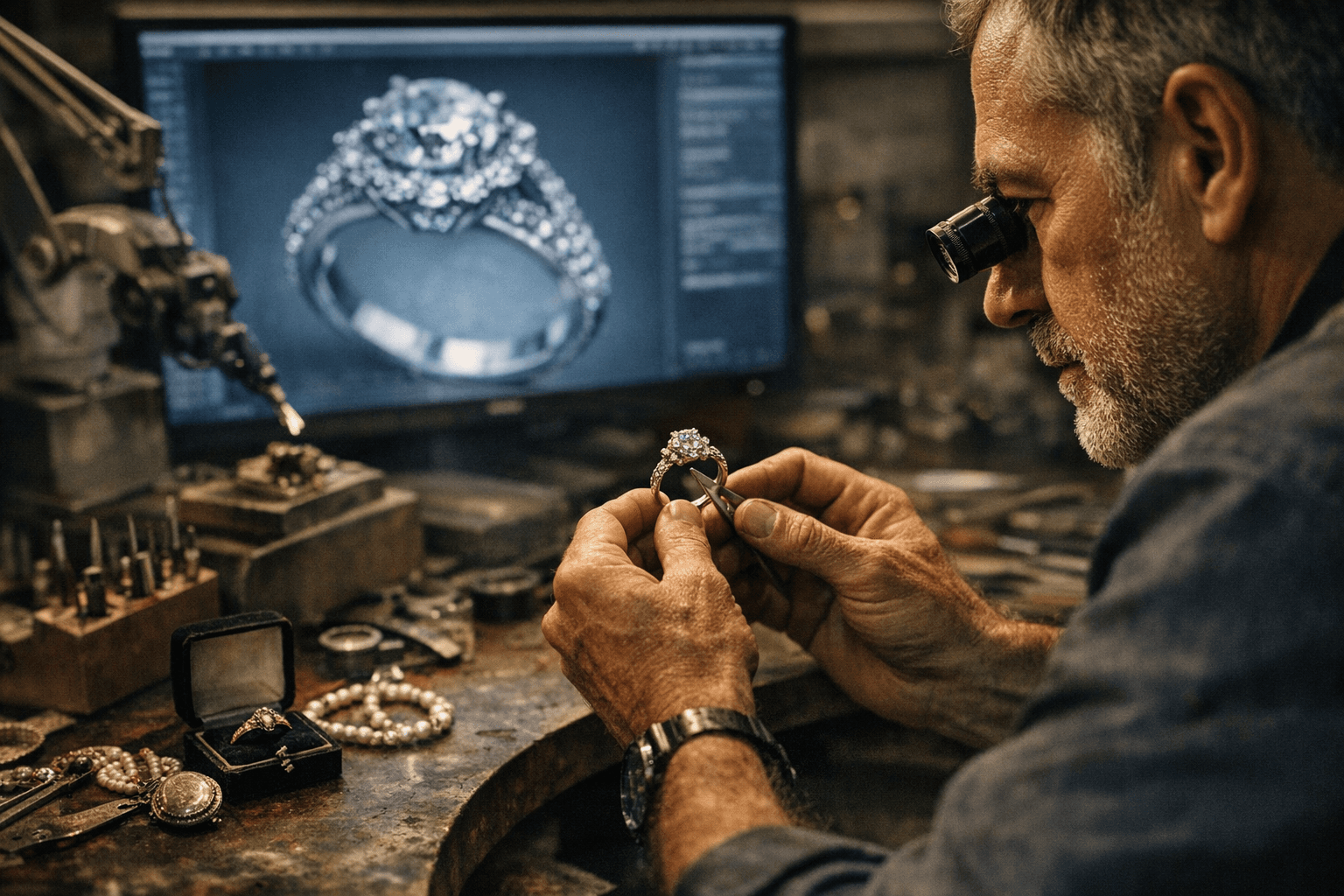
The clearest gain from AI is speed at the front end. Generative tools can turn a text brief or an image prompt into multiple concept directions, which means faster sketches, quicker revisions, and a better sense of scale before metal is ever cut. The Gemological Institute of America has already laid out how tools such as Midjourney, DALL·E, Stable Diffusion, Leonardo, and Firefly are entering jewellery design, and that matters to shoppers because it changes what “custom” can look like in the first conversation. Instead of waiting for a single hand-drawn concept, you can compare silhouettes, settings, and visual directions in a shorter time.
That makes AI especially useful when you are still deciding between options. It can clarify whether you want a slim band or a heavier one, a clean solitaire or a more detailed halo, a warm yellow gold tone or a cooler platinum look. It also helps people who struggle to describe a piece in words, because the image can do some of the translation work that used to take several rounds of explanation.
Where bespoke still needs a person
The limits show up as soon as the brief becomes emotional rather than purely visual. An engagement ring is not just a setting for a diamond, a memorial jewel is not just a pendant, and a family piece is not just a pretty object. These commissions carry relationship, memory, and symbolism, and that is where human interpretation becomes the luxury.
GIA’s 2024 discussion of AI in jewellery design is blunt about the challenges: ethical, legal, and regulatory questions follow fast-moving image generation. But its most important reminder is simpler, and more human. People are still indispensable when it comes to telling the stories of jewellery and gemstones. A machine can assemble a look, but it cannot sit across from a client, hear why a grandmother’s ring matters, and decide that the right solution is not a more elaborate design but a quieter one with better balance.
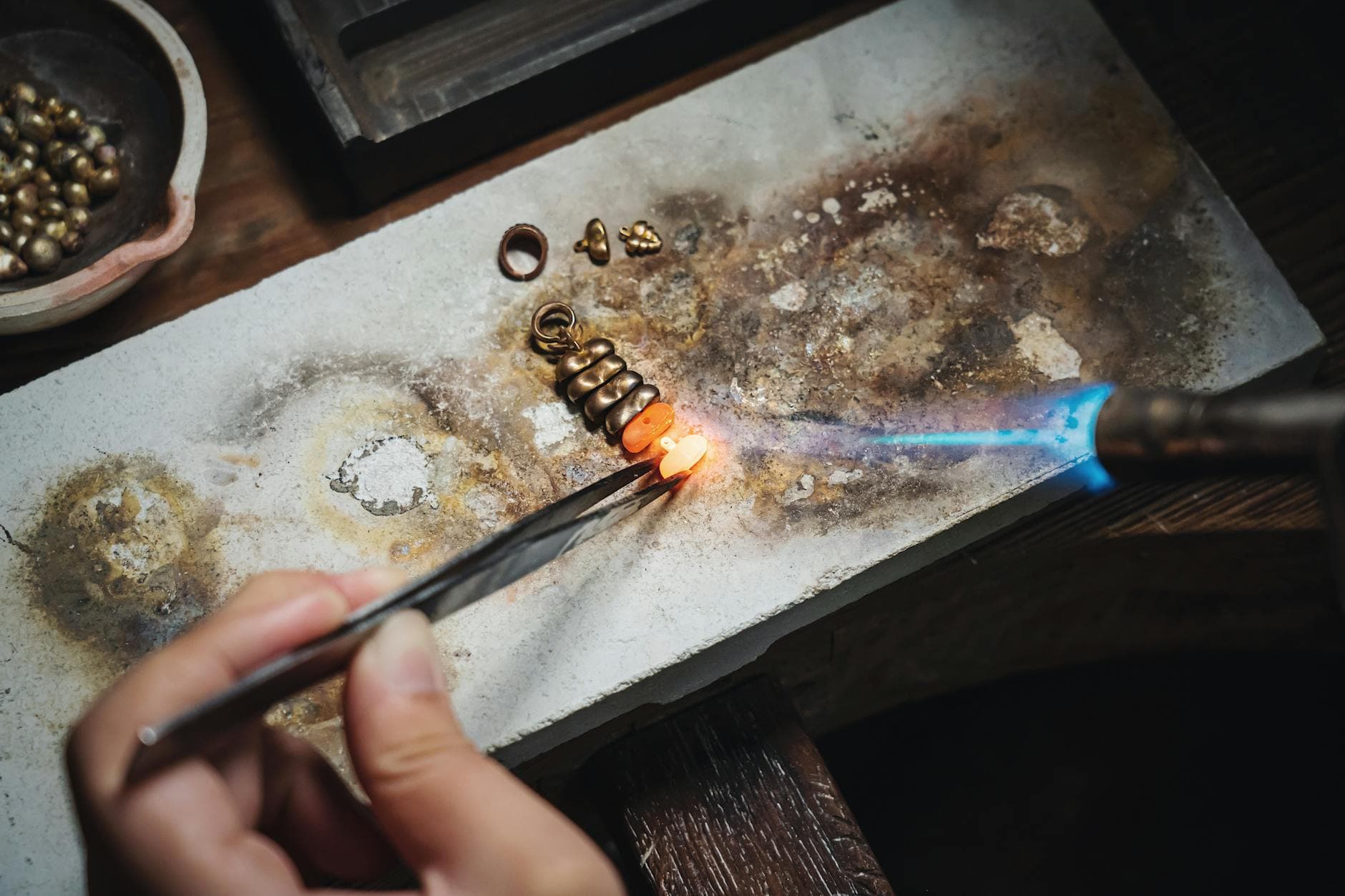
That is where human-led bespoke work earns its keep. A jeweller reads between the lines of a brief, notices when a client says they want “something modern” but really means “something that will still feel right in 20 years,” and understands when a technically polished render would make an uncomfortable ring in real life. The workshop also matters here. Hand-finishing, stone-setting judgment, and the ability to adapt a design once materials are in front of you are not cosmetic extras. They are what turn a digital idea into a wearable object.
Why the market is moving anyway
The wider industry is already making room for this hybrid future. Retail Jeweller ran a separate package in October 2025 on how AI is transforming jewellery manufacturing processes, and in September 2025 it reported that Hill & Co. launched a 21-Day AI Strategy programme to help retailers adopt artificial intelligence with clarity and confidence. That is a strong signal that AI is no longer treated as a novelty in the trade. It is becoming part of the operational conversation, from the bench to the sales floor.
Consumer demand is moving in the same direction. Pandora now sells multiple lab-grown diamond collections, which shows how mainstream brands are building contemporary, customizable lines around modern materials. At the same time, market-research coverage continues to treat personalized jewellery as a distinct category, driven by engraved pieces, nameplate designs, birthstone jewellery, and bespoke commissions. The trend is not just toward more jewellery, but toward more jewellery that says something specific about the wearer.
For shoppers, that is the real story. Personalization is no longer confined to the highest-end atelier. It is spreading across price points and product types, from lab-grown diamond collections to one-off commissions. AI helps those categories scale, but it does not erase the need for a human who can shape a brief into something worth keeping.
How to tell when AI is enough, and when it is not
There is a useful dividing line for buyers. AI-assisted custom jewellery is often good enough when the brief is primarily visual or practical: you want a clean first concept, you need to compare a few variations quickly, or the piece depends mainly on proportion, colour, and a straightforward engraving or stone choice. In those cases, software can make the process faster and less intimidating without diminishing the result.
You should insist on a human-led process when the piece carries a story that cannot be flattened into a prompt. That includes engagement rings with family significance, memorial jewellery, heirlooms being reset, or designs built around inherited stones and complicated emotional histories. It also includes any order where provenance, material choice, or workshop standards matter as much as the final look. A good bespoke jeweller should be able to explain what the piece is made from, how it will be made, and why that method suits the commission.
- Ask what AI, if any, is being used in the design stage, and where a human designer will intervene.
- Ask how revisions are handled, especially if you are refining a sentimental or symbolic piece.
- Ask about materials, including whether the centre stone is lab-grown or mined, and what documentation comes with it.
- Ask how the piece will be finished, set, and checked before it leaves the workshop.
- Ask whether the final design is being shaped to tell a story, or only to match an image.
A practical checklist helps:
That last question is the one that separates convenience from craftsmanship. AI can make bespoke jewellery quicker to imagine, but the pieces people treasure most still depend on a jeweller’s eye, a setter’s hands, and the human instinct to know when a design should speak softly and when it should not speak at all.
This article was produced by Prism’s automated news system from verified source data, official records, and press releases, then run through automated quality and moderation checks before publishing. The system is built and supervised by the people who set the standards it runs under. Read our full AI policy.
Did this article answer your question?