AI Search and Custom Design Tools Are Reshaping Jewelry Retail for Younger Buyers
Millennials and Gen Z are rewriting jewelry retail's rules, demanding AI-powered custom design tools and ethically sourced stones in the same breath.

Something is shifting in how people find and commission jewelry, and it is happening faster than most independent jewelers anticipated. A cluster of industry analysis published between March 10 and March 16, 2026 makes the case plainly: artificial intelligence is rapidly transforming the jewelry sector, particularly in the realm of personalization, and the customers leading this shift are Millennials and Gen Z, who are driving market growth while raising the bar on both customization and conscience.
This is not a distant forecast. Retailers are already adopting AI-powered tools to offer bespoke designs, and the early results point toward enhanced customer engagement and satisfaction. The question for jewelers is no longer whether to engage with this technology, but how quickly and how thoughtfully.
How AI is changing the way customers find jewelers
Before a single stone is set or a ring sized, there is the search. And AI-powered search is changing how customers find jewelers in ways that reward clarity and penalize digital neglect. The practical implication, flagged in Southern Jewelry News's editorial analysis on March 16, 2026, is direct: clear websites and strong local SEO are essential. Younger buyers in particular are using AI-assisted discovery tools that surface results based on structured, readable content. A beautiful Instagram grid is no longer sufficient if your website buries basic information about materials, process, or location.
This is worth sitting with for a moment. An independent jeweler who has built her reputation on word-of-mouth may now lose a commission to a competitor whose site is simply easier for an AI search engine to parse. The craft has not changed; the front door has.
Who is buying, and what they want
Millennials and Gen Z are the cohorts reshaping demand, and they arrive with a specific set of expectations that older luxury paradigms were not designed to meet. They want personalization, certainly, but they also want to know the story behind the stone. They are increasingly demanding that their jewelry be not only beautiful but also environmentally and socially responsible.
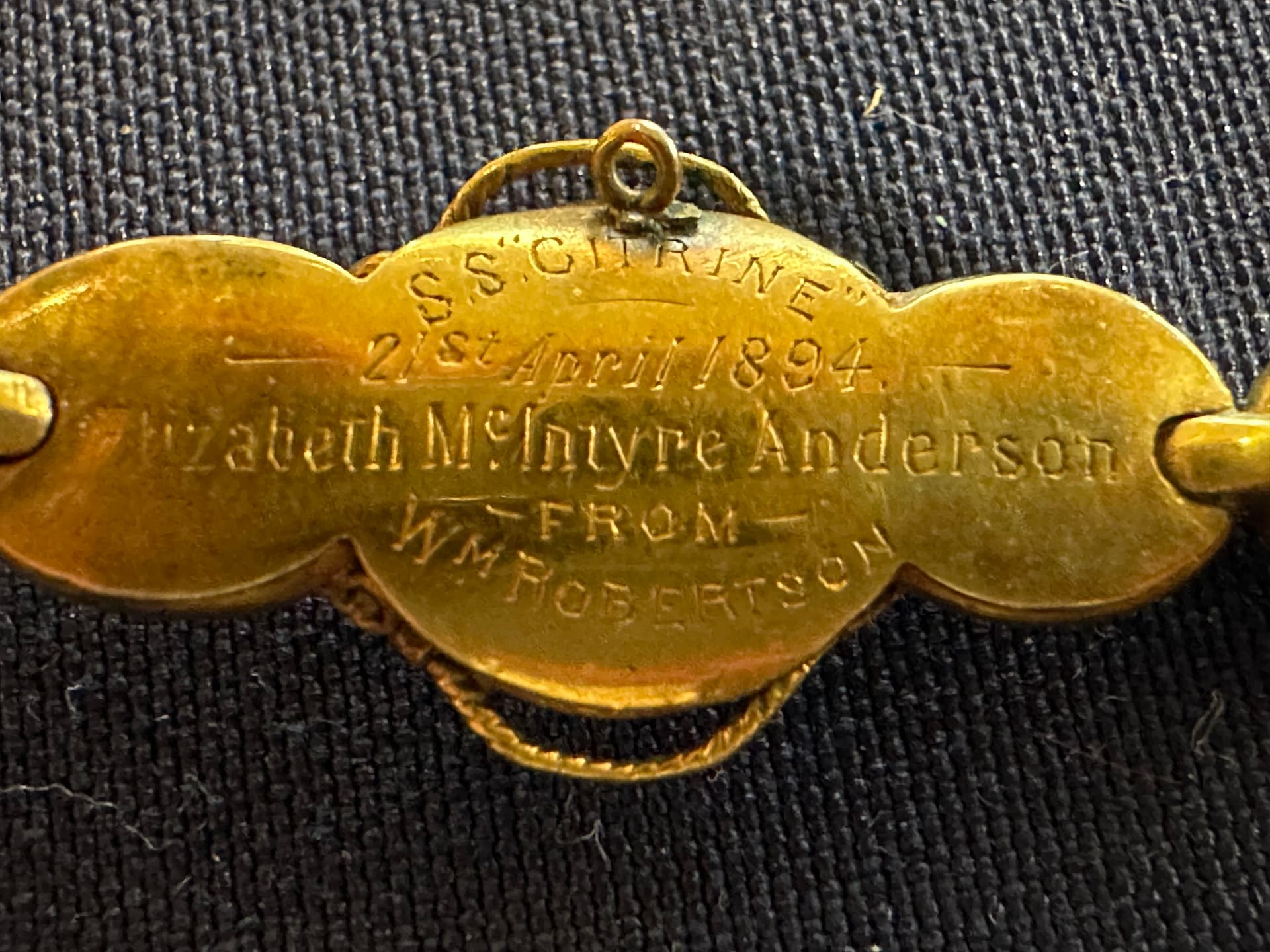
This pairing of personalization and ethics is not incidental. It reflects a broader consumer worldview in which the meaning of an object is inseparable from its origins. A custom signet ring engraved with a grandmother's initials carries a different weight if the gold was responsibly sourced. A lab-grown diamond engagement ring chosen through a custom AI design tool signals something different about values than a mass-market solitaire pulled from a display case. The demand for emotional authenticity helps explain the endurance of makers like Theo Grace, whose hand-engraved name necklaces in 14k gold represent the kind of craftsmanship that AI tools are learning to complement, not replace.
For jewelers, this means that the pitch for a custom piece cannot rest on aesthetics alone. Provenance, certification, and material transparency belong in the same conversation as stone shape and setting style.
The current state of AI personalization tools
Retailers are increasingly adopting AI-powered tools to offer bespoke designs, and the category is expanding quickly. These tools allow customers to iterate on design concepts, visualize pieces before production, and communicate preferences in ways that reduce the back-and-forth that once made custom jewelry feel intimidating or exclusive.
The effect on customer engagement is measurable in sentiment if not yet in published figures across these sources: when buyers feel genuinely involved in the creation of a piece, their attachment to it deepens. That emotional investment is what separates a meaningful purchase from a transactional one, and it is precisely where AI-assisted design has an advantage over the traditional counter experience.
For jewelers accustomed to translating a client's vague reference image into a finished sketch, these tools can accelerate the design phase while preserving the maker's expertise and voice. The technology is not replacing the jeweler; it is handling the parts of the process that historically created friction.
What comes next: VR, biometrics, and the outer edge of custom design
The more speculative corner of this conversation involves technologies that do not yet exist at commercial scale but are being actively imagined. Consider a future where customers can design their own jewelry using virtual reality interfaces, or where AI can automatically generate designs based on biometric data, such as heart rate or brainwave activity. These are not product announcements; they are design horizons, and their inclusion in industry commentary reflects genuine directional thinking about where the category is headed.
The biometric design concept is particularly worth examining critically. The idea that a ring's form could be generated from a customer's physiological signature is compelling as a personalization narrative, but it raises immediate questions about data privacy, consent, and what certification or oversight would govern such systems. No vendor or regulatory framework is named in the current analysis, which means these remain conceptual rather than actionable. Buyers intrigued by the vision should watch this space with curiosity and appropriate skepticism.
The VR design interface scenario is closer to plausible near-term reality, given the trajectory of spatial computing. Several industries already use VR for product configuration; jewelry's high emotional stakes and visual complexity make it a natural candidate.
Sustainability and ethical sourcing as design criteria
The increasing adoption of sustainable and ethically sourced materials is likely to drive further innovation in the jewelry industry, and this dynamic is already visible in how younger buyers frame their custom commissions. Sustainability is not a brand add-on for this cohort; it is a precondition.
What that means in practice: jewelers who cannot speak fluently about their supply chain are losing ground with this demographic. Vague language about "responsible sourcing" or "conflict-free" claims without certification to back them up will not hold. The Kimberley Process has long been criticized for its limitations, and informed buyers in 2026 know this. More meaningful signals include Fairmined or Fairtrade certification for gold, Responsible Jewellery Council membership with third-party audit, and transparent disclosure of whether diamonds are mined or lab-grown.
Custom and personalized jewelry actually has a structural advantage here: the smaller scale of individual commissions makes it easier to trace materials, and the direct relationship between jeweler and client creates a natural space for that conversation. A bespoke commission is an opportunity to walk the customer through exactly where their metal came from, which mine or lab produced their stone, and what that choice means for the people in the supply chain.
What jewelers should do now
The editorial analysis converging across these sources adds up to a coherent set of priorities for independent jewelers navigating this landscape:
- Audit your website for clarity and searchability. If your site is visually rich but informationally thin, AI search tools will surface competitors before you.
- Invest in local SEO. Younger buyers searching for custom jewelers in their city are increasingly using AI-assisted tools; structured, location-specific content matters.
- Adopt AI design tools where they reduce friction and expand what you can offer clients. The goal is not to automate craft but to make collaboration easier.
- Lead with provenance. In every custom commission conversation, material sourcing and certification should be part of the design brief, not an afterthought.
- Stay genuinely curious about emerging technologies, including VR interfaces and AI-assisted design generation, but do not let speculative claims outpace what you can deliver or verify.
The jewelry industry has always been one in which trust is the primary material. The brands and makers who will thrive in this next phase are those who can translate that trust into digital discoverability, personalized experience, and a supply chain transparent enough to withstand a well-informed buyer's questions. AI is a tool in that work, not a substitute for it.
This article was produced by Prism’s automated news system from verified source data, official records, and press releases, then run through automated quality and moderation checks before publishing. The system is built and supervised by the people who set the standards it runs under. Read our full AI policy.
Did this article answer your question?