Clienteling drives personalized jewelry shopping, panel says at JCK Luxury show
Retailers were urged to record birthdays, repairs, and past buys, then use that data to time one-on-one outreach that can turn a stud sale into a bridal order.
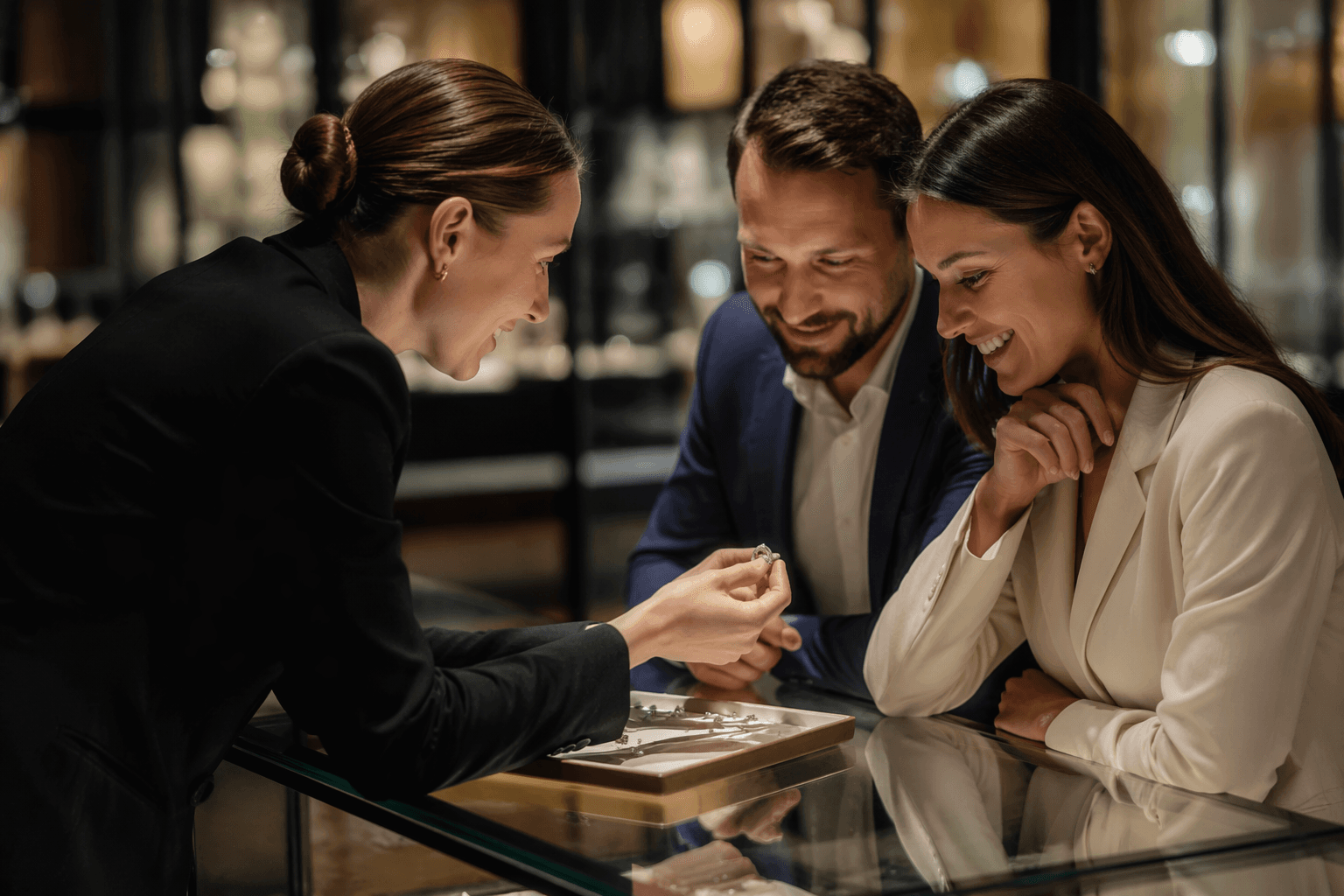
The strongest sales pitch on the JCK Luxury stage was not a jewel, but a memory. Retailers at “Where the Customers Are: Driving Traffic in Today’s Market,” held on Day 2 of the Luxury show in Las Vegas on May 29, 2026, heard that the real margin lives in the follow-up: remembering a client’s anniversary, a child’s name, or the repair she just picked up, then turning that detail into a tailored reason to return.
Amy Elliott, JCK’s contributing editor, moderated the discussion with Becka Johnson Kibby of Edge Retail Academy, Fernanda Durmer of Denver’s Universal Deco, Dalton Powell of Oz’s Jewelers in Hickory, North Carolina, and Kathleen Kimball of George Thompson Diamond Co. in Camarillo, California. Their common thread was clienteling, a retail practice that feels old-fashioned only until it is used well. Kimball drew the sharpest line between genuine outreach and noise: “Clienteling is very specific to the person, not sending a blanket text or e-blast out,” she said. “It is one-on-one, sharing a specific message about something.”
That specificity is where the money is. Powell warned against treating clients as transactional targets, saying, “You don’t want to use your customers like an ATM. You want them to feel special, invested in your store.” The tactic is simple enough to execute and difficult enough to do consistently: maintain strong notes, keep a reliable customer relationship management platform, and watch for purchase patterns that reveal what comes next. Kimball said her store has noticed that customers who buy diamond studs often return six to eight months later for an engagement ring. In other words, the stud sale is not the end of the story. It can be the opening scene.
That same logic guided the conversation around bridal business. Powell asked, “Are you rolling out the red carpet for your pre-bridal customer?” The question got to the heart of high-margin personalization: if a shopper has already signaled readiness for a bigger milestone purchase, the retailer’s job is to shorten the distance between intent and order. The panelists framed that as disciplined service, not aggressive selling, with every birthday, anniversary, repair, and family detail becoming a potential trigger for a better-timed, more relevant offer.
New traffic still matters, and Durmer pointed to TikTok as a particularly effective source of new business for an independent designer with an active digital presence. Powell described social media as a “marketing funnel,” but said repetition matters as much as the first click. “Getting your name in front of people, it’s really surprising how much of an impact that makes,” he said. He recalled a customer who said, “I saw your ad on TV,” even though no TV campaign existed. The repetition had done its work, and recognition had filled in the blank.
The panel fit neatly inside JCK’s broader 2026 push at The Venetian Expo, where the show ran from May 29 to June 1 and Luxury opened by invitation for its first two days. JCK also added a new Lifestyle Pavilion to help retailers diversify their offerings and draw more traffic into stores. The urgency is easy to understand: The Plumb Club’s 2025 research found that nearly 70% of respondents consider personalization important when choosing jewelry, and 64% want to personalize pieces with initials, names, letters, dates, or symbols. In that climate, the most profitable jewelry store may be the one that knows not just what a client bought, but what she is likely to want next.
This article was produced by Prism’s automated news system from verified source data, official records, and press releases, then run through automated quality and moderation checks before publishing. The system is built and supervised by the people who set the standards it runs under. Read our full AI policy.
Did this article answer your question?