Designing Custom Jewelry: Choices in Metals, Gemstones, Lab-Grown Diamonds
Design with intent: choose certified metals, match stones to wear, and treat lab-grown diamonds as ethical and technical choices, not automatic shortcuts.
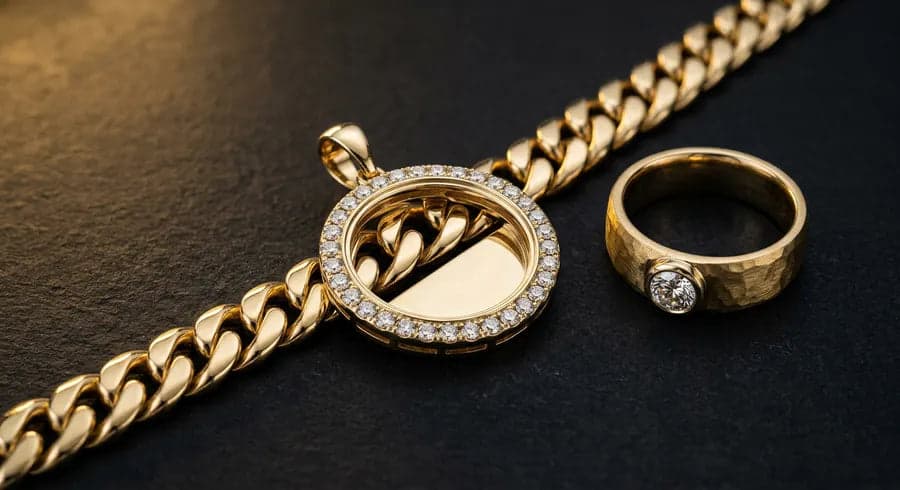
1. Metals, what to pick and why it matters
Metals are the frame for your story; pick one that matches lifestyle, longevity, and the maker’s sourcing claims. Miadonna explicitly offers “100% recycled solid platinum and 14k and 18k yellow gold, white gold, and rose gold,” a clear inventory to ask about when you brief a jeweler. Jewelry Artisans’ production language brings that choice to life: “Molten metal (gold, silver, platinum, or another material of your choice) is then poured into the mold and left to solidify,” which underscores that your metal choice affects every downstream step, from casting impurities to how much finishing and polishing the artisan must do. Finish matters too: Jewelry Artisans notes that “Polishing comes next, lending a glossy or matte finish based on your preference,” so confirm surface options and how they age (platinum resists wear differently than 14k gold). Finally, treat claims about recycled metal as vendor-specific: Miadonna states the recycled-platinum offering, but none of the supplied notes include independent certification language, so request documentation (recycled-metal declarations, assay marks) from the maker before you commit.
2. Gemstones, matching beauty to durability and meaning
Gemstones are both symbolic and technical choices. Miadonna’s plain-spoken advice is essential: “Make sure to learn the hardness (Mohs) level of your stone/s of choice, as some (like diamonds, rubies, sapphires, and emeralds) are strong enough for everyday wear, like in engagement rings. Others, like opals and pearls, are more prone to damage and better suited for jewelry worn less frequently or as earrings or necklaces.” Use that guidance to map your daily routines to stone selection: choose tougher stones for rings and bracelets; reserve softer, vulnerable gems for pendants or occasional-wear pieces. Personalization lives in the stones as well, Miadonna recommends birthstones, favorite colors, and lab-grown options to “give your item sparkle and meaning,” while Noemie frames customization as an emotional act: “Your life has inherent value that's exclusive to your journey, beliefs, and experiences.” If you’re combining stones or designing stackable pieces, plan for modularity: Miadonna encourages “stackable bracelets or necklaces featuring swappable pendants” so one bespoke design becomes a small system you can evolve.
3. Lab-grown diamonds, ethics, aesthetics, and retail claims
Lab-grown diamonds appear across vendor guidance as a mainstream personalization option. Miadonna explicitly lists lab-grown diamonds among the stones customers can choose: “Pick from a wide selection of lab-grown diamonds and gemstones.” Retailers like Noemie use lab-diamond messaging in promotions, “Receive $500 Lab Diamond Baguette Huggies With Purchase Over $1,000.” Treat promotional language and ethical claims separately: lab-grown stones often carry different price structures and disclosure expectations than mined diamonds, so verify paperwork and grading. None of the notes supplied explicit grading bodies or sustainability certifications for lab-grown stones, so ask makers for the specific reports they rely on (GIA lab-grown reports, IGI reports, or equivalent) and for clarity on any lifecycle claims. In short: lab-grown diamonds are a legitimate route to scale and design flexibility, but insist on transparent grading and a clear return policy, Noemie’s retail terms are explicit about buyer convenience: “Complimentary Shipping and Returns, Gift Packaging on all Orders.”
4. The custom process, from idea to finished piece
Expect a sequence that many makers follow and that the industry pages describe in similar terms. GoldZenn’s how‑to guide frames the scope clearly: it “walks consumers and independent retailers through the full custom jewelry process, from idea and budgeting to metal choice, stone selection, timelines, and aftercare.” Jewelry Artisans supplies stage-level mechanics: first casting, “Molten metal… is then poured into the mold and left to solidify”, then finishing, where “an artisan meticulously finishes the piece” and trims excess, followed by polishing and the final “Setting the Stones.” These stages suggest realistic lead times and checkpoints: design approval, wax or CAD sample, casting, finishing, stone-setting, and final quality checks. Ask your maker for a mapped timeline tied to these steps and for explicit milestones (design sign-off, sample approval, shipping/return policy).
5. Personalization options, engraving, modularity, heirlooms
Personal touches are what move custom jewelry from commodity to keepsake. Miadonna urges personalization: “Personalize it! Bracelet charms or pendants that represent special things to you are perfect for regular wear and tell your story with every sparkle.” Noemie articulates the emotional value: “Giving or receiving a personalized piece of jewelry indicates a deep intimacy between two people,” and offers a concrete engraving example: interior engraving on a baguette diamond eternity band. Linked by Brilla highlights why people opt for bespoke: “Firstly, custom jewellery allows you to have a say in the design process.” Use these options deliberately, initials, birthstones, zodiac motifs, interior engravings, or swappable pendants, and consider modularity if you want the piece to adapt over time.

6. Heirloom redesign and repairs, practical aftercare
Redesigning and repairing family pieces is a common custom path. Linked by Brilla encourages elevating heirlooms, “Bring new life to a priceless heirloom piece”, while Jewelry Artisans includes “Jewelry Repair” in its services alongside custom design. House of Stones emphasizes local service depth and repair capabilities: “Here, you'll find a team of award-winning jewelry repairs, the best ones in New Philadelphia, Dover, and all of Tuscarawas county,” and lists services such as “setting diamonds, ring re-sizings, and prong repair.” When you hand over a sentimental item, document the original condition, request a written estimate for redesign versus repair, and confirm local repair warranties and turnaround.
7. Where to shop and what vendor claims mean
Vendors frame custom work differently. Linked by Brilla leans into a concierge model: “Invest in yourself with a custom piece of jewellery with Linked by Brilla” and promises an “Exclusive Personal Shopping Experience.” Jewelry Artisans markets “With decades of experience and top-tier craftsmanship,” while Miadonna foregrounds sustainable-metal claims. Treat these statements as starting points: probe what “decades of experience” means in practice (examples, staff credentials), what “top-tier craftsmanship” entails (photos of workshop benchwork, setting examples), and request proof for sustainability claims. Promotional terms matter too, Noemie’s “Receive $500 Lab Diamond Baguette Huggies With Purchase Over $1,000” and “Complimentary Shipping and Returns, Gift Packaging on all Orders” are concrete retail positions; confirm expiry and return windows before you buy.
- Start with a purpose and budget: GoldZenn’s how-to scope includes “idea and budgeting,” so lock those down before sketches.
- Ask for material proofs: if a vendor claims “100% recycled solid platinum,” request assay or supplier documentation.
- Match stone to wear: follow Miadonna’s Mohs guidance when choosing gems for daily-wear pieces.
- Insist on stage approvals: require CAD or wax models and sign-off checkpoints tied to Jewelry Artisans’ listed steps (casting → finishing → polishing → setting stones).
- Verify grading and returns: for lab-grown diamonds, ask for grading reports and check the seller’s shipping/return policy, Noemie lists complimentary returns as part of their offering.
8. Practical checklist for commissioning custom jewelry
Conclusion Custom jewelry is where technical decisions meet personal narratives: the metal frames the craft, the stones carry meaning and durability, and lab-grown diamonds expand design and ethical options. Use the specifics vendors provide, Miadonna’s recycled-metal claim, Jewelry Artisans’ stepwise production language, Noemie’s retail terms, Linked by Brilla’s bespoke service promise, and House of Stones’ local repair listing, as the basis for your questions. When you demand documentation for materials and grading, and when you map design checkpoints to casting and finishing milestones, you turn an impulse purchase into an heirloom that can be worn, serviced, and passed on with confidence.
Know something we missed? Have a correction or additional information?
Submit a Tip

