Emilien brings quiet bespoke luxury to French haute joaillerie
Emilien turns bespoke restraint into status, with numbered French-made jewels, a 2-carat debut ring, and Charlotte Rampling as its quiet emblem.

Emilien is making a pointed case for quiet luxury in French haute joaillerie: less branding, more intention, and a design language that feels personal without ever becoming precious in the obvious sense. The Paris-based house has built its identity around scarcity, mixed metals, and sculptural forms, with pieces that read like private signals rather than public declarations. In a market where personalization has become the real status marker, Emilien’s restraint is the message.
A new code for personalized jewelry
What makes Emilien feel current is not flash, but calibration. The house describes itself as rooted in long-lasting value rather than short-term trends, and that stance shows up in the way it releases jewelry in numbered editions instead of named showpieces. Some styles are limited to 10 pieces, others to 100, a structure that gives each design the feel of a signed object rather than a seasonal product.
That controlled scale matters because it changes how the jewelry is worn. A logo can be read from across a room; a numbered jewel asks to be noticed up close, through proportion, metal contrast, and the way the stone is set. Emilien is betting that today’s luxury client wants exactly that kind of intimacy, where the point is not to broadcast wealth but to signal discernment.
The designer behind the discipline
Emilien Vivier, the house’s co-founder and creative director, brings an unusual mix of legal rigor and jewelry training to that vision. Before turning to jewelry, he studied at the Sorbonne and worked as a business lawyer, then retrained at the Haute École de Joaillerie in Paris. That school, founded in 1867, describes itself as the oldest jewelry establishment in the world, and it remains one of the clearest pipelines for French craftsmanship.
Vivier’s technical path helps explain the tension inside Emilien’s pieces. The house’s design language is often described as both strong and delicate, masculine and feminine, which is another way of saying the jewelry avoids easy categories. That duality is not decorative. It is structural, built into the way the house handles form, metal, and volume.

Duality and the art of making a piece feel personal
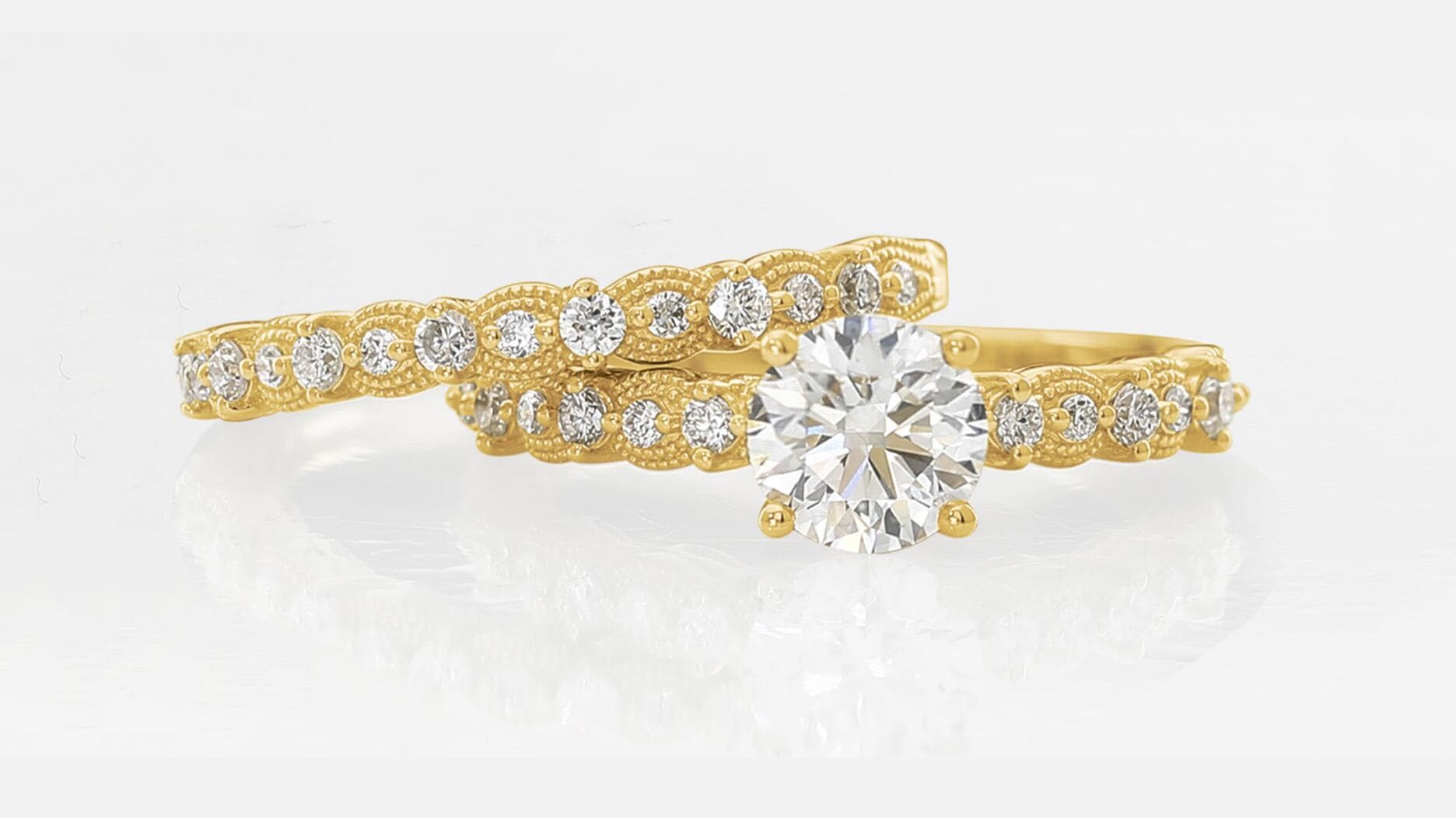
The debut collection, Duality, gives the clearest view of Emilien’s aesthetic. Its launch ring featured a 2-carat princess-cut diamond set in a square raised cage setting, a design that is architectural without feeling severe. The cage lifts the stone and frames it with clean geometry, turning the ring into a small study in balance: open, precise, and unmistakably modern.
The collection began from something more intimate than a concept board. It was rooted in a family heirloom ring belonging to Emilien Vivier’s grandfather, set with an aquamarine that revealed the finger beneath. That detail matters because it gives the collection its emotional logic: jewelry as something that reveals as much as it adorns. The house takes that inherited idea and translates it into contemporary French savoir-faire, where the craftsmanship is visible, but the sentiment is not overexplained.
Emilien’s styles are numbered rather than named, which deepens that sense of privacy. Names can push a jewel toward narrative branding; numbers keep the focus on the object itself. In a personalized jewelry market crowded with monograms and overt customization, Emilien’s approach feels more refined, almost secretive, and that is precisely why it registers.
Why scarcity now reads as luxury
The brand’s business model is as controlled as its design language. Emilien’s official site says each piece is handcrafted in France and part of a numbered 100-piece edition, while the Natural Diamonds profile notes that some styles are capped at 10 pieces and others at 100. That kind of limited distribution does more than protect exclusivity. It makes the customer feel chosen, not targeted.
The company’s corporate footprint reinforces that impression. EMILIEN was created on February 28, 2024, and registered in Paris on March 6, 2024, at 27 Rue Drouot, 75009 Paris. Its capital is €24,387, and the filing lists 0 employees in 2025, all signs of a lean operation still very much in formation. For a fine jewelry house, that scale is telling: this is not a volume play, but a tightly managed atelier identity.
That does not automatically answer every question a modern jewelry buyer should ask about sourcing or traceability, but it does show where the brand is drawing its line. The emphasis is on French handcraft, limited production, and a deliberate refusal to chase mass recognition. In a luxury landscape increasingly defined by who can still feel personal, that restraint becomes part of the product.
The celebrity signal is subtle, not loud
Emilien’s most telling cultural cue may be its relationship with Charlotte Rampling. The house created a custom ear cuff for her from the first collection, and Rampling, described as an icon and muse, met with Vivier in Paris to discuss the creative process behind the piece. That is a very specific kind of endorsement: not a glossy campaign, but an artistically literate woman wearing a jewel that appears to have been shaped through dialogue.
Brand advisor Mathilde Stone captured the strategy in blunt terms, saying clients do not want to see the brand “blasted all over Instagram.” That line gets to the heart of Emilien’s appeal. The house is not selling spectacle; it is selling discretion with a point of view.
For readers watching the rise of personalized jewelry, Emilien is a useful benchmark. It shows how scarcity, craftsmanship, and design intelligence can create intimacy without resorting to initials, loud logos, or overexposed branding. The strongest modern luxury pieces do not announce themselves first; they reveal themselves slowly, through form, fit, and the confidence to leave space around the stone.
This article was produced by Prism’s automated news system from verified source data, official records, and press releases, then run through automated quality and moderation checks before publishing. The system is built and supervised by the people who set the standards it runs under. Read our full AI policy.
Did this article answer your question?