Forbes Ranks Best Lab-Grown Diamond Retailers for Custom and Engraved Jewelry
Lab-grown diamonds now make custom engraved pieces more accessible, and Forbes tested four retailers to find which ones actually deliver on that promise.
After combing through retailer policies, interviewing gem experts, and first-hand testing services that range from in-house engraving to resizing and after-sales care, Forbes identified four lab-grown diamond vendors that stand above the rest for shoppers who want more than a solitaire in a standard prong setting. Lab-grown diamonds have redrawn the economics of personalized fine jewelry: the same budget that once bought a modest natural center stone can now secure a two-carat lab-grown diamond with enough left over to fund a custom pavé band, a laser-engraved interior, or a multi-stone halo. That math matters most when the piece you're designing carries initials, a date, or a sentiment that makes it irreplaceable.
Here is what the Forbes evaluation found, translated into what each ranking actually means for anyone ordering a personalized piece.
1. Blue Nile
Blue Nile earned its placement on the strength of sheer variety and a customization infrastructure built for serious shoppers. The retailer's online platform lets you mix and match loose lab-grown stones with a wide range of settings, and its selection depth gives engravers more ring styles to work with. For personalized pieces, variety is not a vanity metric: the interior width of a band directly determines how many characters fit legibly in a laser engraving. Blue Nile's breadth of setting profiles, from low-profile bezels to classic four-prong solitaires, means you can find a shank wide enough to hold a meaningful inscription without cramping the text.
When ordering a custom piece through Blue Nile, confirm the engraving lead time separately from the setting construction timeline. Made-to-order configurations can add one to two weeks before engraving even begins, which matters enormously if you are working toward a proposal date.
2. James Allen
James Allen distinguishes itself with the Ring Studio, a design tool that allows you to pair a specific lab-grown diamond with a specific setting and preview the result in high-definition 360-degree video before committing. That visual inspection capability is particularly valuable for custom work: you can assess whether a chosen setting's prong style complements your stone's shape before the piece is cast. The Ring Studio also includes engraving options directly in the checkout flow, making it one of the few platforms where font, character count, and placement are visible before you finalize the order.
James Allen generally offers more affordable price points on lab-grown diamonds compared to equivalent natural stones, which gives you more room to invest in setting upgrades or more elaborate engraving work without inflating the total budget.
3. Grown Brilliance
Grown Brilliance was specifically flagged by Forbes for its custom-order service and engraving-friendly approach, two capabilities that are far from standard across the industry. The retailer operates with a lab-grown-only focus, which means its staff is trained specifically on the characteristics of CVD and HPHT stones rather than treating lab-grown as a secondary category. That specialization matters during custom consultations: a representative who understands how lab-grown diamonds interact with light differently than mined stones will guide you toward settings that maximize brilliance rather than defaulting to whatever is most popular.
For shoppers with non-standard requests, such as engraving on a colored metal band or incorporating a lab-grown stone in a vintage-style setting, Grown Brilliance's custom-order channel is worth a direct consultation before assuming the answer is no.
4. With Clarity
With Clarity was highlighted alongside Grown Brilliance as a standout for engraving-friendly custom services, and it brings one additional advantage that proposal shoppers should know about: the retailer offers a home preview program that lets you assess a replica of your custom setting before the final piece is made. That try-before-you-commit model eliminates one of the biggest anxieties of ordering personalized jewelry online, the fear that the ring you imagined and the ring you receive will not match.
For made-to-order pieces, With Clarity's process means you have a visual checkpoint before engraving is applied, which prevents the costly mistake of laser-inscribing a ring in a setting that turns out to feel wrong on the hand.
Why Lab-Grown Diamonds Change the Customization Calculus
Forbes frames the entire guide around a fundamental shift in fine jewelry economics. Lab-grown diamonds are chemically and optically identical to mined diamonds but sell at a significant price reduction per carat. For personalized jewelry, this cost advantage is not just a saving: it is a creative opportunity. A shopper who previously could afford a one-carat natural diamond in a plain solitaire can now afford a two-carat lab-grown stone in a pavé-set band with engraving, a bezel halo, or a colored metal shank that reinforces a personal narrative.
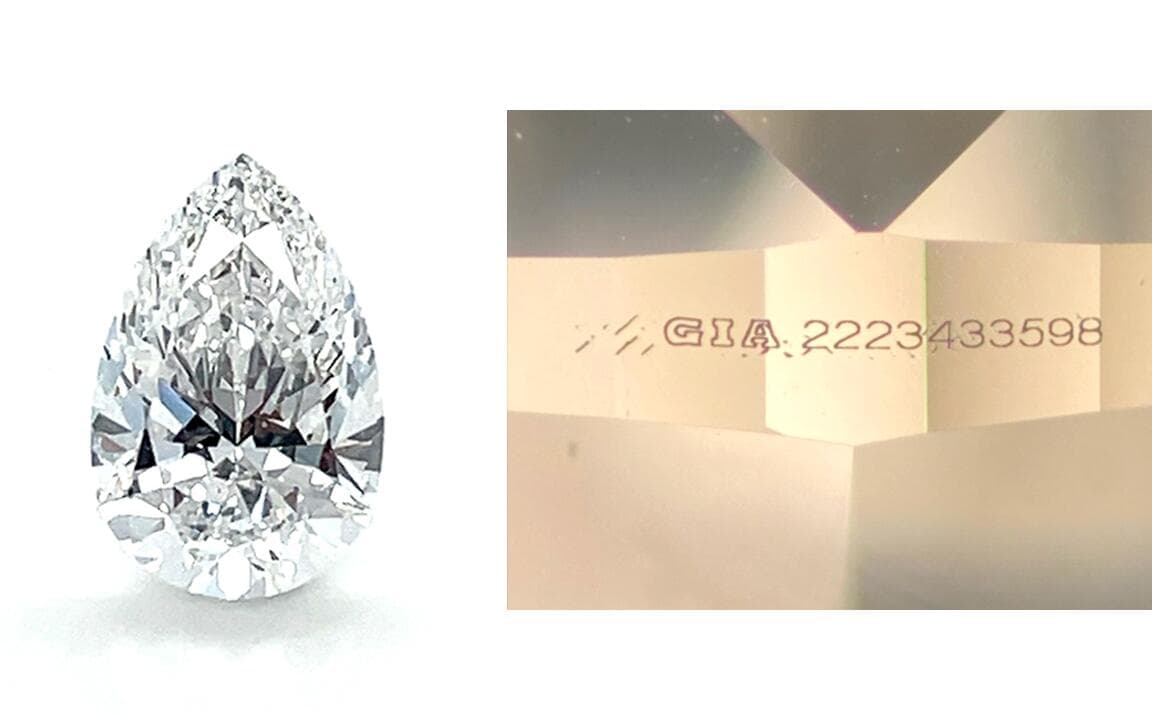
The Forbes guide recommends prioritizing stones certified by the IGI (International Gemological Institute) or the GIA (Gemological Institute of America) when ordering custom pieces. Certification matters for personalized jewelry because it establishes a verifiable record of the stone's characteristics, which can be referenced by any jeweler who later performs resizing, prong retipping, or engraving maintenance. If a stone gets swapped during a service visit, a certification number laser-inscribed on the girdle is your protection.
Avoid These Costly Customization Mistakes
Font legibility is the first casualty of enthusiasm. Script fonts with fine serifs look elegant on paper but compress into illegibility inside a narrow ring shank. Choose a clean block or sans-serif typeface for any engraving under eight millimeters of interior band width, and limit your inscription to 20 to 30 characters if you want each letter to remain distinct to the naked eye.
Prong selection for lab-grown stones deserves more scrutiny than most shoppers apply. Lab-grown diamonds are frequently cut with slightly steeper pavilion angles than their mined counterparts, which can affect how standard prong heights grip the stone. V-prongs are the correct choice for any pointed fancy shape, including marquise and pear-cut lab stones, because flat prongs leave sharp corners exposed and prone to chipping. Ask your retailer whether the prong height on your chosen setting has been calibrated for a lab-grown stone of your specific carat weight.
Resizing limits are the detail most buyers discover too late. Many personalized rings with engraving, pavé set side stones, or eternity bands cannot be resized without destroying the design. Before finalizing any custom order, ask the retailer explicitly: how many sizes can this ring be adjusted up or down, and will the engraving survive the process? Standard solitaires typically allow one to two sizes of adjustment; eternity bands with full-circumference stones often cannot be sized at all. Knowing that before you commission the piece, not after it arrives, is the difference between a wearable heirloom and an expensive lesson.
Lab-grown diamonds have made personalized fine jewelry genuinely accessible, but the Forbes evaluation makes clear that the retailer you choose shapes everything that happens after you select your stone. Engraving quality, custom setting integrity, and return policy flexibility for made-to-order pieces vary significantly across the category, and those distinctions matter far more than price per carat when the piece is meant to last a lifetime.
Know something we missed? Have a correction or additional information?
Submit a Tip

